Fizen Card vs Bybit Card: Which USDT Card for Media Buyers? (2026)
Bybit Card is "free" but costs 0.9–3% per transaction. Fizen is $9.99 but near-zero ongoing fees. Here's the real math.

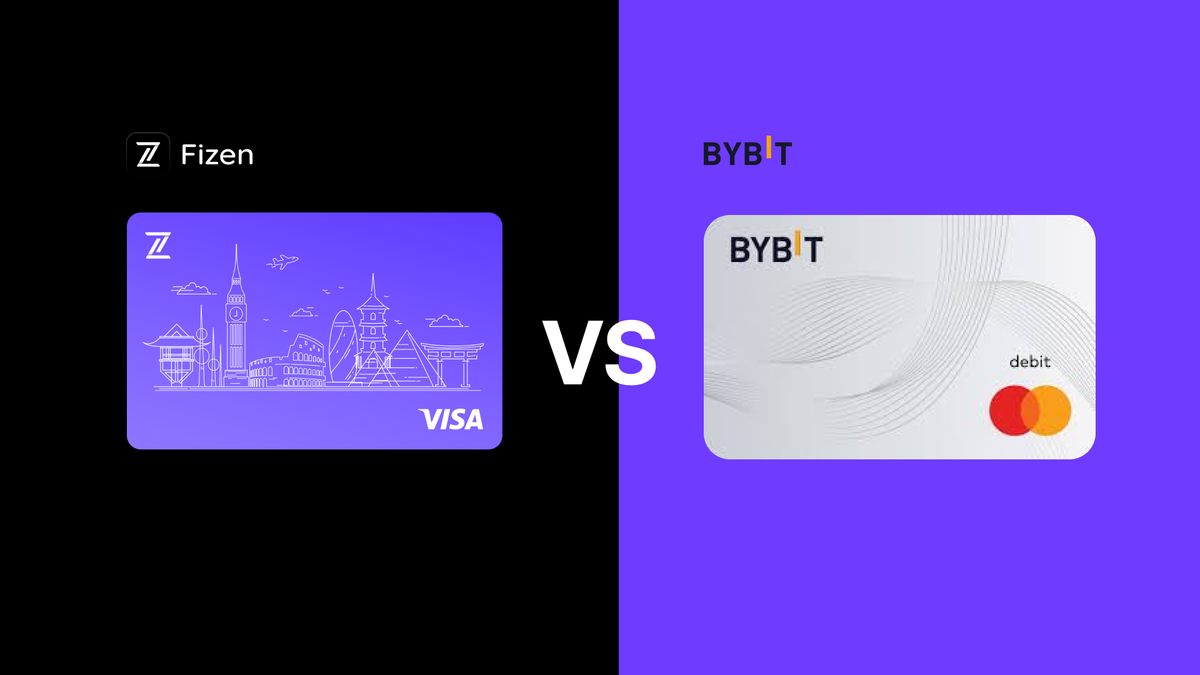
You use Bybit, or you've heard the Bybit card is "free." Fizen is the alternative being recommended. Both are crypto cards, but one is exchange-dependent and region-locked, while the other is global. The "free" label on Bybit matters less than the fee structure hiding behind it. Here's the breakdown.
Quick Comparison
| Feature | Fizen Card | Bybit Card |
|---|---|---|
| Card network | Visa | Mastercard |
| Card fee | $0 (free) | |
| Transaction fees | Transparent, flat | 0.9–3% (varies by region/currency) |
| Top-up | USDT/USDC Solana | 8 cryptos from Bybit exchange |
| Multi-card | Up to 100 virtual cards | 1 card per account |
| Available regions | Global | EEA, Australia, Argentina, Brazil, select others |
| Physical card | Not yet available | Yes (select regions) |
| Card type | Standalone (no exchange needed) | Requires Bybit exchange account |
| Invested by | Tether | Bybit exchange |
| Best for | Media buyers, multi-account, global | Exchange users, EU residents |
Where Fizen Wins
Global availability. Bybit Card is limited to EEA (European Economic Area), Australia, Argentina, Brazil, and a few others. If you're in Southeast Asia, CIS, Africa, or most of the Americas — no Bybit Card for you. Fizen is available globally.
Visa network. Fizen uses Visa. Bybit uses Mastercard. For ad platforms, both work — but Visa has wider global acceptance, especially in SEA and emerging markets. SomeTikTok Ads regions prefer Visa BINs.
Up to 100 cards. Bybit gives you 1 card tied to your exchange account. Fizen gives you up to 100 virtual cards. For media buyers running 5, 10, or 50 ad accounts — this is the entire difference. One card per ad account means clean billing and isolated risk.
No exchange dependency. Bybit Card requires a Bybit exchange account. Your card balance is your exchange balance. If Bybit has maintenance, withdrawal restrictions, or regulatory issues in your country, your card stops working. Fizen operates independently — your card works whether any exchange is up or down.
Lower effective transaction fees. Bybit advertises 0.9–3% transaction fees depending on your card version, region, and whether the merchant currency matches your card currency. Those variables add up. On a $10,000/month ad spend, 0.9–3% = $90–300/month in fees. Fizen's flat USD-to-USD structure avoids this entirely for USD-billed ad platforms.
Where Bybit Wins
$0 card fee. Bybit Card is free to issue. No $10 upfront. If you just want to try a crypto card with zero commitment, Bybit has the lowest barrier to entry.
Direct exchange integration. If you already trade on Bybit, spending from your exchange balance is seamless. No transfer step, no separate wallet. For active Bybit traders, this is genuinely convenient.
8 crypto top-up options. Bybit Card supports BTC, ETH, XRP, USDT, USDC, TON, MNT, and BNB. Fizen focuses on USDT/USDC. If you hold diverse crypto and want to spend directly, Bybit has more options.
The Catch With Bybit's "Free" Card
Free card ≠ free usage. Here's what Bybit's 0.9–3% transaction fee looks like on real ad spend:
| Monthly ad spend | Bybit fee (0.9%) | Bybit fee (3%) | Fizen fee (USD to USD) |
|---|---|---|---|
| $5,000 | $45/mo | $150/mo | ~$0/mo |
| $10,000 | $90/mo | $300/mo | ~$0/mo |
| $20,000 | $180/mo | $600/mo | ~$0/mo |
| $50,000 | $450/mo | $1,500/mo | ~$0/mo |
Fizen's $10 card fee pays for itself in the first day of ad spend. Bybit's "free" card costs $45–1,500/month in transaction fees.
The card fee is a one-time cost. Transaction fees are forever.
For Media Buyers Specifically
This is where the comparison gets sharp:
Bybit Card = 1 card, limited regions, exchange-dependent, 0.9–3% per transaction.
Fizen Card = 100 virtual cards, global, independent, flat USD fees.
If you run multiple ad accounts acrossTikTokMetaandGoogle Ads — you need multiple cards. Bybit gives you one. Fizen gives you one hundred.
If you're outside the EEA — Bybit doesn't serve you. Fizen does.
If you spend $10K+/month on ads — Bybit's "free" card costs more in fees than 10 Fizen cards.
The Honest Trade-Off
Where Bybit has an edge: If you already trade on Bybit and want to spend directly from your exchange balance without any transfer step — Bybit's integration is seamless. It also supports 8 cryptos (BTC, ETH, XRP, etc.), while Fizen focuses on USDT/USDC.
But that convenience has a price. Bybit's 0.9–3% transaction fee means you're paying $90–300/month on $10K ad spend — forever. You're locked into one card, one exchange, and limited regions. If Bybit goes down for maintenance or faces regulatory issues in your country, your card goes with it.
Fizen gives you independence: up to 100 virtual cards, global availability, Visa network, and flat transparent fees. At $10K/month, Fizen's $10 one-time fee pays for itself in 3 hours. Bybit's "free" card bleeds you every single month.
Bottom Line
A free card that costs you 0.9–3% on every transaction isn't free. It's a subscription you didn't sign up for.
At $10K/month, Bybit costs $90–300/month in hidden fees. At $50K/month, that's $450–1,500/month — or $5,400–18,000/year. Fizen costs $10 once, plus The math isn't even close.
Whether you're in the EEA or anywhere else, whether you run 1 ad account or 50 — Fizen's 100 virtual cards, exchange independence, and transparent pricing make it the smarter choice.See how Fizen compares to all 10 crypto cards here
Related reads:
→Fizen vs Buvei — Virtual-only alternative
→Fizen vs RedotPay — Fee breakdown and cost analysis
→How to pay for TikTok Ads with USDT
→Best USDT cards for Facebook/Meta Ads
→How to pay for Google Ads with crypto
→10 Best Crypto Cards for Media Buyers 2026
Fizen Virtual Visa Card
The best card for Google, Meta, Tiktok Ads. Spend USDT like cash
See more in Ads & Marketing
- TikTok Ads with USDT — Up to 100 Cards, Zero FX on Ad Spend
- Pay for Google Ads with Crypto: USDT Card Guide (No Bank Required)
- 10 Best Crypto Cards for Media Buyers in 2026
- Best USDT Cards for Media Buyers in 2026
See more in AI Tools
- Perplexity Pro for Crypto Holders — USDT to Visa, No Off-Ramp
- GitHub Copilot + USDT — The Dev Card That Actually Works on Stripe
- USDT Visa Card for ChatGPT Plus — $20 Should Cost $20
See more in Streaming
- Discord Nitro with Crypto — Boosts, Emojis, HD Streaming via USDT
- YouTube Premium + Google One — One USDT Card for All Google Billing
- Spotify Premium Without a Bank Account — USDT Visa That Auto-Renews
Fizen is invested by TetherUp to 100 USDT Visa cards, global availability, transparent fees.
Need help? Reach us atsupport@fizen.io or connect with our support in-app or onX (Twitter) ·Telegram