Best USDT Cards for Media Buyers in 2026
Compare the best crypto cards for running Google Ads and Meta Ads with USDT. Multi-card support, US BIN, bind fee refunds, real cost breakdown for media buyers.

The Media Buyer's Card Problem
If you run digital ads at scale with crypto funding, you know the landscape is broken.
Your options today:
- Buy prepaid cards from resellers at $15, 30 each (unreliable, sketchy BINs, no control)
- Use P2P to fund traditional bank cards (freeze risk, slow)
- Run everything through one card (declines kill campaigns)
- Hope the card companies don't ban crypto-funded accounts
None of these are good.
What to Look For in a Crypto Card
Before comparing options, here's what actually matters for media buyers:
- Multi-card support: One card is a single point of failure. You need 5+, ideally 100+.
- Network: Visa is critical forGoogle Ads andMeta AdsMany cards use sketchy jurisdictions.
- Fee structure: 0% up to a cap is useless. You need honest fees at scale. 1% flat beats 0.9% per-transaction.
- Bind fee treatment: Google and Meta charge "bind fees" when authorizing new cards. If the card company doesn't refund these, you're eating losses.
- Transaction and daily limits: Need $150K per transaction and $1M daily for real ad spend.
- Funding speed: USDT top-up should be instant or under 1 hour. Days don't work.
- Support quality: When a card declines at 2am, can you reach a human? Yes/no matters.
- Honest backing: Is this a VC startup or backed by something real?
Card Comparison: 2026 Edition (8 Providers, Real Data)
We reviewed 17 virtual card providers targeting media buyers. Below are the 8 most relevant, compared on the criteria that actually matter for ad spend.
Fee Comparison Table
| Fee / Feature | Fizen Card | BroCard | PST.net | FlexCard | Combo Cards | Zambulay | eCards | Adpos |
|---|---|---|---|---|---|---|---|---|
| Card creation | $9.99 (one-time) | $2/card (cashback) | Free (100/mo) | $2 (refunded) | $0, 3/card | Free 1st, $5, 17 after | Free | $1/card |
| USDT top-up fee | 0% | 4% | 2, 4% | 3, 4% (refunded) | 3% (0.5% via exchange) | 1.5, 10% | 3% USD / 4.5% EUR | 1.5% |
| Decline fee | $0 | $0.50 (even on blocked cards) | $0 | Not stated | $0.50 | Not stated | Not stated | Not stated |
| FX / Txn fee | $0 FX fee | 0% domestic | 0% domestic | Not stated | Not stated | Not stated | Not stated | 2.5% per txn |
| Monthly fee | $0 | $0 | $0 | $0 | $0, 2.35 | $0 | $0 | $0 |
| Min deposit | $10 | $500 | ~$500 | $50 | Not stated | Not stated | $500 | 100 USDT |
| Max cards | 100 | 50 free, multi-BIN | 100/mo, multi-BIN | Unlimited, 20+ BINs | Unlimited, multi-BIN | Unlimited, 100+ BINs | Unlimited, EU/UK/US | Unlimited, 20+ platforms |
| Bind fee | Auto-refunded | Not refunded | Not refunded | Refunded | Not refunded | Not stated | Not stated | Not stated |
| KYC | Yes (Tether-backed) | Yes | Yes | Fast KYC | Not stated | No KYC | Interview only | Not stated |
| Hidden fees | $0, zero | Eff. total ~7, 8% | Not disclosed | 0% (fees refunded) | $1 withdrawal fee | Withdrawal fees | Not disclosed | Not disclosed |
| Support | 24/7 human | Community | Community | Community | Community | Community | Invite-only | Limited |
| Backing | Tether | Independent | Independent | VC | Independent | Independent | Independent | Independent |
Data sourced from public review sites (AffCatalog, AffNinja, Trustpilot, G2), competitor websites, and affiliate marketing forums as of March 2026. "Not stated" = fee not publicly disclosed.
The Real Cost: $30K/Month Ad Spend Across 50 Cards
The table above shows individual fees. Here's what those fees actually cost you when running real ad campaigns at $30K/month with 50 active cards and a 20% decline rate.
BroCard, looks cheap, costs the most
- USDT top-up: 4% × $30,000 =$1,200/month
- Decline fees: 20% DR × 50 cards × $0.50 =$500/month (yes, they charge on blocked cards too)
- Card creation: 50 × $2 = $100 one-time
- Total monthly cost: ~$1,700. That's $20,400/year leaked to your card provider.
PST.net, the "3% cashback" trap
- USDT top-up: 2, 4% × $30,000 =$600, $1,200/month
- They advertise 3% cashback on ads, but you're paying 2, 4% top-up first. That's not a benefit, that's breaking even.
- Total monthly cost: ~$600, $1,200. The cashback is marketing, not savings.
Fizen Card, 3 fees, no asterisks
- Card creation: 50 × $9.99 = $499.50 one-time
- USDT top-up:0% × $30,000 = $0
- Decline fee:$0
- FX fee: 1% × $30,000 = $300/month
- Total monthly cost: ~$300. That's $3,600/year vs BroCard's $20,400.
The difference is $16,800/year. That's money going back into your campaigns, not your card provider's pocket.
Why Fizen Card Wins for Media Buyers
The numbers are clear. But here's why it matters operationally.
Multi-card isolation kills cascade failures
With BroCard or PST (50 cards each), one platform-level decline or freeze can ripple across accounts. With Fizen, each of your 100 cards is independent, one decline doesn't touch the other 99.
Bind fee auto-refund saves on every new card link
Google and Meta charge authorization fees when you bind a new card. Most providers pocket this. Fizen refunds bind fees automatically at end of each billing cycle. If you're rotating 50 cards across ad platforms, that adds up fast.
$10 minimum deposit vs $500 everywhere else
BroCard, PST, and eCards all require $500 minimum deposits. Fizen starts at $10. For testing new campaigns or spinning up a fresh card for a single account, you don't need to lock up capital.
Setup for Multiple Ad Accounts
Here's the operational flow with Fizen:
Month 1 (April, Free)
- Create 15 virtual cards in oneFizen account
- Top up each with $100 USDT ($1,500 total)
- All 15 card fees refunded ($150 back)
- Link each card to a unique Google Ads account
- Bind fees auto-refund at end of billing cycle
Net cost: $1,350 funded, $150 back = $1,200 invested. Cards are free.
The same setup on BroCard would cost:
- 15 cards × $2 = $30 (card fees)
- $1,500 top-up × 4% = $60 (USDT top-up fee)
- Plus $0.50 per declined transaction going forward
- Plus $500 minimum deposit requirement before you start
Month 2+ (May onward)
- Top up cards as needed (USDT in, Visa out)
- only, the only recurring fee
- Card fees already paid ($9.99 each, one-time)
- $0 decline fees, bind fees auto-refunded
You're now running 15 ad accounts on your cards. No resellers, no P2P, no shared cards. Scale this to 50 cards if needed. Same model.
When to Switch Your Ad Stack
If you're currently:
- Buying from resellers ($15, 30/card): Switch now. Fizen is $9.99 one-time with 0% top-up, resellers can't compete.
- On BroCard and paying 4% top-up: You're leaking $1,200+/month at $30K spend. Switch to 0% top-up.
- On PST with "3% cashback": You're paying 2, 4% top-up to get 3% back. That's not savings. Switch to actual 0%.
- Using one card across accounts: Switch. Multi-card isolation prevents cascade failures.
- Using P2P to fund bank cards: Switch. Direct USDT cards are faster, cheaper, and no freeze risk.
For media buyers: create 5 cards? All free. Create 10 cards? All free. Test on one account first, scale after approval.
After April 30: $10 card fee per card flat. Still the best numbers in the market, but the April promo is the best entry point.
The Bottom Line for Media Buyers
If you run ads with USDT, you need: multiple cards (100 is the right number), Visa, reasonable fees (1% is fair), honest bind fee treatment, and real support when things break.
Fizen Card checks all boxes.
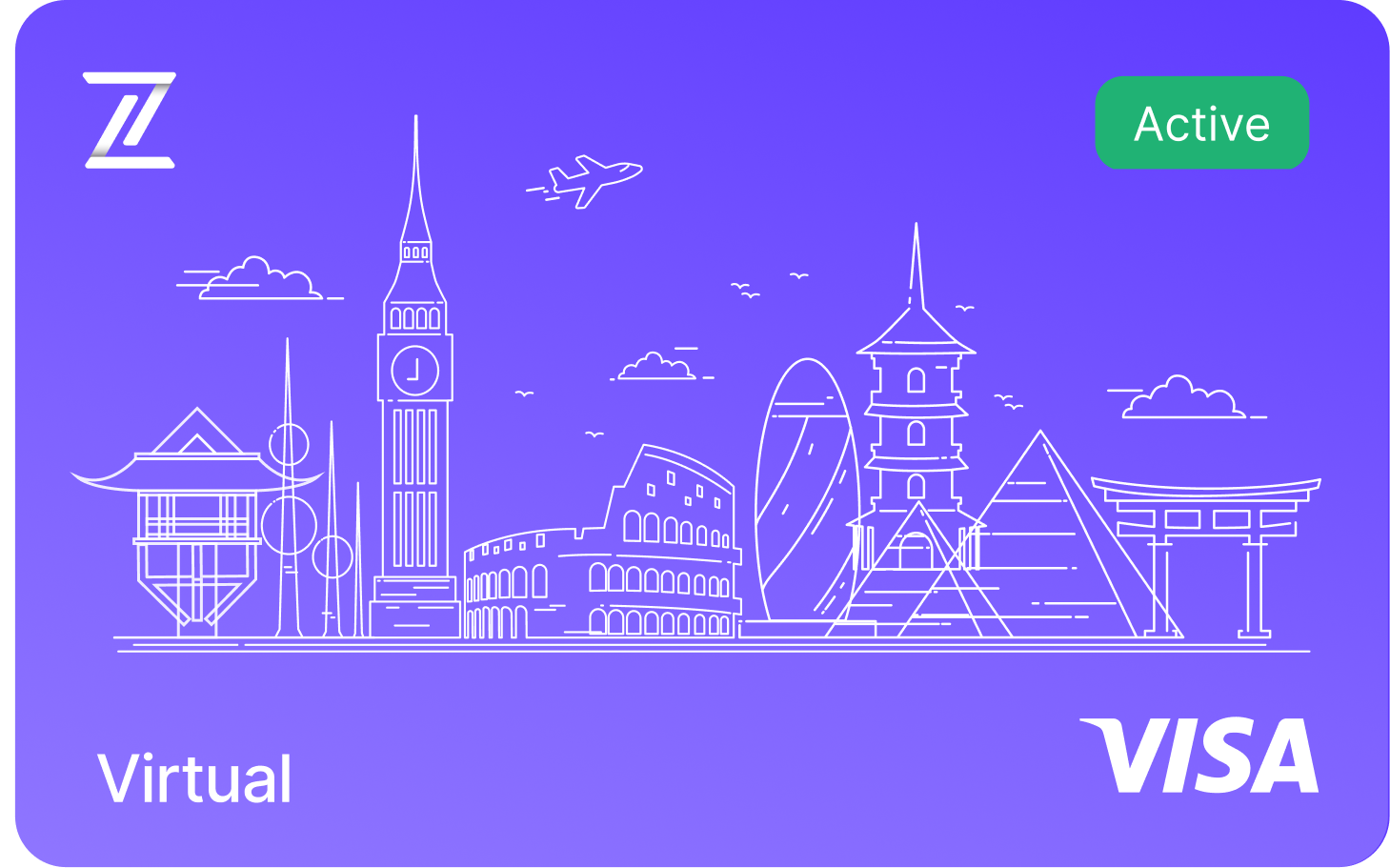
Fizen - Best Card for Ad Campaigns
The best card for SaaS, ChatGPT, Claude, Netflix, Spotify, Amazon, Google, Meta, Tiktok Ads. Spend USDT like cash globally.
See more in Ads & Marketing
- TikTok Ads with USDT, Up to 100 Cards, Zero FX on Ad Spend
- Pay for Google Ads with Crypto: USDT Card Guide (No Bank Required)
- 10 Best Crypto Cards for Media Buyers in 2026
- Fizen Card vs Bybit Card: Which USDT Card for Media Buyers? (2026)
See more in AI Tools
- Perplexity Pro for Crypto Holders, USDT to Visa, No Off-Ramp
- GitHub Copilot + USDT, The Dev Card That Actually Works on Stripe
- USDT Visa Card for ChatGPT Plus, $20 Should Cost $20
See more in Streaming
- Discord Nitro with Crypto, Boosts, Emojis, HD Streaming via USDT
- YouTube Premium + Google One, One USDT Card for All Google Billing
- Spotify Premium Without a Bank Account, USDT Visa That Auto-Renews
Last updated: April 1, 2026. Fizen is a crypto fintech company invested and backed byTetherThis article is for informational purposes only and does not constitute investment advice. Terms and conditions apply, see thefull T&C
Related guides
- Best Crypto Cards in 2026: An Honest Comparison of Fees, Cashback, Cus
- Fizen Card vs Bybit Card: Which USDT Card for Media Buyers? (2026)
- The best crypto card to pay smoothly in SE Asia: Fizen Adventure Card
Terms and conditions
- Information only. Fizen publishes this article to inform, not to sell. Nothing here is an offer or solicitation, and it is not financial, investment, legal or tax advice. Prices, rules and availability change; check official sources.
- For readers in the United States. This article provides information only. It is not an offer, solicitation or sale of any product or service, and it is not financial, investment, legal or tax advice. Fizen is not offered to US Persons.
- Full terms. Master Terms of Use, Privacy Policy and Disclaimer on the Fizen site.