
Crypto Tax for Freelancers: What You Owe on USDT Income (2026)
A plain-English 2026 guide to tax on USDT freelance income: income at receipt, what to record, and why stablecoin gains are usually negligible.

Getting paid in USDT does not make the income invisible to the tax office. In most countries, stablecoin you receive for work is ordinary income, taxed on its value in your local currency at the moment it lands. The good news is that the crypto-specific part, capital gains, is usually near zero for a stablecoin, because it holds at about one dollar. Here is what that means in practice. This is general information, not tax advice.
Income tax at the moment you receive it
When a client pays you USDT, the taxable event is the same as any freelance payment: you owe income tax on the local-currency value of what you received, on the day you received it. Whether it was dollars, euros or USDT does not change that. Record the amount, the date, and the value in your currency.
Why capital gains is usually nil
Capital gains only arise if the asset changes value between when you receive it and when you sell or spend it. Because USDT is designed to track one dollar, that difference is normally negligible, so for most freelancers the capital-gains part rounds to nothing. This is what makes stablecoins simpler than being paid in a volatile coin.
What to keep
- The transaction hash for every payment, which is your proof it happened.
- The value in your local currency on the date received, for income.
- Buy and sell records when you cash out, in case your jurisdiction wants them.
Rules differ by country, and some treat crypto records strictly. For anything sizeable, use accounting software or a professional who understands crypto.
Frequently asked questions
Do I pay tax on USDT freelance income?
In most countries, yes: it is income, taxed on its local-currency value when you received it, the same as any freelance payment.
Do I owe capital gains on USDT?
Usually almost nothing. Capital gains only apply to the change in value between receiving and spending, and a stablecoin holds at about one dollar.
What records should I keep?
The transaction hash, the local-currency value on the date received, and your buy and sell records when you cash out.
Is this tax advice?
No. This is general information. Tax rules vary by country, so consult a local professional for your situation.
Getting paid in USDT is simple; staying clean with it is simpler still. Track the value at receipt and keep the hash.
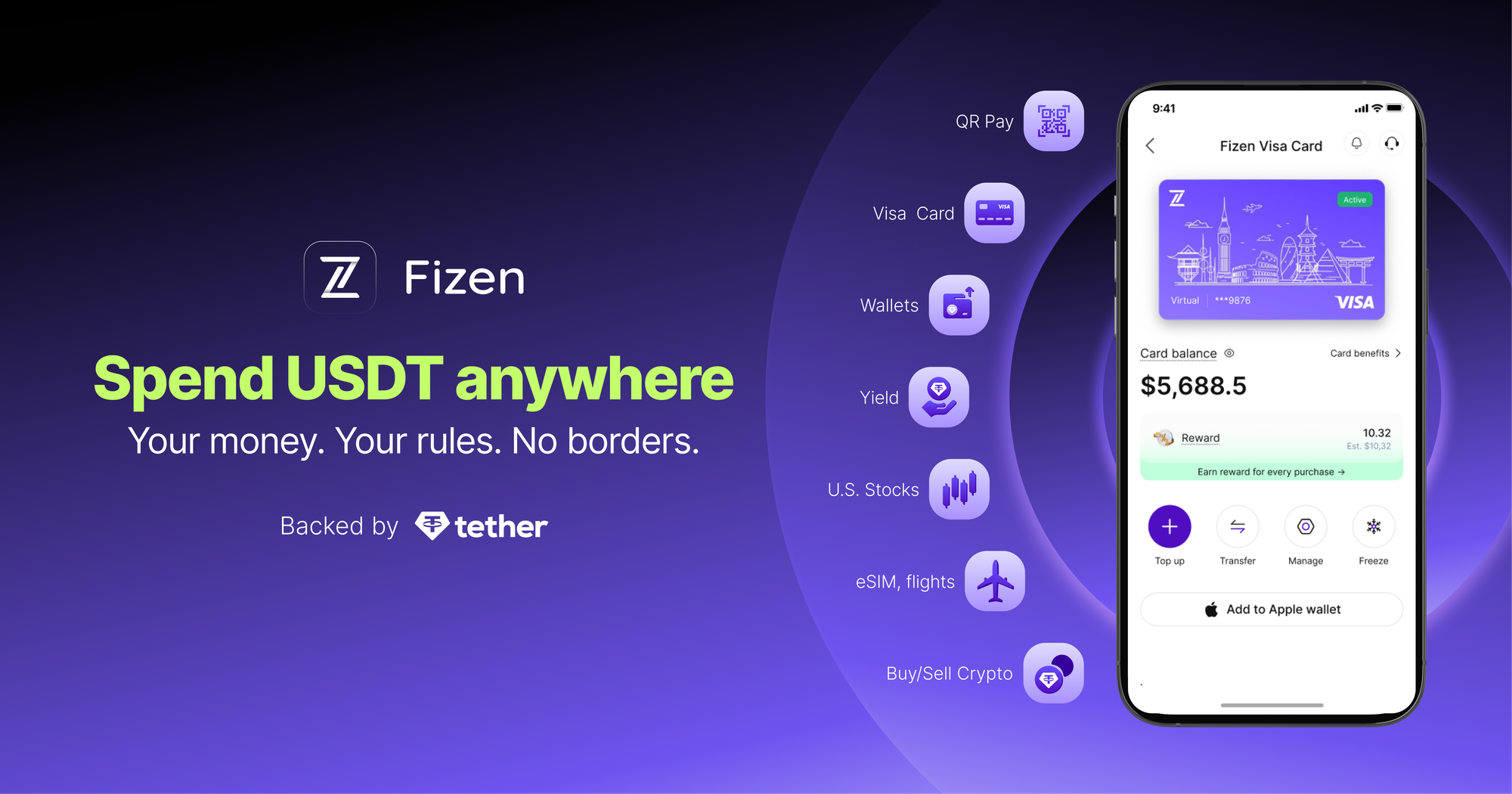
Fizen — send, spend and get paid in USDT
Buy and sell crypto with P2P in 64 countries or Transak, invest in tokenized US stocks, QR pay in Vietnam and the Philippines, and a Visa card. One app.
Fizen lets you hold your own balance and move it across borders. Availability of buy, sell, transfer, tokenized stocks and QR pay varies by country, and whether any individual transaction completes depends on the networks, counterparties and partners at the time. Fizen is backed by an investment from Tether. For more, see the Fizen Docs and Terms of Use. This article is for general information only and is not financial or tax advice.