Telegram Is Launching a Non-Custodial Crypto Wallet for 1 Billion Users
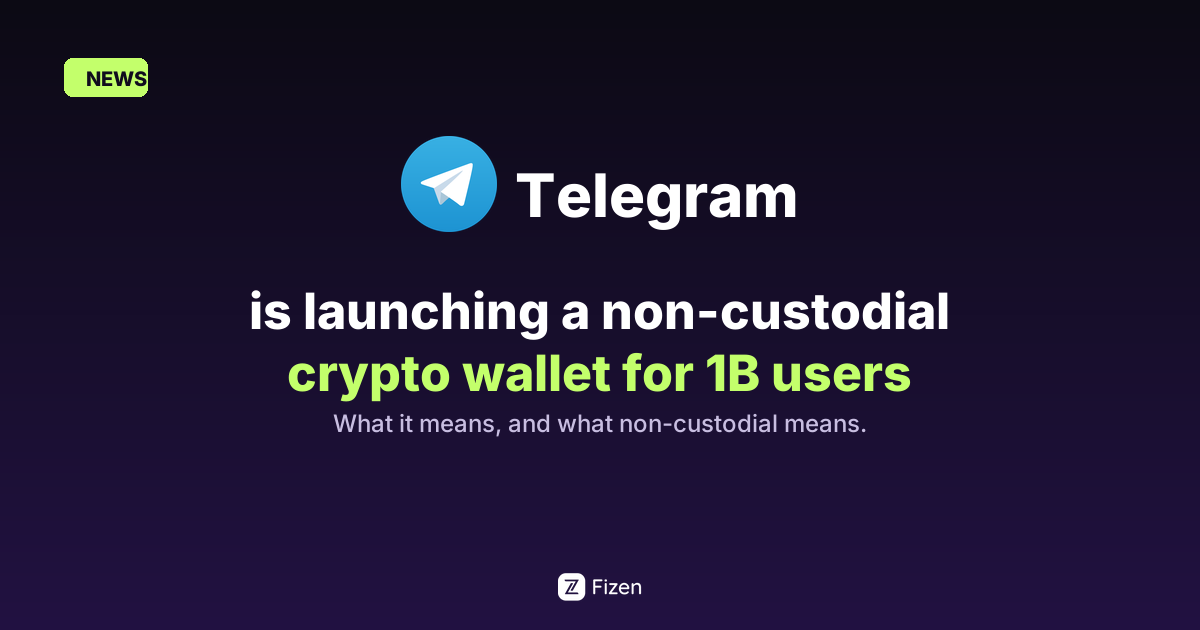
Telegram is putting a self-custody crypto wallet in front of a billion people. Here is what was announced, what non-custodial actually means, and why it matters.

Key takeaways
- Telegram founder Pavel Durov announced a native, non-custodial crypto wallet that will be built into every Telegram client this summer, for its 1 billion-plus users.
- Non-custodial means Telegram never holds your keys or your funds; you do. If Telegram is hacked or goes down, your crypto stays yours.
- The wallet runs on The Open Network (TON) and uses Gram, the token that rebranded from Toncoin on June 15, 2026.
- It is the largest push of self-custody to mainstream users so far, a strong signal that holding your own crypto is going mainstream.
Telegram is about to hand a self-custody crypto wallet to more people at once than anyone in history. Founder Pavel Durov said the messaging app will build a native, non-custodial wallet into every Telegram client this summer, putting it in front of over a billion users. Here is what was announced, what non-custodial actually means for your money, and why it is a bigger deal than another app launch. Reporting from BitcoinWorld and Crypto Briefing.
What Telegram announced
According to U.Today and LCX, Durov said Telegram will ship a native, non-custodial wallet embedded directly in the app this summer, letting its 1 billion-plus users send and receive crypto instantly with zero fees. It runs on The Open Network (TON), Telegram's blockchain infrastructure, and uses Gram, the token that rebranded from Toncoin on June 15, 2026 after a community vote.
Pavel Durov's announcement:
What "non-custodial" actually means
This is the part that matters. Non-custodial means Telegram never holds your private keys or your funds, you do. It is the opposite of leaving money on an exchange or an app that can freeze, delist or lose it. If Telegram gets hacked, goes down, or hits another regulatory fight, your crypto stays in your control because only you hold the keys. The flip side is responsibility: with self-custody, you are the one who must keep your recovery phrase safe.
Why this is a big deal
Self-custody has been a niche idea that most people never tried, because holding your own keys felt technical. Putting a non-custodial wallet inside an app a billion people already use every day changes that overnight. It is the largest single push of self-custody to mainstream users so far, and a clear signal of where crypto is heading: away from trusting platforms with your money, toward holding it yourself.
The honest caveats
A wallet is a starting point, not the whole story. Telegram's is built around TON and Gram, so it is one chain's ecosystem, and holding a token is not the same as being able to spend or send it in real life. Self-custody also means you carry the responsibility for your keys. The principle, though, that your money should answer to you and not a platform, is exactly right, and now a billion people are about to meet it.
The bigger picture for stablecoins
The same logic is why self-custody plus stablecoins is powerful. Holding your own USDT, a digital dollar that does not swing in value, in a wallet only you control, and being able to actually spend it, send it and live on it, is the practical version of what Telegram is introducing at scale. The direction is the same: your keys, your money, used in the real world.
Sources
Frequently asked questions
Is Telegram's crypto wallet custodial or non-custodial?
Non-custodial. Telegram never holds your keys or funds; you do. It runs on The Open Network (TON) and uses the Gram token.
When is Telegram's wallet launching?
Founder Pavel Durov said it will ship inside every Telegram client this summer, for the app's 1 billion-plus users.
What is Gram?
Gram is the token that rebranded from Toncoin on June 15, 2026 after a community vote. It powers Telegram's TON-based wallet.
What does non-custodial mean for me?
You hold your own keys, so your crypto cannot be frozen or lost by Telegram. You are also responsible for keeping your recovery phrase safe.
Does this mean self-custody is going mainstream?
It is the largest push of self-custody to mainstream users yet: a billion people getting a wallet where they, not a platform, hold the funds.
A billion people are about to hold their own keys. Self-custody is going mainstream, and that is the point.
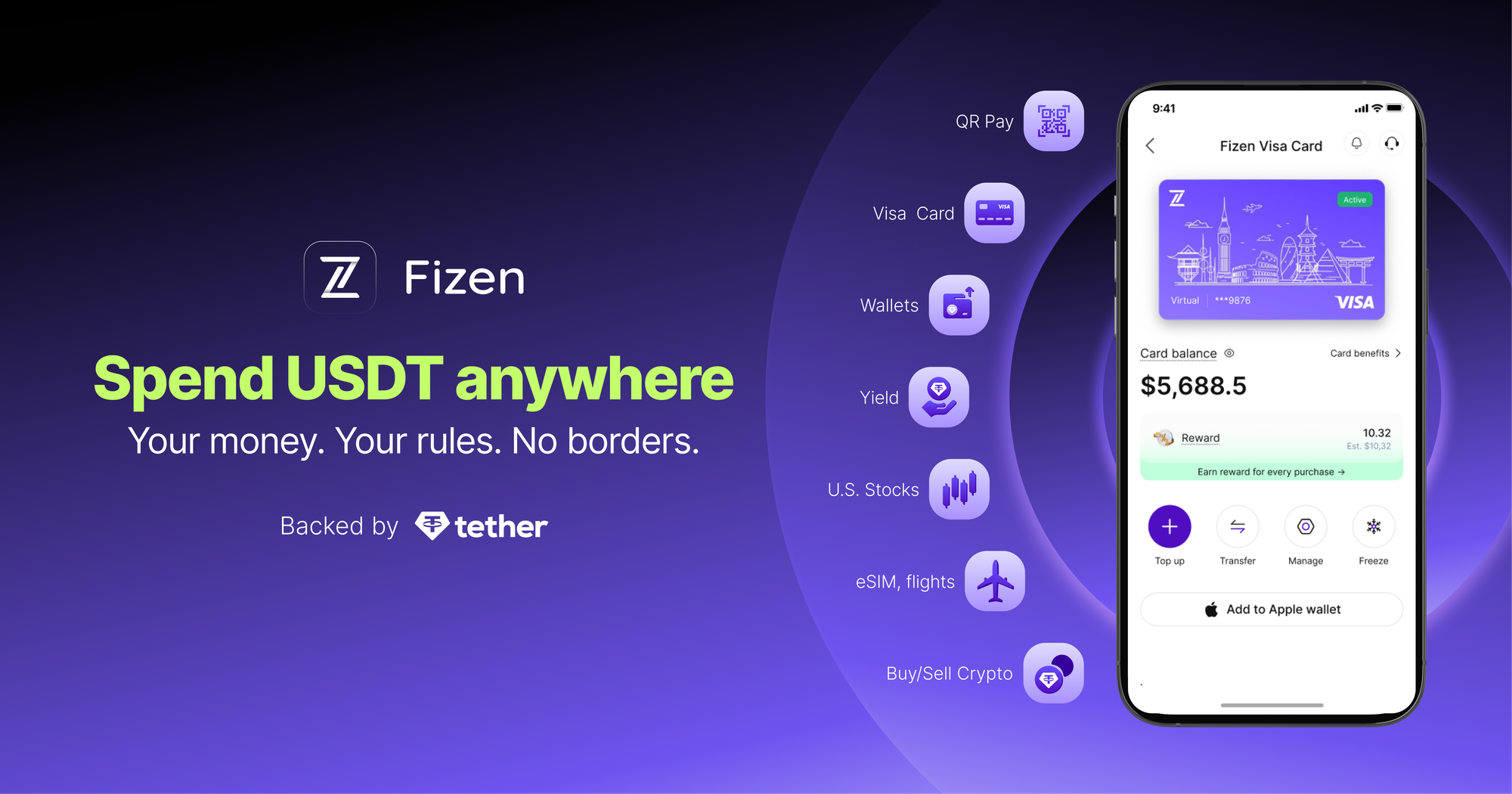
Fizen: self-custody, with real-world utility
Hold your own USDT in a self-custody super app, then actually use it: spend by Visa or QR, send across 64 countries, buy tokenized stocks, and get a travel eSIM. Your keys, your money. Backed by an investment from Tether.
Fizen is a self-custody super app: you hold your own balance. Backed by an investment from Tether. This is general information, not financial advice; do your own research.
Terms and conditions
- Information only. Fizen publishes this article to inform, not to sell. Nothing here is an offer or solicitation, and it is not financial, investment, legal or tax advice. Prices, rules and availability change; check official sources.
- For readers in the United States. This article provides information only. It is not an offer, solicitation or sale of any product or service, and it is not financial, investment, legal or tax advice. Fizen is not offered to US Persons.
- Full terms. Master Terms of Use, Privacy Policy and Disclaimer on the Fizen site.