USDT Vanished From EU Exchanges. It's Still in Your Wallet.
MiCA pushed USDT off EU exchanges on July 1, 2026, but delisting is not confiscation. What changed, what didn't, and how to keep USDT in self-custody.
The email arrived like a funeral notice. "We are ending support for USDT for EU customers." A freelancer in Lisbon, paid in Tether for two years, read it twice and felt the floor tilt: was the money simply gone? It was not. The headlines said "USDT banned in Europe," but the reality is narrower, and the difference is the whole story. Here is what MiCA actually changed on July 1, 2026, what it did not, and how to keep holding and using your USDT.
What MiCA actually did on July 1, 2026
MiCA, the EU's crypto rulebook, requires any fiat-backed stablecoin offered by a licensed European exchange to be issued by an EU-authorized e-money entity, fully reserved and redeemable at par. Tether never sought that e-money authorization for USDT. So to keep their licenses, regulated EU platforms removed USDT: Coinbase, Kraken, Binance's EU entity, Crypto.com, and Revolut all delisted or restricted it for European users by the July 1 deadline. Circle's USDC, which secured an EU e-money license, stays listed. That is why one stablecoin vanished from EU order books and the other did not.
🎁 Reader tip: Fizen is a self-custody app, so your USDT stays in a wallet only you control, no exchange listing required. Info only, not advice.
Download Fizen →Delisting is not confiscation: the distinction that matters
Here is the line the panic headlines blur. MiCA restricts what licensed exchanges may offer to EU users. It does not make it illegal for an individual to hold USDT. Per the same reporting, Europeans can still hold USDT in self-custody wallets and trade it on decentralized exchanges. In other words, the rule is about listing, not about your right to own the asset. If your USDT sat on a delisting exchange, the platform is closing that door, but the coins themselves are not seized. Self-custody is a door that a listing decision cannot close.
How to keep holding and using USDT in Europe
The clean answer to an exchange delisting is to stop depending on the exchange to hold your coins. A self-custody wallet keeps USDT in a balance only you control, so no listing rule and no company decision can strand it.
- Move it to self-custody: withdraw USDT from any delisting platform into a wallet where you hold the keys. Fizen, a crypto neobank for travelers and digital nomads, is one such self-custody app.
- Buy and sell in-app: Fizen supports buying and selling crypto across 64 countries and 136 cryptocurrencies, so you are not tied to a single exchange's EU status.
- Everyday spending: QR payments work in Vietnam and the Philippines today, plus a travel eSIM for nomads. Honest scope note: Fizen's QR is not an EU point-of-sale rail, so for now think of it as where you hold and move USDT, not a euro tap-to-pay replacement.
None of this is a way around the rules. It is simply the difference between renting space on someone else's exchange and holding your own asset. Individuals holding self-custody USDT are doing what the reporting says is still permitted; how you use it is your responsibility, so check what applies where you live.
Frequently asked questions
Is USDT banned in Europe?
No. MiCA prevents licensed EU exchanges from offering USDT to European users because Tether did not obtain EU e-money authorization, so platforms like Coinbase, Kraken and Revolut delisted it. Individuals can still hold USDT in self-custody wallets and trade it on decentralized exchanges.
Can I still hold USDT in the EU after MiCA?
Yes, per the reporting on the July 1, 2026 deadline. The restriction is on what regulated exchanges may list, not on personal ownership. A self-custody wallet keeps USDT in a balance you control, independent of any exchange's listing decision.
Why did Coinbase, Kraken and Binance delist USDT?
To keep their MiCA licenses. MiCA requires fiat-backed stablecoins offered to EU users to be issued by an EU-authorized e-money entity. Tether did not pursue that authorization for USDT, so licensed platforms removed it before the July 1, 2026 deadline.
How can I keep using USDT in Europe now?
Move it into self-custody so you are not reliant on a delisting exchange, then buy, sell and manage it there. Fizen holds USDT in a self-custody balance and supports buy and sell across 64 countries; its QR payments are currently Vietnam and Philippines only, not an EU checkout rail.
Is USDC a better choice under MiCA?
For trading on regulated EU exchanges, USDC stays listed because Circle secured an EU e-money license, while USDT did not. Which stablecoin suits you depends on where and how you transact, and this is information, not advice.
An exchange can delist a coin; it cannot delist self-custody. Hold your USDT where the keys are yours.
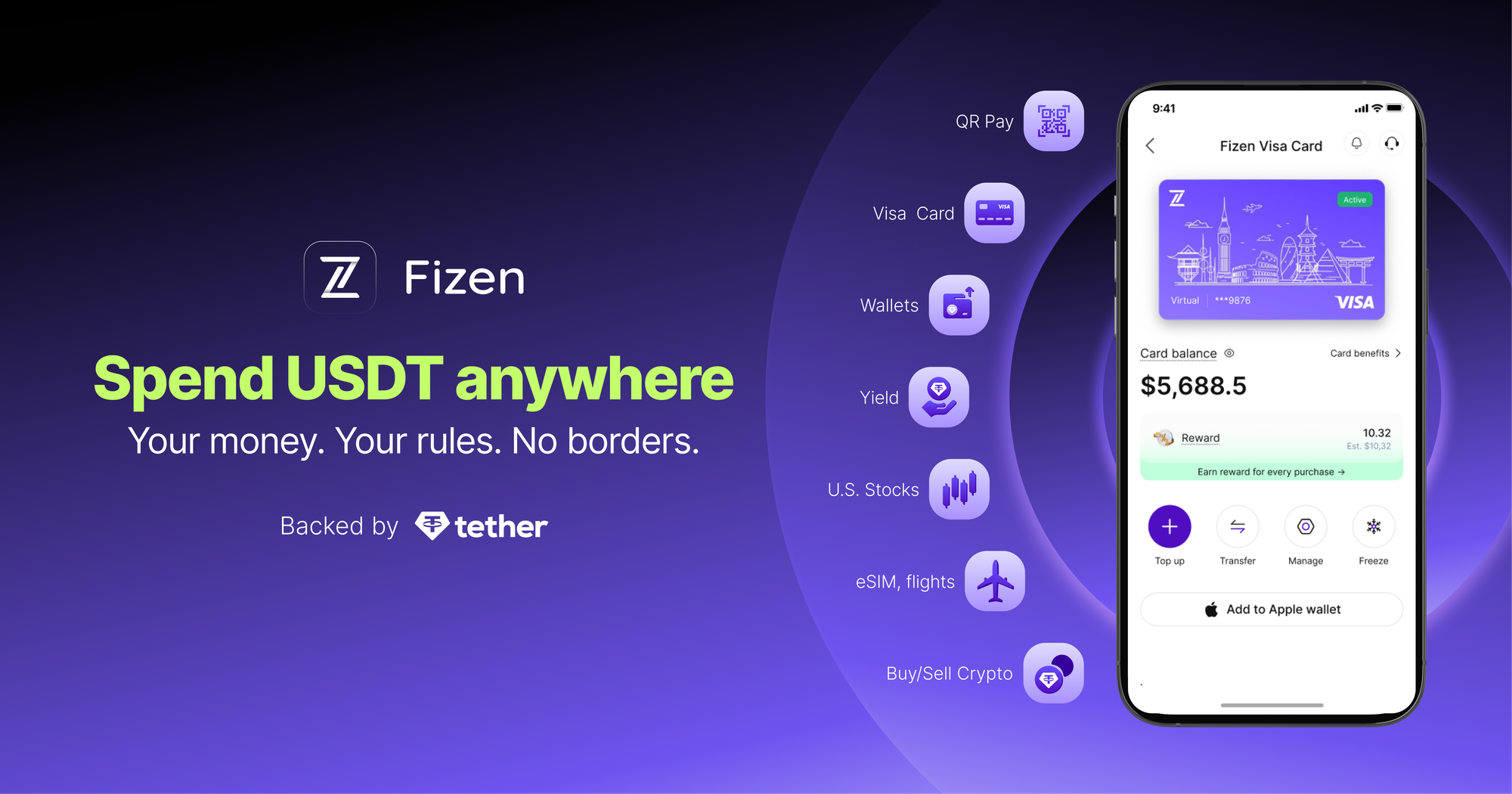
Fizen: crypto neobank for travelers & digital nomads
Hold USDT in self-custody, buy and sell crypto in 64 countries, QR pay in Vietnam & the Philippines, travel eSIM, all from a balance you control.
Fizen is a self-custody app, so you hold your own balance. This article explains publicly reported regulatory changes and is for information only, not legal, tax, or financial advice; check the rules that apply where you live. Fizen is backed by Tether, the largest digital-asset company and issuer of USDT. For more, see the Fizen Docs and Terms of Use.
Related guides
- Stablecoins 101: How USDT Works
- Crypto On-Ramp and Off-Ramp Explained
- Fizen Wallet: Self-Custody Explained
Terms and conditions
- Information only. Fizen publishes this article to inform, not to sell. Nothing here is an offer or solicitation, and it is not financial, investment, legal or tax advice. Prices, rules and availability change; check official sources.
- For readers in the United States. This article provides information only. It is not an offer, solicitation or sale of any product or service, and it is not financial, investment, legal or tax advice. Fizen is not offered to US Persons.
- Full terms. Master Terms of Use, Privacy Policy and Disclaimer on the Fizen site.