
Revolut Is Delisting USDT in Europe on August 31. What It Means, and How to Keep Yours
Revolut is removing USDT for European users by August 31, auto-converting what's left to fiat. The MiCA reason, what it means, and how to keep your USDT in self-custody.

Key takeaways
- Revolut will delist Tether's USDT for customers in the EEA and Switzerland, completing the process by August 31, 2026.
- New USDT deposits stop around July 30; you can sell or withdraw until August 31, after which any leftover USDT is automatically converted to fiat.
- The trigger is MiCA: Tether chose not to seek an EU stablecoin authorization, and MiCA requires significant issuers to hold most reserves in EU bank deposits.
- USDT is not banned in Europe. It is being delisted by a platform. If you self-custody, no exchange or app can delist or force-convert your USDT.
Revolut, one of Europe's biggest fintech apps, is removing Tether's USDT for users across the European Economic Area and Switzerland, with the change fully in effect by August 31, 2026. For the millions of Europeans who hold USDT on the app, the important detail is what happens if they do nothing: any balance left after the deadline is automatically converted to fiat currency. Here is what is actually happening, why, and how to keep your USDT if you want to.
What Revolut announced
According to reporting from Cryptopolitan and Yahoo Finance, Revolut is winding USDT down in stages for EEA and Swiss customers. New USDT deposits stop at the end of July, and users can sell or withdraw the token to an external wallet up to August 31. After that date, any remaining USDT is converted to fiat at prevailing rates. Crucially, this applies only to the EEA and Switzerland; USDT support on Revolut continues unchanged elsewhere.
Revolut's own statement on the MiCA change:
From 1 July, strict MiCA regulations mean unlicensed crypto platforms can no longer serve EU customers. Revolut is MiCA-authorised... If you invest in crypto, make sure to switch to a trusted partner before the deadline.
— Revolut (@Revolut) July 2026
Why is this happening?
It comes down to MiCA, the EU's Markets in Crypto-Assets regulation, which moved into full enforcement on July 1. MiCA requires significant stablecoin issuers to hold a large share of reserves as EU bank deposits and to obtain an EU authorization. Tether chose not to seek that authorization, so regulated European venues have been steadily dropping USDT to stay compliant. Revolut is among the last major ones to do so. Separately, CoinDesk reports Tether faces a parallel two-year countdown in the United States under the GENIUS Act, adding pressure on both sides of the Atlantic.
What it means if you hold USDT on Revolut
If you are in the EEA or Switzerland and leave USDT on Revolut past August 31, the app will convert it to fiat for you, at whatever rate applies that day, whether or not that is the moment you would have chosen to sell. You are not losing money to a ban; you are losing the choice of when and whether to stay in USDT. For anyone using USDT as a stable dollar store of value, that automatic conversion is the part to plan around.
The bigger picture: this is a custodial problem, not a USDT problem
Step back and the pattern is clear. USDT is not disappearing from Europe; individuals can still hold and use it. What is happening is that platforms which hold USDT on your behalf, exchanges and apps, are the ones forced to delist it under local rules. When a custodian delists or auto-converts, it is making the decision about your money for you. The single thing that removes that risk is self-custody: if your USDT sits in a wallet whose keys you hold, no exchange, app or regulator-driven delisting can convert it or take it off the shelf. You decide.
How to keep your USDT before August 31
- Do not wait: Revolut lets EEA and Swiss users withdraw USDT to an external wallet until August 31. After that, the choice is made for you.
- Move it to self-custody: withdraw your USDT to a wallet where you hold the keys, so no future delisting can touch it. A self-custody app is one way to do this.
- Then keep using it: in self-custody you can still spend, send or cash out USDT on your terms, rather than having it converted on a platform's schedule.
Sources
Frequently asked questions
Is USDT banned in Europe?
No. USDT is being delisted by platforms like Revolut to comply with MiCA, but individuals can still hold and use it, especially in self-custody. It is a platform decision, not a ban on ownership.
What happens to my USDT on Revolut after August 31?
If you are in the EEA or Switzerland and leave it there, Revolut automatically converts it to fiat at prevailing rates. Withdraw it beforehand if you want to keep it as USDT.
Why is Revolut delisting USDT?
Because Tether did not seek an EU stablecoin authorization under MiCA, and MiCA requires significant issuers to meet reserve and licensing rules. Regulated European venues are dropping USDT to stay compliant.
Does this affect USDT outside Europe?
No. The delisting applies to the EEA and Switzerland. USDT support on Revolut continues unchanged in other regions.
How do I keep my USDT?
Withdraw it to a self-custody wallet you control before August 31. In self-custody, no exchange or app can delist or force-convert it.
A platform can delist your dollars. A wallet you control cannot.
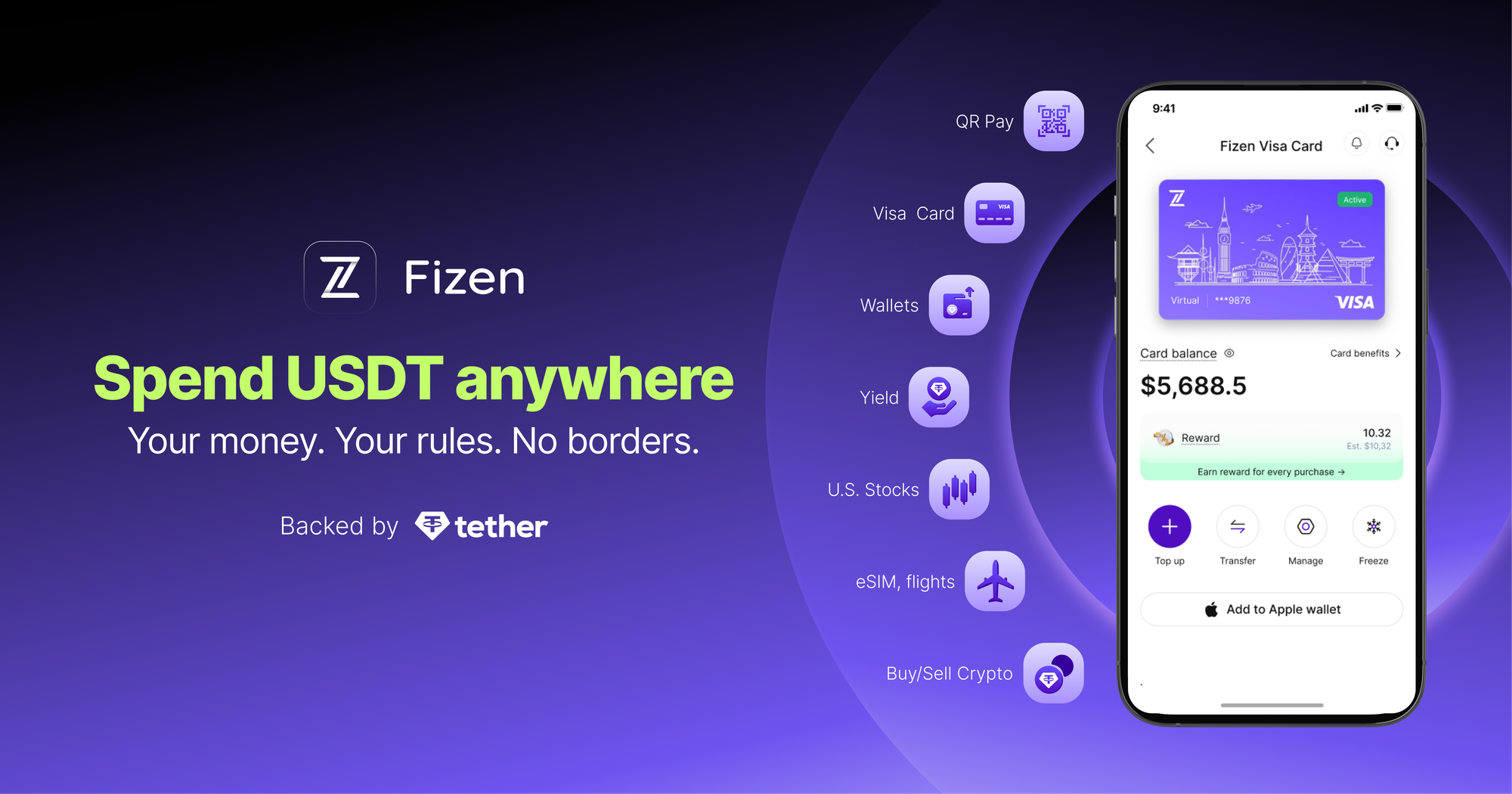
Fizen: hold your own USDT, no platform can delist it
A self-custody super app: your USDT lives in a wallet only you control, so no exchange or app can delist it or force-convert it. Spend by card or QR, send across 64 countries, and more. Backed by an investment from Tether.
Fizen is a self-custody super app: you hold your own balance. Backed by an investment from Tether. This is general information, not financial advice; do your own research and follow your local rules.
Terms and conditions
- Information only. Fizen publishes this article to inform, not to sell. Nothing here is an offer or solicitation, and it is not financial, investment, legal or tax advice. Prices, rules and availability change; check official sources.
- For readers in the United States. This article provides information only. It is not an offer, solicitation or sale of any product or service, and it is not financial, investment, legal or tax advice. Fizen is not offered to US Persons.
- Full terms. Master Terms of Use, Privacy Policy and Disclaimer on the Fizen site.