Stablecoin Supply Just Hit $322 Billion. Almost None of It Gets Spent.
Stablecoins just hit $322 billion, more than the FX reserves of the UK, Canada, UAE, and 92 other countries. And almost none of it ever buys a coffee. Why holding got easy, spending stayed hard, and what the next $900B implies.

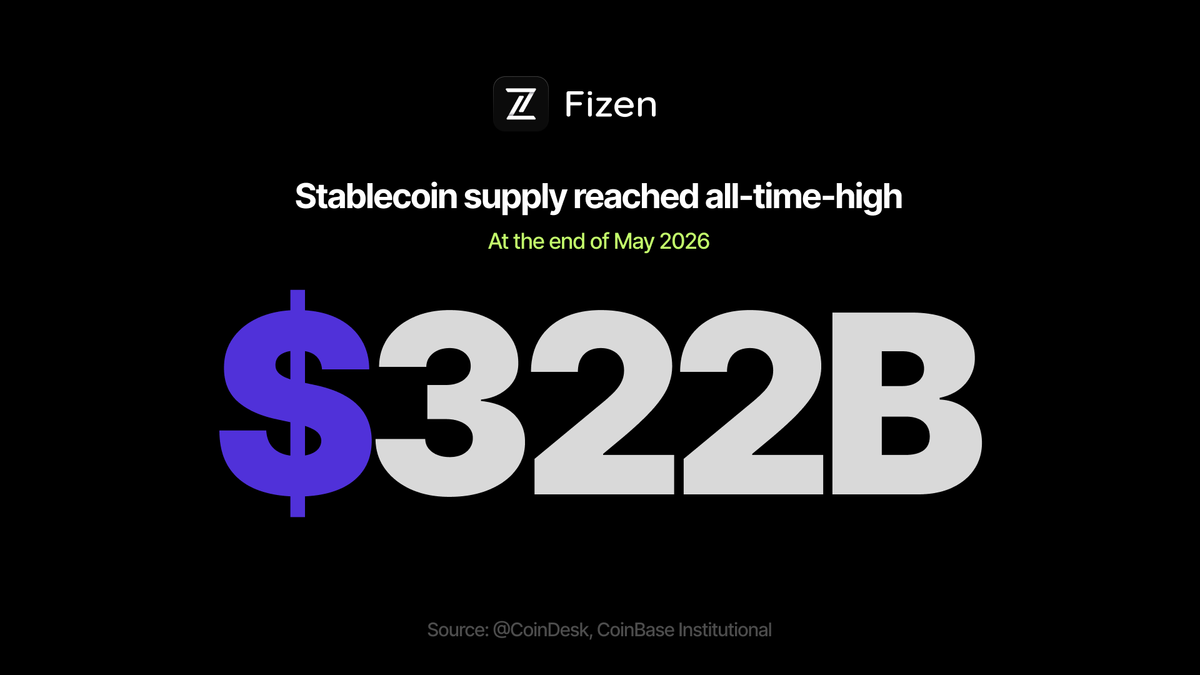
The total value of stablecoins in circulation just passed $322 billion. That is a record. It is also more money than the foreign exchange reserves of 95 entire countries, including the UK, Canada, and the UAE.
Here is the part nobody puts on a chart: almost none of it gets spent on anything real.
The number behind the number
According to CoinDesk, stablecoin market cap hit roughly $322 billion at the end of May 2026. Tether (USDT) makes up about 58% of that. USDC sits around 24%. Together those two are more than 80% of every digital dollar on-chain.
Most coverage frames this as a liquidity story. More stablecoins means more dry powder for trading, more collateral for DeFi, more settlement rails for institutions. All true.
But step back and the picture is stranger. There are hundreds of billions of dollars sitting in wallets, fully liquid, pegged to the dollar, and the overwhelming majority of it never buys a coffee, a flight, a subscription, or a single thing in the physical world.
The holding problem is solved. The spending problem is not.
Why holding got easy and spending stayed hard
Getting stablecoins is trivial now. You can buy USDT on any exchange, receive it from a client, earn it from a job, or swap into it in seconds. Cash App just turned on USDC for nearly 60 million users. The on-ramps are everywhere.
Spending is where it falls apart. If you are holding USDT and you want to use it like money, your options have historically been:
1. P2P. Sell your USDT to a stranger for local currency, then spend that. It works until your bank flags the inbound transfer, or the counterparty disappears, or you eat a bad rate. Plenty of people have had accounts frozen over exactly this.
2. Cash out to a bank. Move from exchange to bank account, wait for settlement, then spend. Slow, and it assumes you have a bank that plays nicely with crypto. Many do not.
3. Hold and wait. The most common choice. Leave it in the wallet and tell yourself you will figure out spending later.
None of these is "spend your dollars like dollars." That gap, between having digital cash and actually using it, is the real story behind the $322 billion.
What spending stablecoins directly actually looks like
A USDT-funded Visa card closes the gap by removing the conversion step you do manually today. Instead of selling USDT to a person or a bank first, the card does it at the moment of payment.
The flow is simple:
You load USDT onto a Fizen Card. When you tap at any merchant that takes Visa, the dollar value leaves your balance and the merchant gets paid in their local currency. You keep whatever USDT you did not spend. No P2P counterparty. No bank account required. No 24-hour settlement wait.
It works online and in person, including Apple Pay and Google Pay, and anywhere the Visa network reaches. The same wallet sits behind a virtual card you can use in minutes and a physical card you can tap in a store.
That is the entire idea. Stablecoins in, spending out, with nothing manual in the middle.
The honest version: who this is and isn't for
This is worth doing if you actually hold stablecoins and keep hitting the wall when you try to use them. Freelancers paid in USDT. People in markets where a local USD card gets declined on foreign subscriptions. Anyone tired of running a P2P trade every time they need to buy something.
It is not for you if you do not hold stablecoins in the first place, or if your local bank card already does everything you need without friction. No tool fixes a problem you do not have.
And to be clear about cost: the card is not free. There is a price to create it and a monthly fee. What you are buying is the removal of P2P friction, FX surprises, and the "card declined" screen, not a magic zero-cost wallet.
Why $322 billion is the signal, not the headline
Records get broken constantly in crypto. The reason this one matters is what it implies about direction. Coinbase Institutional projects the stablecoin market could reach roughly $1.2 trillion by 2028, and their thesis is not about trading. It is payments, payroll, remittances, and settlement.
In other words, the growth is moving toward spending, not speculation. The $322 billion sitting mostly idle today is the demand. The infrastructure that lets people actually spend it is the part still being built.
If you are holding stablecoins and waiting to "figure out spending later," later is a reasonable time to start. The dollars are already in your wallet. The only thing missing is a way to tap them.

Fizen Virtual Visa Card
The best card for SaaS, ChatGPT, Claude, Netflix, Spotify, Amazon, Google, Meta, Tiktok Ads. Spend USDT like cash globally.
See more in Guides & Comparisons
- How to Pay for Claude Pro with a USDT Card
- How to Pay for Claude Code, ChatGPT & AI Tools with Fizen Card (Developer's Guide)
- Best Crypto Card for AI Tools in 2026
- 0% Fee. Claude, ChatGPT, Netflix, Amazon. Every Transaction.
Trust signals: Fizen is backed by Tether and established in Switzerland and Hong Kong. The Fizen Visa Card is issued by DBS Bank (Singapore) via a MAS-licensed provider. Stablecoin figures cited from CoinDesk (May 2026) and Coinbase Institutional. This article is informational and not financial advice.