KAST vs EtherFi: The ToS Feud, the $500 Cap, and What It Means (2026)
The KAST vs EtherFi feud explained fairly: what the fine print said, what changed on July 7, and the 3-line ToS checklist for any card.

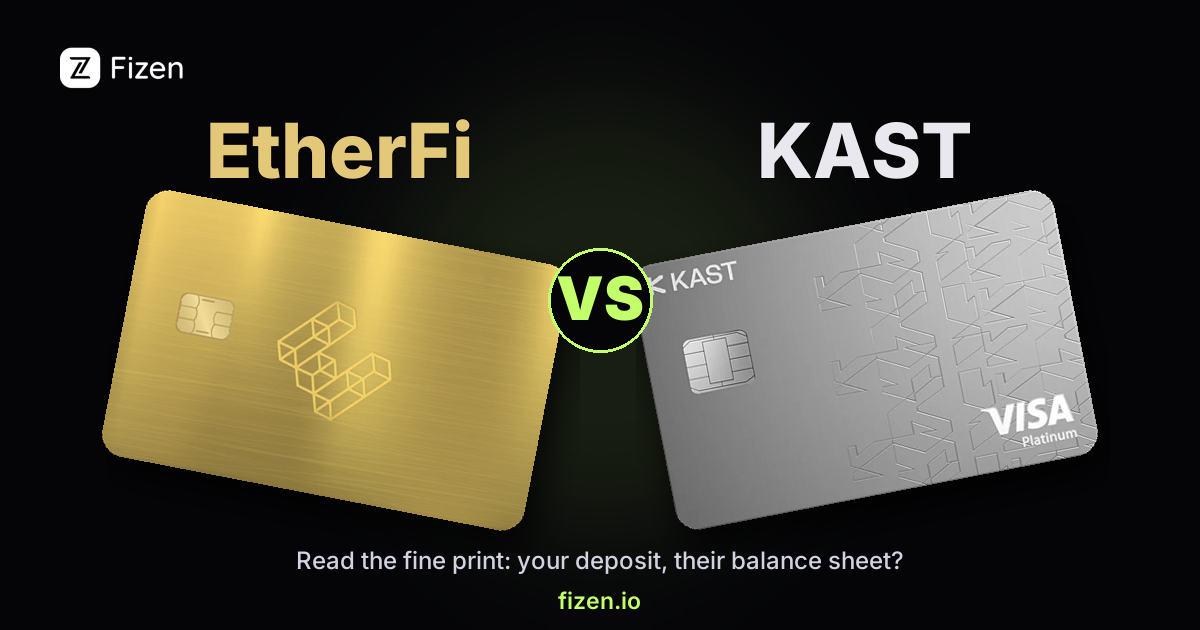
It started, as crypto feuds do, with a post. On July 5, EtherFi CEO Mike Silagadze publicly called rival card issuer KAST a "Kasthole scammer", and the receipts he pointed at were not rumors; they were KAST's own Terms of Service. Within 48 hours the terms had been updated, the timelines were full of screenshots, and thousands of cardholders were reading their fine print for the first time. Here is what the fight is actually about, and what it means for anyone with stablecoins on any card or app.
Kasthole scammer
— Mike Silagadze (@MikeSilagadze) July 7, 2026
Above: EtherFi CEO Mike Silagadze's post on X that set off the feud. View the original on X.
What the fine print said
- Deposits classified as sales: KAST's terms treat stablecoins you top up as SOLD to the company; you hold a spending balance on their books, not your coins.
- A $500 liability cap: the terms cap KAST's total liability to a user at $500, regardless of how much the account holds.
- The July 7 update: after the backlash, KAST revised its terms and reaffirmed that unspent balances are redeemable. The structural framing, deposits as sales, did not change.
Deposits as sales: what that actually means
Put concrete numbers on it. Say you top up 2,000 USDT to spend on a trip. Under a deposits-as-sales structure, you have not handed the company your coins to hold for you; per the terms you have SOLD them to the company in exchange for a 2,000 spending balance on its books. Day to day that feels identical. The difference only shows up in the edge cases: if the company has trouble, you are a creditor holding a claim, not an owner holding an asset, and a liability cap like $500 tells you how far that claim is contractually guaranteed to go. That is the whole reason the fine print suddenly mattered to people who had never read it.
Both sides of the feud, fairly
The EtherFi side lands because the documents say what they say; this blog flagged the same custody catch in our KAST review before the feud broke. The KAST side deserves fairness too: deposits-as-sales is how many prepaid programs are legally structured, the update was fast, and daily spending on KAST continues to work as advertised. EtherFi, meanwhile, has faced its own pointed questions this cycle, including fraud claims about card data that its CEO publicly denied. In a feud between two custodial issuers, neither side is arguing for your keys.
| When you top up… | KAST | EtherFi | Self-custody (e.g. Fizen) |
|---|---|---|---|
| Do the coins stay yours? | Treated as sold to the company (per its ToS) | Markets non-custodial; you keep ownership until you spend | Yes; they sit in a wallet only you control |
| Stated liability cap | $500 (per its ToS) | See its own terms | Not applicable; you hold the keys |
| Withdraw unspent balance? | Yes (reaffirmed in the Jul 7 update) | Yes | Anytime; it never left your wallet |
The lesson that outlives the drama
Nobody reads terms of service until a CEO makes them go viral. The durable takeaway is a three-line checklist for ANY card or wallet app: (1) when I top up, do I still own the asset, or did I just sell it to the issuer? (2) what is the issuer's maximum liability to me? (3) can I withdraw the unspent balance, on my timeline? With self-custody apps the first answer is structural: the balance sits in your wallet until the moment you spend, so the liability question barely arises. That is the quiet argument self-custody neobanks like Fizen, built for travelers and digital nomads with Tether's backing on the record, have been making all along.
Sources
- Mike Silagadze (@MikeSilagadze), CEO of EtherFi; the "Kasthole scammer" post on X
- raagulanpathy (@raagulanpathy), founder of KAST
- “KAST faces backlash over Terms of Service after EtherFi CEO feud”; Crypto Briefing
Frequently asked questions
What is the KAST vs EtherFi feud about?
EtherFi's CEO publicly attacked KAST over Terms of Service that classify user deposits as sales to the company with liability capped at $500. KAST updated its terms on July 7, reaffirming redemption of unspent balances, but kept the deposits-as-sales framing.
Does KAST really own your deposits?
Per its terms, stablecoins you top up are treated as sold to KAST in exchange for a spending balance. That is a custody structure many prepaid programs use; the controversy is about how few users realized it.
Is EtherFi's card different?
EtherFi markets a different structure, but it is also an issuer with its own terms, and it has faced its own public questions this cycle. Read any issuer's custody and liability clauses, not their tweets.
What should users check in any crypto app's ToS?
Three lines: do deposits remain your asset or become the issuer's; what is the liability cap; can unspent balances be withdrawn freely. Self-custody apps make the first question structural rather than contractual.
What does “deposits as sales” mean in plain English?
It means that when you top up, the terms treat you as having sold your stablecoins to the company in exchange for a spending balance, rather than the company holding your coins for you. You end up with a claim on the company, not ownership of the coins.
Is a self-custody card safer?
Self-custody changes the structure: the balance stays in a wallet you control until the moment you spend, so “who owns the deposit” isn’t a contract question. The trade-off is that you are responsible for your own keys and security. Which fits you depends on your needs; this is information, not advice.
The feud will scroll away; your fine print will not. Hold your balance in a wallet that answers to you.
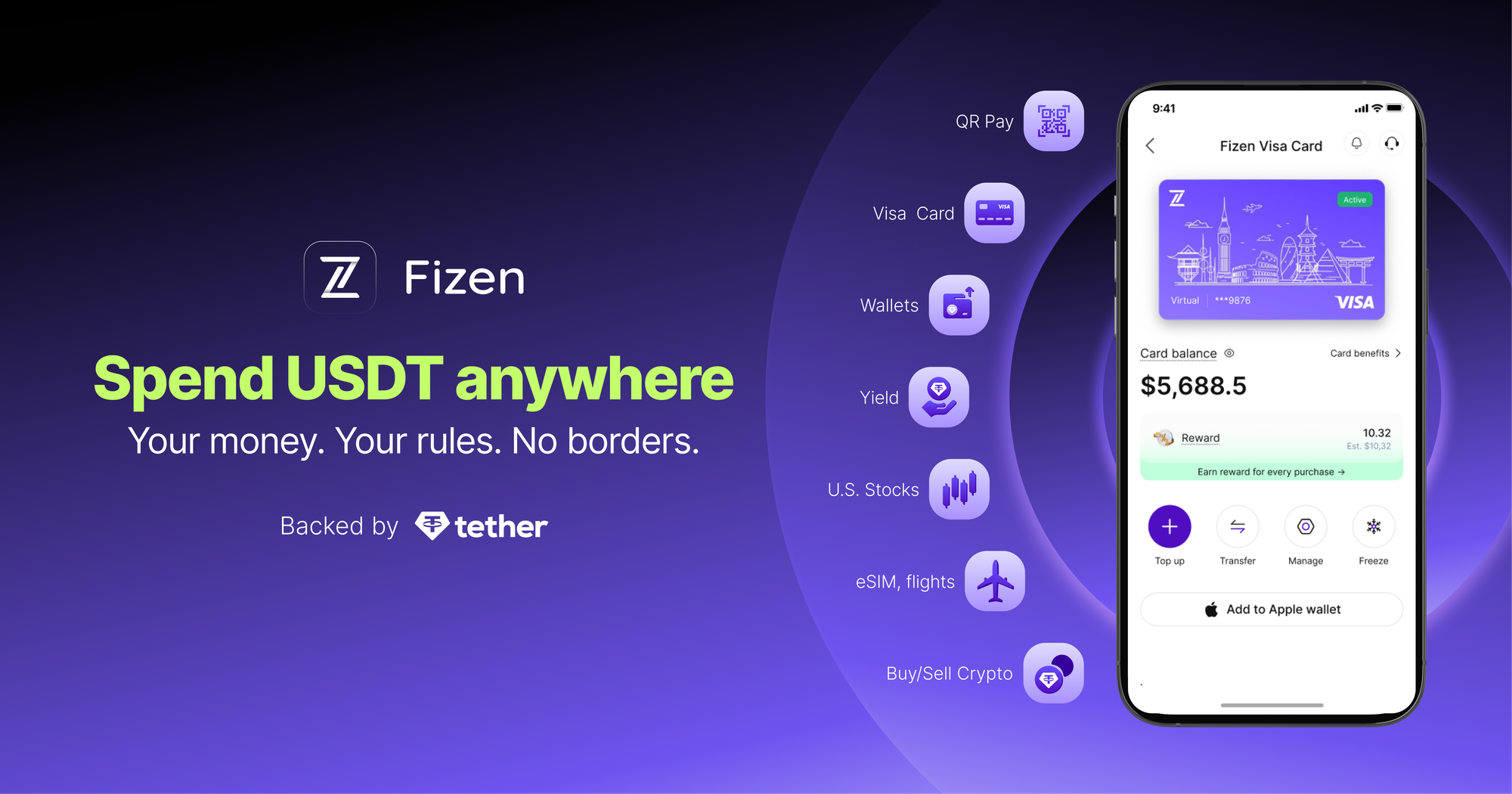
Fizen; crypto neobank for travelers & digital nomads
QR pay across Vietnam and the Philippines, buy and sell crypto in 64 countries, travel eSIM; all from a self-custody balance you control.
Fizen is a self-custody app, so you hold your own balance. Whether any individual transaction completes depends on the networks and counterparties involved at the time. Fizen is backed by Tether, the largest digital-asset company and issuer of USDT. For more, see the Fizen Docs and Terms of Use. This article is for informational purposes only and is not financial advice.
Related guides
- KAST Card Review 2026 (we flagged the custody catch)
- Fizen vs RedotPay vs KAST
- KYC 101: Verification vs Custody
Terms and conditions
- Information only. Fizen publishes this article to inform, not to sell. Nothing here is an offer or solicitation, and it is not financial, investment, legal or tax advice. Prices, rules and availability change; check official sources.
- For readers in the United States. This article provides information only. It is not an offer, solicitation or sale of any product or service, and it is not financial, investment, legal or tax advice. Fizen is not offered to US Persons.
- Full terms. Master Terms of Use, Privacy Policy and Disclaimer on the Fizen site.