How to Send Money Abroad Without a Bank Account (2026)
You do not need a bank account to send money across borders. Here is how to do it with USDT in 2026, and how your recipient receives it.
Key takeaways
- You can send money internationally without a bank account by holding and sending USDT from a wallet you control.
- It settles in minutes and does not depend on a bank supporting your corridor.
- The receiver can take it to their bank, a mobile wallet, or as cash via local peer-to-peer.
- Agree the blockchain network with the receiver and send a small test first.
Plenty of people cannot use a bank to send money abroad: they do not have an account, their bank blocks the corridor, or the fees make small transfers pointless. The good news is a bank account is not required to move money across borders anymore. Here is how to send money without one in 2026, and how the person on the other end actually receives it.
How can you send money without a bank account?
By holding your money as USDT, a digital dollar, in a self-custody wallet, and sending it to the recipient's wallet. It moves in minutes for a small network fee, and neither side needs a bank to make the transfer itself happen. You fund the wallet with cash via peer-to-peer, a card, or by receiving USDT you were paid.
How does the receiver get their money?
- To a bank: they sell the USDT for local currency via peer-to-peer and receive a bank transfer, if they have an account.
- To a mobile wallet: many corridors cash out straight to a mobile-money or e-wallet balance, no bank needed.
- As cash: they sell to a local buyer or dealer for cash, common in places where banking is thin.
| You have | You can still |
|---|---|
| No bank account | Send USDT from a wallet you control |
| A blocked corridor | Route around it with USDT |
| Only a phone | Cash out to mobile money |
Staying safe
Confirm the blockchain network before sending, test with a small amount for any new recipient, and use escrow when cashing out via peer-to-peer. You hold your own balance, so no bank or platform can freeze the transfer mid-way.
Frequently asked questions
Can I send money abroad without a bank account?
Yes. Hold your money as USDT in a self-custody wallet and send it to the recipient's wallet; neither side needs a bank for the transfer itself.
How does the receiver get the money without a bank?
They cash out USDT to a mobile wallet or to cash via local peer-to-peer, or to a bank if they have one.
How do I fund the wallet without a bank?
With cash via peer-to-peer, a card, or by receiving USDT you were paid for work.
Is it cheaper than a bank?
Usually far cheaper, around 0.5 to 1.5 percent versus 4 to 7 percent, and it settles in minutes.
What is the main risk?
Sending on the wrong blockchain network. Confirm the network and send a small test first.
A bank account should not be the thing standing between you and your family. Send money without one.
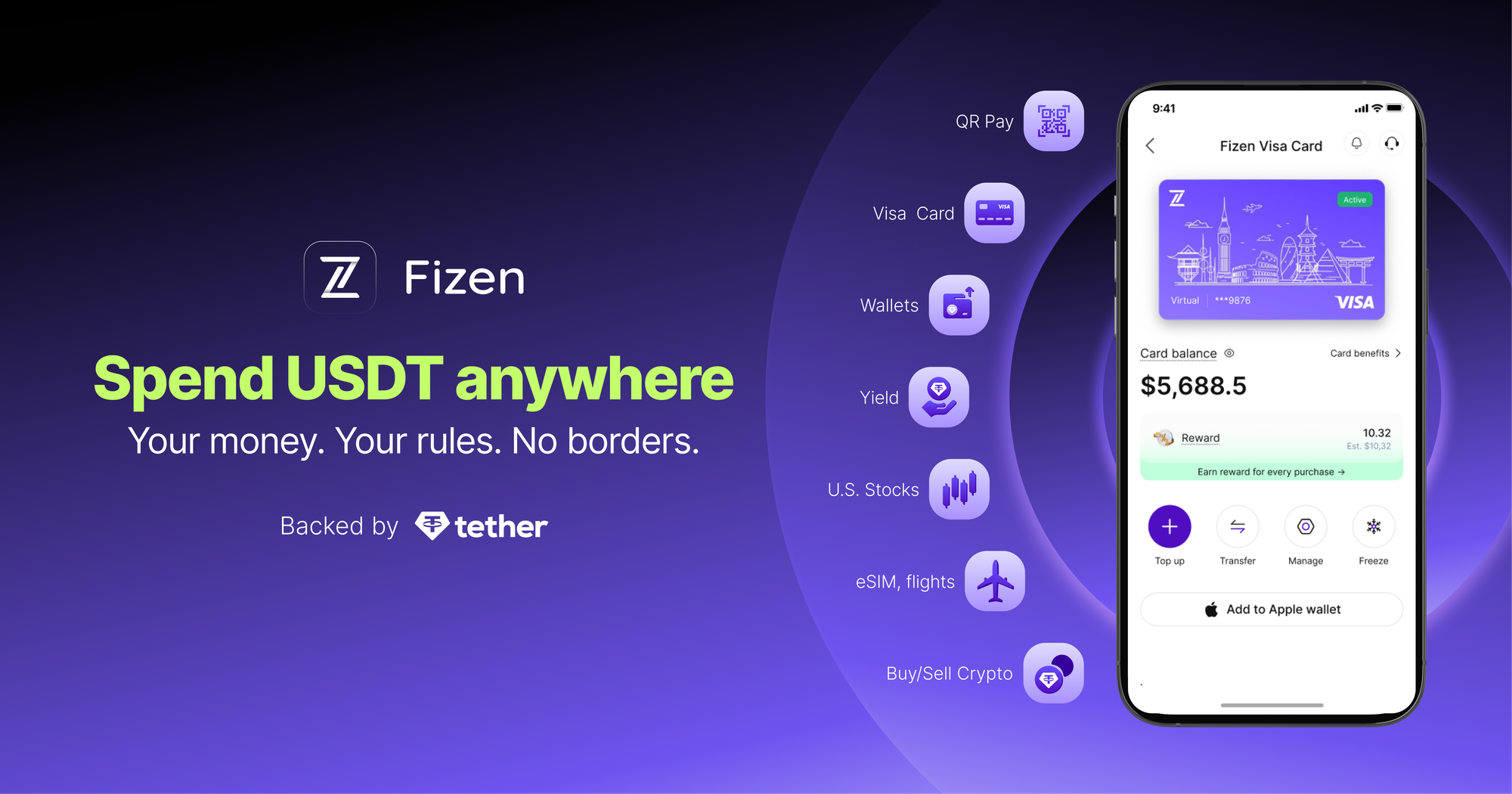
Fizen: send money across 64 countries in USDT
Move money across borders from one self-custody USDT balance: instant, low-fee, and cashed out to a bank, a mobile wallet or a Visa card on the other side. Backed by an investment from Tether.
Fizen is a self-custody app: you hold your own balance, and availability, corridors and payout options vary by country and partner at the time. Backed by an investment from Tether. This is general information, not financial advice.
Terms and conditions
- Information only. Fizen publishes this article to inform, not to sell. Nothing here is an offer or solicitation, and it is not financial, investment, legal or tax advice. Prices, rules and availability change; check official sources.
- For readers in the United States. This article provides information only. It is not an offer, solicitation or sale of any product or service, and it is not financial, investment, legal or tax advice. Fizen is not offered to US Persons.
- Full terms. Master Terms of Use, Privacy Policy and Disclaimer on the Fizen site.