Fizen at Tether's Global Gathering in Singapore: Aiming for a Global Stablecoin Neobank
Tether flies its portfolio companies in once a year. Fizen founder Leo Vu went. Here is what that network actually does, what Tether funded in October, and the four things a stablecoin neobank has to prove.

Key takeaways
- Tether gathers the companies it has invested in once a year to swap experience, learn and do business together. Fizen founder and CEO Leo Vu attended this year's gathering in Singapore.
- The useful part is not the cheque. Tether puts its global partner network and its own people behind portfolio companies.
- Tether's October 2026 investments point at one map: emerging-market payment rails, not trading venues.
- Stablecoin supply is roughly flat near $300B while demand is intense in specific corridors. India's USDT premium sat near 6.40% in late October.
- Calling yourself a stablecoin neobank is easy. Four things are hard: custody, the on and off ramp, local rails, and saying plainly what is not live yet.
Not a cheque. A network.
Once a year Tether invites the companies it has backed into one room, to learn from each other, trade hard-won experience and find business together. That is not how most investors operate. A typical fund wires the money and asks for a quarterly update.
What makes the difference is what sits behind the investment: Tether puts its global partner network and its own staff to work for the companies in its ecosystem. In practice that means you can message a partner when you need a service, ask for an introduction to almost anyone in the industry, and get a straight answer from people who have already solved the problem you are stuck on.
This year it also meant a working session with Tether's investment team on strategy for the period ahead, which is a different kind of conversation from a status update.
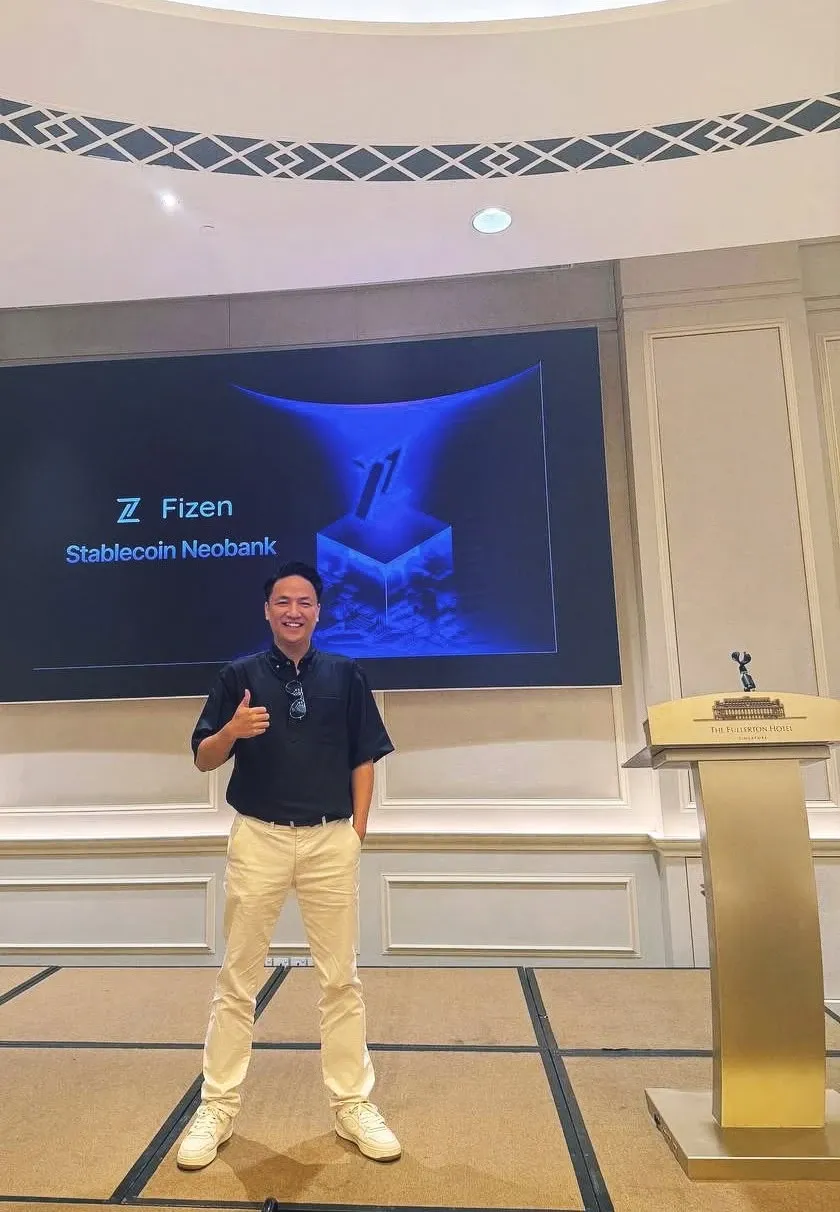

A room where everyone shares one investor
This is not an open conference. Every company in that room is one Tether has put money into, and that single fact changes how people talk.
Nobody is pitching. There is no investor to impress at the back, because the investor organised the room. So the conversation skips the polished version and lands on the useful part: which corridor just closed and why, which partner actually delivers, which licence took six months longer than promised, what broke in production last quarter and how it got fixed.
You also leave with business, not only notes. Portfolio companies often need precisely what another one has already built, and an introduction from inside the ecosystem carries weight no cold email ever will. That is the part a term sheet cannot buy.
Spend enough years in this market and you start to read it differently. You hear a piece of news and can call what happens next. You know which partner to message when something breaks. And, most usefully, you work out which features actually decide whether you win. Fizen has been building one of those for the past year, and it is close to launch.
Follow Tether's money, not the headlines
If you want to know where stablecoins are going, read the cheque book rather than the keynote. Tether's October 2026 moves cluster tightly:
- 7 October: signed an MoU with the National Bank of Kazakhstan and the Alatau City Authority on stablecoin use cases and asset tokenization.
- 13 October: invested in EFY Finance, a stablecoin payments and custody firm building across Latin America.
- 15 October: invested in AIsa, where AI agents pay for data and compute directly.
- 20 October: joined Tenstorrent's $1.5 billion Series E.
- 21 October: led the pre-seed round in Peso, a Bolivian fintech for payments, savings and investments.
- 24 October: secured backing from 15 mining firms, Bitmain and Foundry Digital among them, for its open-source Mining Development Kit.
Kazakhstan. Latin America. Bolivia. These are not trading hubs. They are places where the local currency is under pressure and the official route to dollars is slow, expensive or closed. That is the thesis: stablecoins as plumbing for people the banking system serves badly.
Flat supply, very loud demand
The headline numbers look boring. Total stablecoin supply sat near $300.5 billion in late October, down from a May peak around $315.5 billion. USDT held roughly $182.4 billion and about 60.7% of the market, while USDC was near $71.6 billion and accounted for most of the recent decline.
Now look one level down. In India, USDT traded at roughly a 6.40% premium to par in late October, with USDC near 6.89%, close to record levels. A premium that size is not speculation. It is dollar demand meeting a narrow on-ramp.
That gap is the whole story. Global supply can sit flat while demand screams inside particular corridors. Totals hide it. Premiums do not. And it explains why Tether keeps funding rails in exactly those places.
What a stablecoin neobank actually has to prove
Anyone can put the words on a slide. Here are the four tests we think matter, including where they are uncomfortable for us.
1. Who holds the money
A bank holds your deposit and owes you a claim. Self-custody flips that: you hold the keys, nobody can freeze or convert your balance, and you are also your own backup. The Fizen wallet is self-custody, and that trade is real. Write your recovery phrase down offline, never type it into a website, and never send it to anyone, including anyone claiming to be support.
Being precise matters more than sounding good. Self-custody applies to the Fizen wallet and to services like eSIM, tokenized stocks, top-ups and send money. It does not apply to every product a company ships, and any honest provider should tell you which is which rather than spraying the word across everything.
2. The on and off ramp
Holding digital dollars is the easy half. Getting in and out at a fair rate, in your own country, on a normal day, is the half that decides whether the product is useful. This is exactly what the India premium measures, and why Tether is buying into local payment firms rather than building one global front door.
3. Local rails, not a global template
Money is international. Daily life is stubbornly local. Payment habits, consumer protections and accepted methods differ street by street, and a product that ignores that is a demo, not a service. It is why the same app needs a different answer in Sao Paulo than in Seoul.
4. Saying what is not live
The least glamorous test, and the one most companies fail. Fizen is looking toward LATAM, with Argentina, Brazil and Bolivia on the roadmap. Nothing is live there yet. We would rather say that plainly than let a roadmap slide read like an announcement.
Where Fizen actually stands today
One self-custody wallet holding one USDT balance, sending and receiving across several chains including Tron, Ethereum, BNB Chain and Solana. Around it: tokenized US stocks and ETFs funded with USDT or USDC on Ethereum, eSIM data in 150+ countries, phone top-ups and gift cards, swap and bridge, and send money. QR Pay is built for travellers spending abroad in supported markets, not for residents paying at home. Tokenized stocks are not available to US persons and are not marketed in the UK, mainland China or Hong Kong.
That is a narrower claim than "neobank" implies, and we prefer it that way. The word is a direction, not a finished product.
What we are watching next
- Whether corridor premiums in India and LATAM compress as local rails improve, which would be the clearest sign the thesis is working.
- Whether US stablecoin rulemaking lands as proposed, since the detail decides who may offer interest-like rewards and on what terms.
- Whether tokenized equity access keeps widening without the investor protections thinning out.
Related reading
- Tether's strategic investment in Fizen
- Why Tether is betting on stablecoin utility and self-custody
- The Fizen wallet: what it is and how it works
- Tokenized US stocks on Fizen: 10 things to know
Information only. This article is published for information and does not sell any product or service. It is not financial, investment, tax or legal advice, and it is not an offer or recommendation to buy or sell any asset. Digital assets are volatile and you can lose money. Product availability, eligibility, fees and features vary by country and may change. Always read the applicable terms before using any service. US persons: tokenized US stocks are not available to you. Fizen does not market tokenized US stocks in the UK, mainland China or Hong Kong.