RedotPay Alternative: Keep More of What You Spend (2026)
Per-swipe fees and no cashback? A fair look at where RedotPay’s costs come from, and a self-custody alternative that keeps more, said honestly.

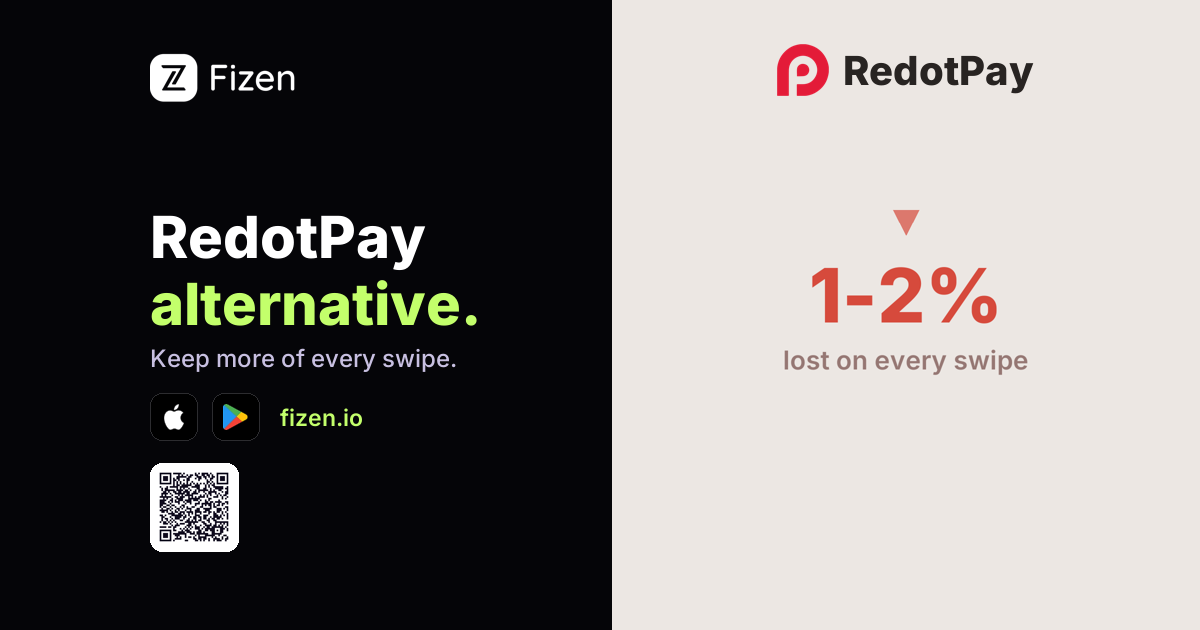
If every RedotPay swipe quietly loses one to two percent, and the end of the month brings no cashback, you are not imagining it. Here is a fair look at where those costs come from, and a self-custody alternative that keeps more of your money, said honestly, including the things RedotPay still does better.
The short answer
People usually look for a RedotPay alternative for three reasons: per-transaction fees, no ongoing cashback, and funds held custodially. Fizen answers those with 0% top-up, 0% FX, cashback up to 10% (effort-based, subject to program terms), and self-custody, where you hold your own USDT. But RedotPay covers more countries and more deposit chains, so the honest answer is that the right pick depends on how and where you spend.
Where the costs come from
Based on RedotPay’s published fees as of 2026, an international transaction carries roughly one to just over two percent (a crypto conversion step plus an FX step), the physical card has a one-time cost that is not refundable, and your balance is held custodially on the company’s side. None of that is hidden; it just adds up quietly on everyday spending.
How Fizen is different
- 0% top-up and 0% FX: you fund the Visa card with USDT and spend at 160 million Visa merchants without a conversion or FX markup on the card.
- Cashback up to 10%: earned through the FiPoint program (effort-based, subject to program terms), not a flat promise.
- Self-custody: your USDT sits in a wallet you control, so no company decision can freeze or strand it.
- Up to 100 virtual cards: one per subscription, ad account, or purpose, frozen or deleted anytime.
An honest comparison, both ways
Some rows favor Fizen; some favor RedotPay. We show both on purpose.
| RedotPay | Fizen | |
|---|---|---|
| Per-transaction cost | ~1 to 2%+ | 0% top-up, 0% FX |
| Ongoing cashback | Limited | Up to 10% (effort-based, subject to terms) |
| Custody | Custodial | Self-custody, you hold USDT |
| Virtual cards | Fewer | Up to 100 per account |
| Country coverage | Very wide (100+ countries) | Broad, with some exclusions |
| Deposit chains | More options | USDT on Solana for the card |
| Extras | Card focused | QR pay (VN and PH), tokenized U.S. stocks, gift cards, eSIM |
Be fair to RedotPay: it supports more deposit chains, reaches more countries, and is strong across South Asia, Africa, and Latin America, and if you need a physical card in hand today, that is a real point in its favor. Fizen’s edge is cost, cashback, self-custody, and the wider super app. Pick the one that matches how you actually spend.
How to switch
- Move your crypto into self-custody, so it is yours from the first day.
- Download Fizen and create the Fizen Visa Card, funded with USDT on Solana.
- Spend at 160 million Visa merchants with 0% FX, and use virtual cards to separate subscriptions and ad accounts.
A card should not tax every purchase. If RedotPay’s per-swipe cost adds up for you, a flatter, self-custody option is worth a look.
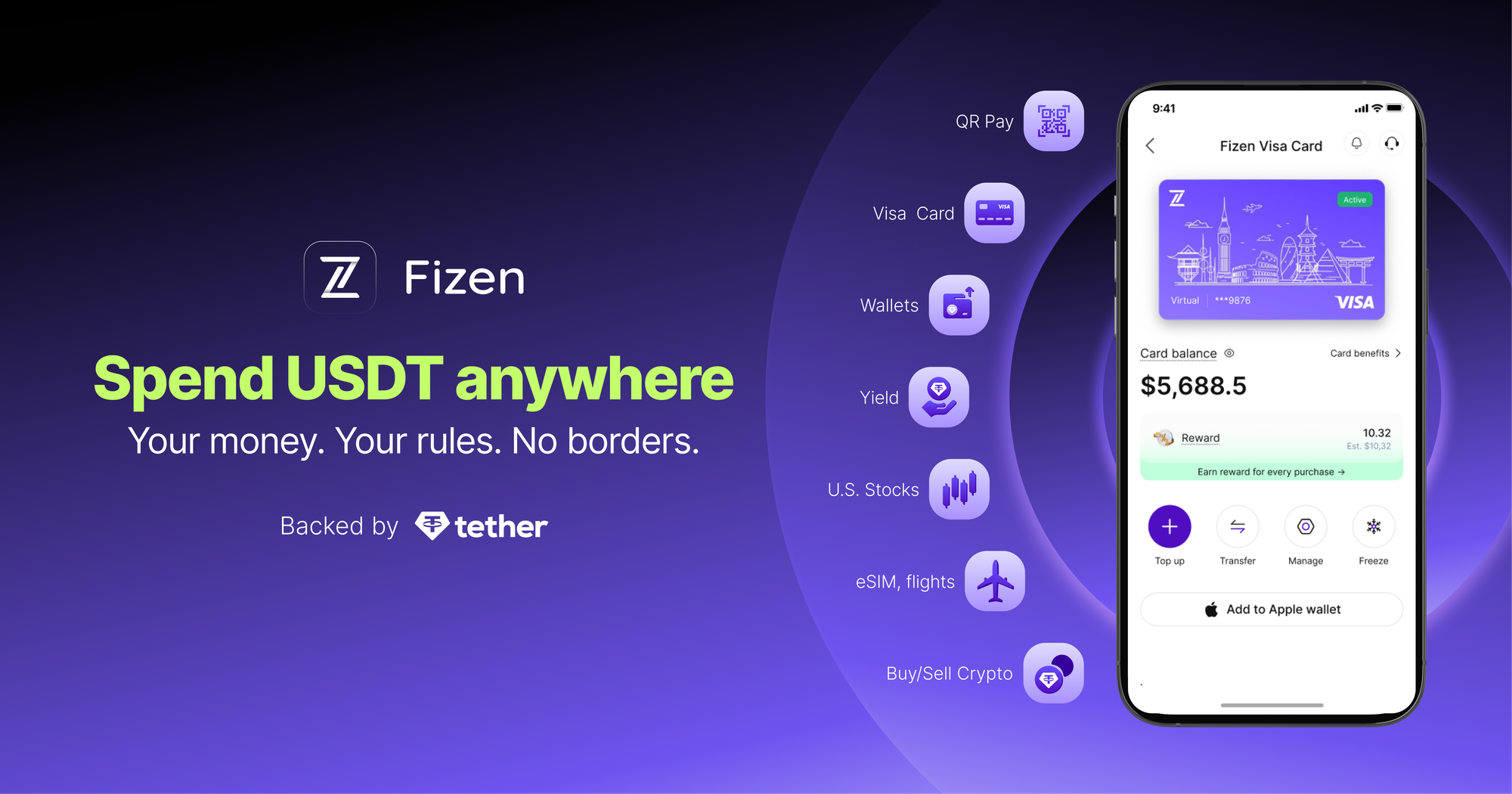
Fizen: crypto neobank, self-custody Super App
Hold USDT in a wallet you control, spend at 160 million Visa merchants with 0% FX, and buy and sell crypto in 64 countries.
Frequently asked questions
Why do people look for a RedotPay alternative?
The common reasons are per-transaction fees of roughly one to two percent, limited ongoing cashback, and funds held custodially. Some users also want more than one card. Fizen addresses those with 0% top-up, 0% FX, cashback up to 10% (subject to program terms), self-custody, and up to 100 virtual cards.
Is Fizen cheaper than RedotPay?
On the card itself, Fizen charges 0% top-up and 0% FX, while RedotPay applies a per-transaction cost of about one to two percent based on its published fees. Your total depends on how you spend, so compare against your own usage.
What does RedotPay do better than Fizen?
RedotPay supports more deposit chains, reaches more countries, and is strong in South Asia, Africa, and Latin America. If you need a physical card available today, that is a genuine advantage. Fizen’s edge is cost, cashback, self-custody, and the wider super app.
Where is Fizen available?
Fizen is available broadly, but it is not offered to US persons or residents of mainland China, Hong Kong, or Vietnam. The Visa card works globally wherever Visa is accepted; QR Pay is Vietnam and the Philippines only.
Fizen Card processes as a standard Visa and is accepted wherever Visa is supported. Whether any individual charge is approved still depends on the merchant and their payment processor at the time of payment. Fizen Card is issued under applicable regulations. Users should verify availability in their jurisdiction. This article is for informational purposes only and does not constitute financial advice. More details about Fizen Card, please refer to Fizen Card Docs and Terms of Use.
Availability: Fizen products are not offered to US persons or residents of mainland China, Hong Kong, or Vietnam.
Related guides
- Fizen vs RedotPay: fees, cashback and limits, head to head
- Fizen vs RedotPay vs KAST: the honest 2026 comparison
- Offramp is shutting down: the self-custody alternative
Terms and conditions
- Information only. Fizen publishes this article to inform, not to sell. Nothing here is an offer or solicitation, and it is not financial, investment, legal or tax advice. Prices, rules and availability change; check official sources.
- For readers in the United States. This article provides information only. It is not an offer, solicitation or sale of any product or service, and it is not financial, investment, legal or tax advice. Fizen is not offered to US Persons.
- Full terms. Master Terms of Use, Privacy Policy and Disclaimer on the Fizen site.