How British Tourists Pay in Vietnam (2026): Beat the FX Fees
British cards get hit with non-sterling and ATM fees in Vietnam. Here is how UK travellers pay by QR in 2026 instead.

A British debit or credit card works in Vietnam, but it rarely works cheaply. Most UK banks add a non-sterling transaction fee of around 2.75 percent on every purchase, and Vietnamese ATMs pile on their own withdrawal charge plus a poor exchange rate. Even the fee-free travel cards British travellers love, Revolut, Monzo and Starling, cap their free spending or weekend rates and still route you through the card networks. If you are spending a fortnight in Hanoi, Hoi An or Phu Quoc, those small percentages add up fast. Here is the way locals and long-stay expats actually pay: by QR.
Why your UK card struggles in Vietnam
- Non-sterling fees: most high-street UK cards charge roughly 2.75 percent per foreign purchase, and many street vendors and small cafes in Vietnam do not take cards at all.
- ATM stings: Vietnamese ATMs charge a withdrawal fee and cap how much you can take out, so you pay repeatedly to get cash.
- The QR gap: almost everything in Vietnam runs on VietQR, the local QR standard, but a foreign card cannot scan and pay a VietQR code directly.
How to pay by QR as a Brit
The Fizen app gives foreign visitors a way onto the VietQR rail. You verify your identity once, top up a balance in USDT, and then scan and pay any VietQR code at markets, cafes, Grab and shops, in dong, straight from your phone. There is no Vietnamese bank account and no fumbling for cash. It is built for foreign visitors and expats specifically, so a British passport is all you need to get started.
What it saves you
Because you are paying merchants directly by QR rather than swiping a card, you skip the 2.75 percent non-sterling fee and the ATM charges entirely. On a two-week trip with everyday spending, that is real money kept in your pocket rather than handed to your bank and a cash machine.
Frequently asked questions
Do UK cards work in Vietnam?
Yes, but with fees. Most British cards add a non-sterling charge of around 2.75 percent per purchase, and many small merchants take only cash or QR, not cards.
How do British tourists pay by QR in Vietnam?
Through an app made for foreign visitors, such as Fizen: verify once, top up a USDT balance, then scan any VietQR code to pay in dong. No local bank account is needed.
Is it cheaper than a Revolut or Monzo card?
Often, yes. Those cards are good but still route through the card networks with spending caps and weekend rates. Paying merchants directly by QR skips card fees and ATM charges.
Do I need a Vietnamese bank account?
No. QR pay for foreigners works from your phone with identity verification, no local bank required.
A fortnight in Vietnam should not cost you a fee on every flat white. Pay the way the country actually pays.
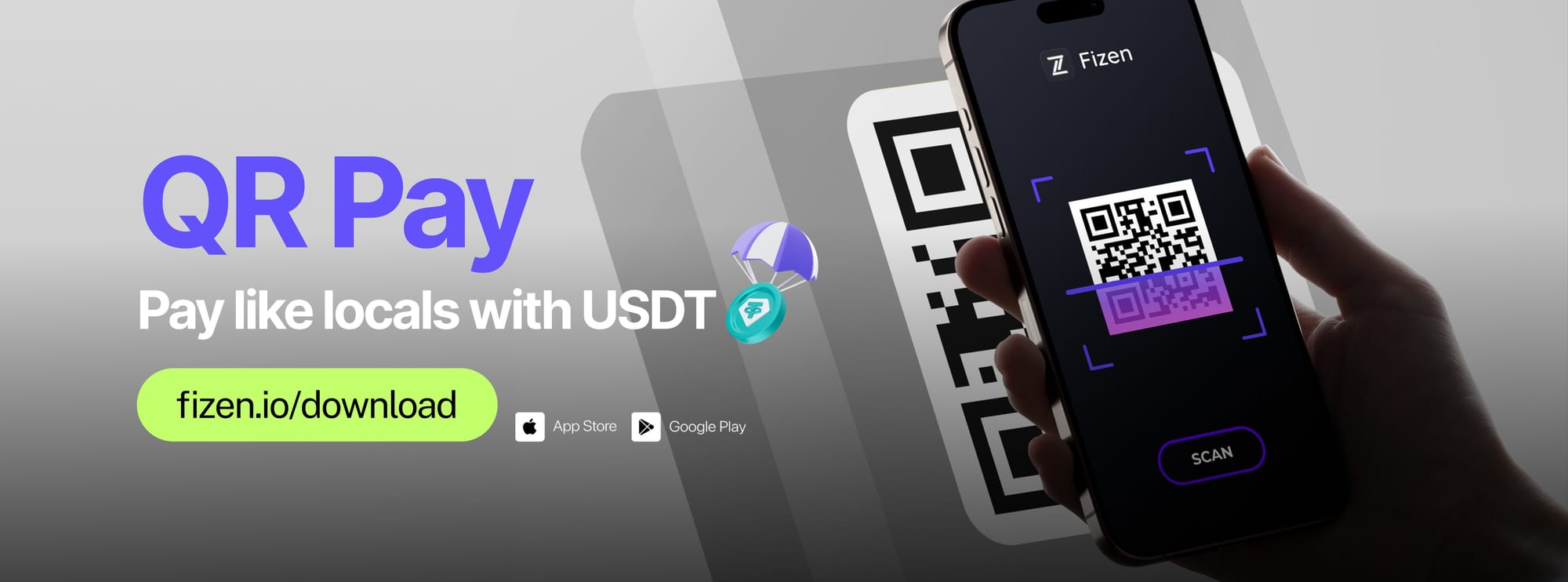
Fizen Super App
One app for QR pay, a Visa card, travel eSIM, buy and sell crypto, and cashback. Your money, your control.
Fizen QR Pay works wherever VietQR is accepted. Whether any individual payment goes through still depends on the merchant and the local network at the time. Fizen is backed by Tether, the largest digital-asset company and issuer of USDT. For more on Fizen QR Pay, see the Fizen QR Pay Docs and Terms of Use. This article is for informational purposes only and is not financial advice.
Related guides
- Your Card Won't Work in Vietnam? Pay by QR
- Best Apps to Scan and Pay QR in Vietnam
- How to Pay in Vietnam as a Tourist
Terms and conditions
- Information only. Fizen publishes this article to inform, not to sell. Nothing here is an offer or solicitation, and it is not financial, investment, legal or tax advice. Prices, rules and availability change; check official sources.
- For readers in the United States. This article provides information only. It is not an offer, solicitation or sale of any product or service, and it is not financial, investment, legal or tax advice. Fizen is not offered to US Persons.
- Full terms. Master Terms of Use, Privacy Policy and Disclaimer on the Fizen site.