How to Pay With Stablecoins by QR in the Philippines (2026)
The Philippines' QR payment network is opening up to stablecoins. Here is how to scan and pay with USDT from your own wallet, no local bank account needed.

Key takeaways
- The Philippines runs a national QR standard (QRPh), and stablecoin payments are being routed onto it, reaching hundreds of thousands of merchants.
- This means you can increasingly pay everyday merchants by scanning a QR code and settling from a stablecoin balance.
- With a self-custody wallet you can do this from your own USDT, without a Philippine bank account.
- It turns dollars you hold into local spending without a manual cash-out step every time.
The Philippines has one of the highest rates of stablecoin use in the world, and its payment rails are catching up. The country's national QR standard, QRPh, is being opened to stablecoin payments across a large merchant base. For anyone holding USDT, that is a big deal: it means paying a local shop can be as simple as scanning a code. Here is how paying by QR with stablecoins works in the Philippines in 2026.
What is QRPh and why does it matter?
QRPh is the Philippines' unified QR code standard, backed by the central bank, so a single code works across participating banks and e-wallets. As stablecoin payments are routed onto QRPh, the same everyday QR you would use for a local wallet can be settled from a stablecoin balance. That connects the dollars people already hold to the shops, stalls and services around them.
How do I pay by QR with USDT?
From a self-custody wallet that supports Philippine QR, the flow is the one you already know from tapping a card: open the app, scan the merchant's QR, confirm the amount, and pay. Behind the scenes your USDT is used to settle the payment in pesos to the merchant, so you spend dollars and they receive local currency.
- Open and scan: open your wallet, scan the merchant's QR code.
- Confirm: check the amount and confirm.
- Done: your USDT settles the payment; no Philippine bank account needed on your side.
Why is this better than cashing out first?
The old way was to sell USDT for pesos, wait for it to reach a bank or e-wallet, and then spend. Paying by QR collapses that into one step at the till. You keep holding dollars until the moment you actually spend, which is simpler for visitors and useful for locals who earn or save in stablecoins.
| Task | Old way | Pay by QR |
|---|---|---|
| Steps | Sell USDT, wait, then spend | Scan and pay |
| Local bank needed | Often | No |
| Hold dollars until you spend | No | Yes |
Frequently asked questions
Can I pay with stablecoins in the Philippines?
Increasingly yes. The national QRPh standard is being opened to stablecoin payments across a large merchant base, so you can scan a merchant QR and settle from a USDT balance.
Do I need a Philippine bank account?
Not on your side. With a self-custody wallet that supports Philippine QR, you scan and pay from your own USDT; the merchant receives pesos.
How does paying by QR with USDT work?
Open your wallet, scan the merchant's QR, confirm the amount, and pay. Your USDT is used to settle the payment in local currency to the merchant.
Is this only for tourists?
No. It suits visitors spending dollars and locals who earn or save in stablecoins and want to spend without cashing out first.
You already hold the dollars. Now you can spend them at the till with a scan.
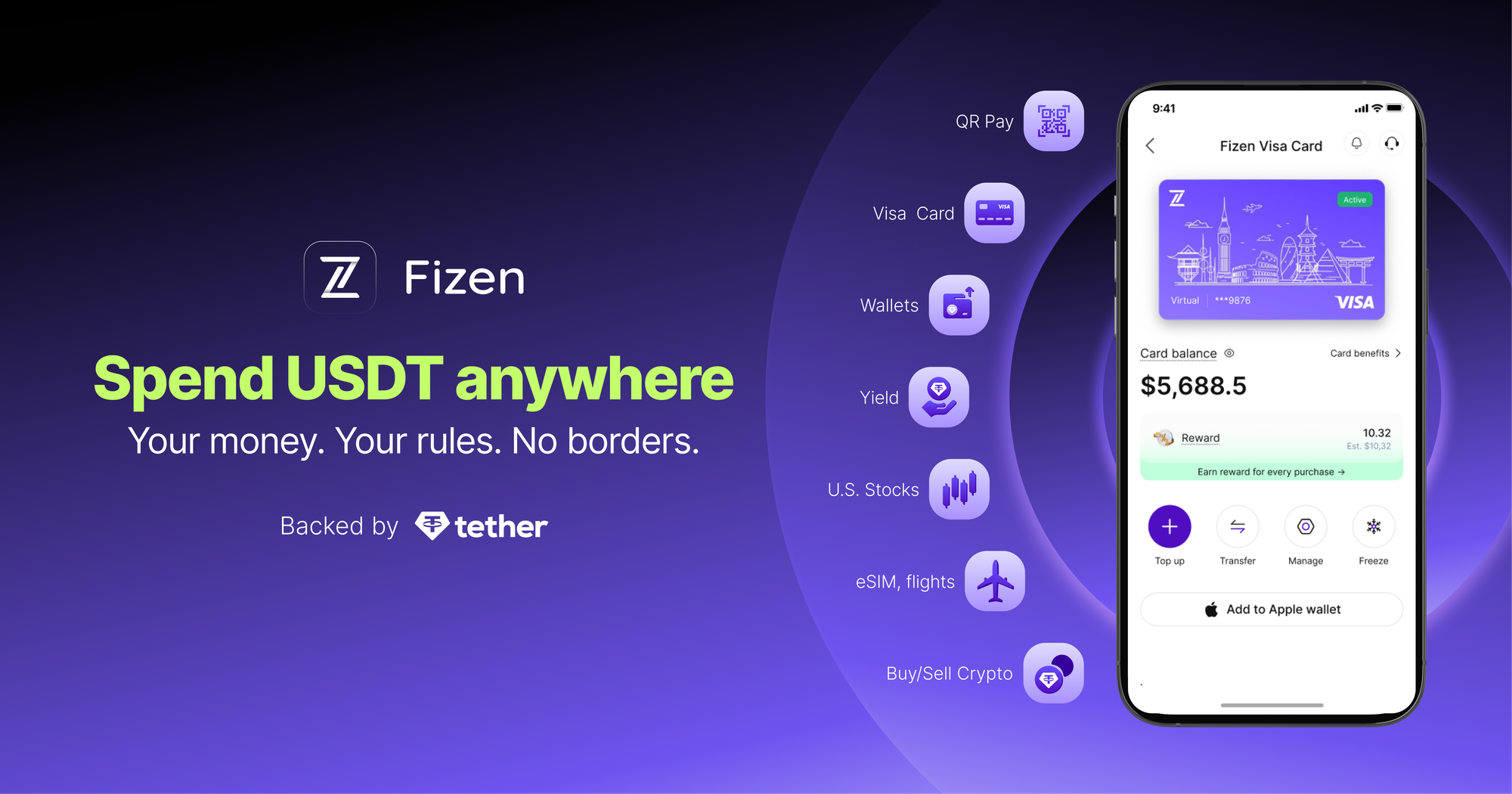
Fizen — hold, spend and send USDT yourself
A self-custody super app: your balance stays in your control. Buy and sell crypto via P2P in 64 countries or Transak, invest in tokenized US stocks, QR pay in Vietnam and the Philippines, and a Visa card. One app.
Fizen lets you hold your own balance and move it across borders. Availability of buy, sell, transfer, tokenized stocks and QR pay varies by country, and whether any individual transaction completes depends on the networks, counterparties and partners at the time. Fizen is backed by an investment from Tether. For more, see the Fizen Docs and Terms of Use. This article is for general information only and is not financial, legal or tax advice.