
Movement Labs Files for Chapter 11 Bankruptcy After the MOVE Token Scandal
Movement Labs filed for Chapter 11 after a year of MOVE token scandals and exchange delistings. Here is what happened, whether the chain survives, and the takeaway.

Key takeaways
- Movement Labs, the developer behind the Movement blockchain and the MOVE token, filed for Chapter 11 bankruptcy on July 15, 2026 in Delaware.
- The filing lists no more than $500,000 in assets against liabilities that could reach $10 million, after more than a year of turmoil around MOVE.
- The trouble traced back to a market-making deal that enabled a rapid dump of 66 million MOVE tokens, a price crash, investigations, and a Coinbase delisting that sent MOVE to an all-time low.
- The lesson: speculative tokens can collapse and get delisted; a stable dollar you hold in self-custody carries a very different kind of risk.
Movement Labs has filed for bankruptcy. The developer behind the Movement blockchain and the MOVE token filed for Chapter 11 on July 15, 2026, capping more than a year of scandal and price collapse, according to CoinDesk. Here is what happened, whether the Movement blockchain itself survives, and the honest lesson for anyone holding tokens.
What happened
Movement Labs filed for Chapter 11 in the U.S. Bankruptcy Court for the District of Delaware, listing no more than $500,000 in assets and liabilities that could reach $10 million, per CoinDesk. Former co-founder and chief executive Rushikesh 'Rushi' Manche holds the largest unsecured claim, at more than $1.6 million.
How it got here
The collapse traces back to the MOVE token's launch in late 2024. A controversial market-making deal enabled the rapid sale of about 66 million MOVE tokens, triggering a steep price drop and prompting investigations and a token buyback. As CryptoSlate reported, a Coinbase delisting then sent MOVE to an all-time low, and the project never recovered.
From a M raise and top-tier backers to Chapter 11
The collapse is starker given where Movement started. Movement Labs raised million in a Series A round, backed by a roster of well-known crypto investors including Polychain Capital, OKX Ventures, Robot Ventures, Hack VC, Maven11, Placeholder, Archetype, dao5, Bankless Ventures, Eterna and Nomad Capital, per crypto-fundraising.info. Roughly a year later, the company filed for bankruptcy with under ,000 in assets. Top-tier backing and a large raise did not shield token holders from what followed, a reminder that a strong investor list is not the same as a safe token.
Is the Movement blockchain dead?
Not exactly, and this nuance matters. The entity that filed is Movement Labs, the company. Per crypto.news, Move Industries, which became the network's primary service provider in December 2025, says operations and development of the Movement blockchain continue, with the Movement Network Foundation as independent steward. So the corporate collapse and the network are not the same thing, though the token's damage is done.
The honest lesson for token holders
This is not about gloating, it is about risk. A project token can go from a hyped launch to an all-time low and a bankruptcy filing in about a year, and once major exchanges delist it, holders are largely stuck. That is the risk profile of a speculative token: it can lose most or all of its value, and you often cannot exit cleanly. It is worth contrasting with holding a stablecoin like USDT in self-custody: it is designed to hold a dollar value, and because you hold the keys, no exchange delisting can trap it. Different tools, very different risk.
Sources
Frequently asked questions
Did Movement Labs shut down?
Movement Labs filed for Chapter 11 bankruptcy on July 15, 2026 in Delaware, with under $500,000 in assets. It followed more than a year of MOVE token turmoil.
Is the Movement blockchain still running?
The bankruptcy is for the company, Movement Labs. Move Industries says development of the Movement blockchain continues, with the Movement Network Foundation as steward.
Why did the MOVE token collapse?
A market-making deal enabled a rapid dump of about 66 million MOVE tokens, causing a price crash, investigations, and eventually a Coinbase delisting to an all-time low.
What is the lesson for token holders?
Speculative tokens can lose most of their value and get delisted, trapping holders. A stablecoin held in self-custody has a very different risk profile.
What happens to MOVE now?
The token has crashed and been delisted from major venues. The company is in Chapter 11; recovery of value for holders is highly uncertain.
A hyped token can hit zero and delisting in a year. A dollar you hold yourself does not work that way.
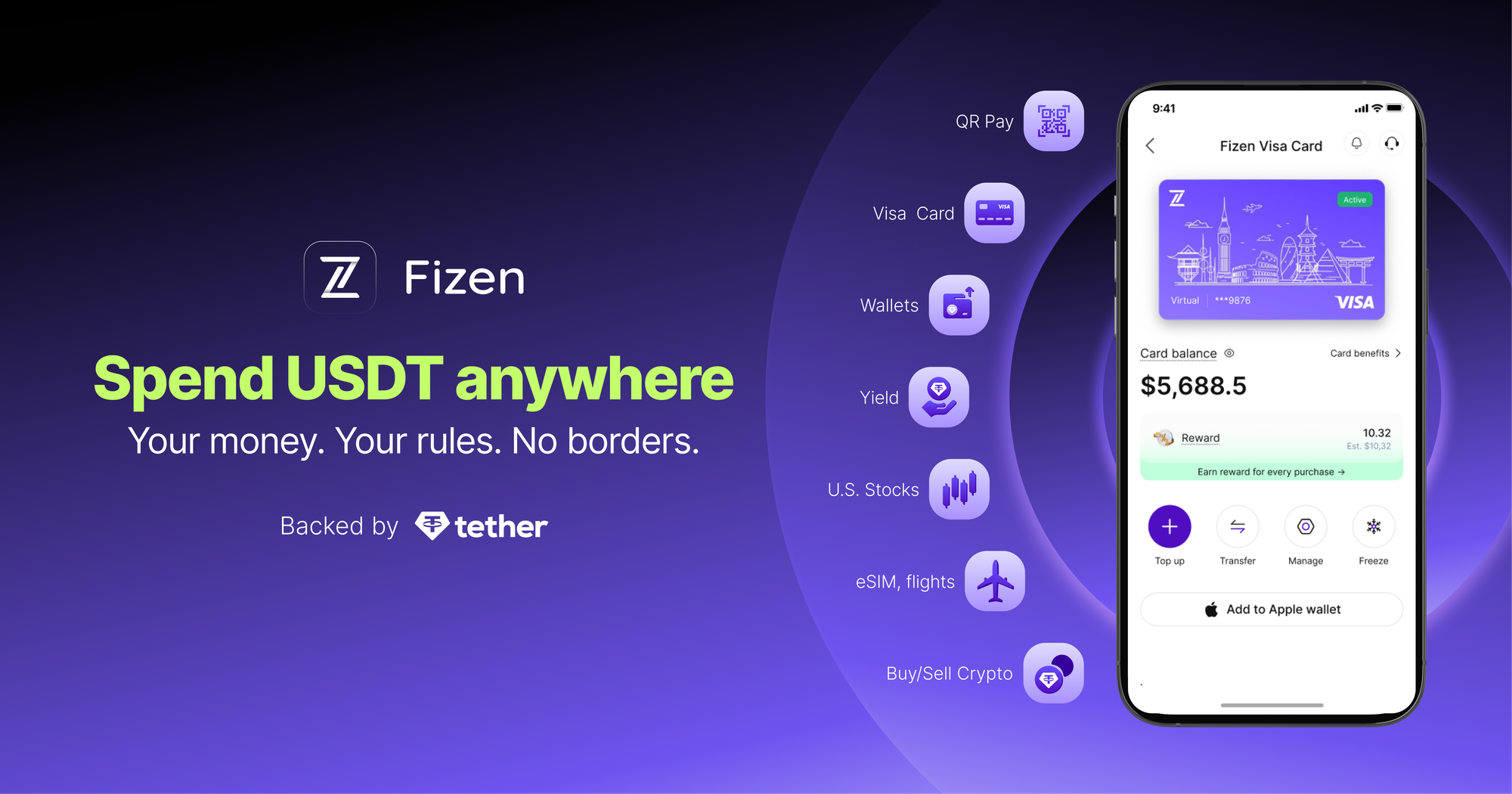
Fizen: hold stable dollars you control
Skip the token roulette. Fizen is a self-custody super app to hold your own USDT, a digital dollar, and actually use it: spend by card or QR, send across 64 countries, and more. Backed by an investment from Tether.
Fizen is a self-custody super app: you hold your own balance. Backed by an investment from Tether. This is general information, not financial advice; do your own research.
Terms and conditions
- Information only. Fizen publishes this article to inform, not to sell. Nothing here is an offer or solicitation, and it is not financial, investment, legal or tax advice. Prices, rules and availability change; check official sources.
- For readers in the United States. This article provides information only. It is not an offer, solicitation or sale of any product or service, and it is not financial, investment, legal or tax advice. Fizen is not offered to US Persons.
- Full terms. Master Terms of Use, Privacy Policy and Disclaimer on the Fizen site.