Is It Safe to Travel to Vietnam Right Now? 2026 Advisories Checked
Short answer: yes. The US State Department rates Vietnam Level 1, Australia says exercise normal safety precautions, and the UK advises against no part of the country. Here is what the three advisories actually warn about, read on 3 November 2026.
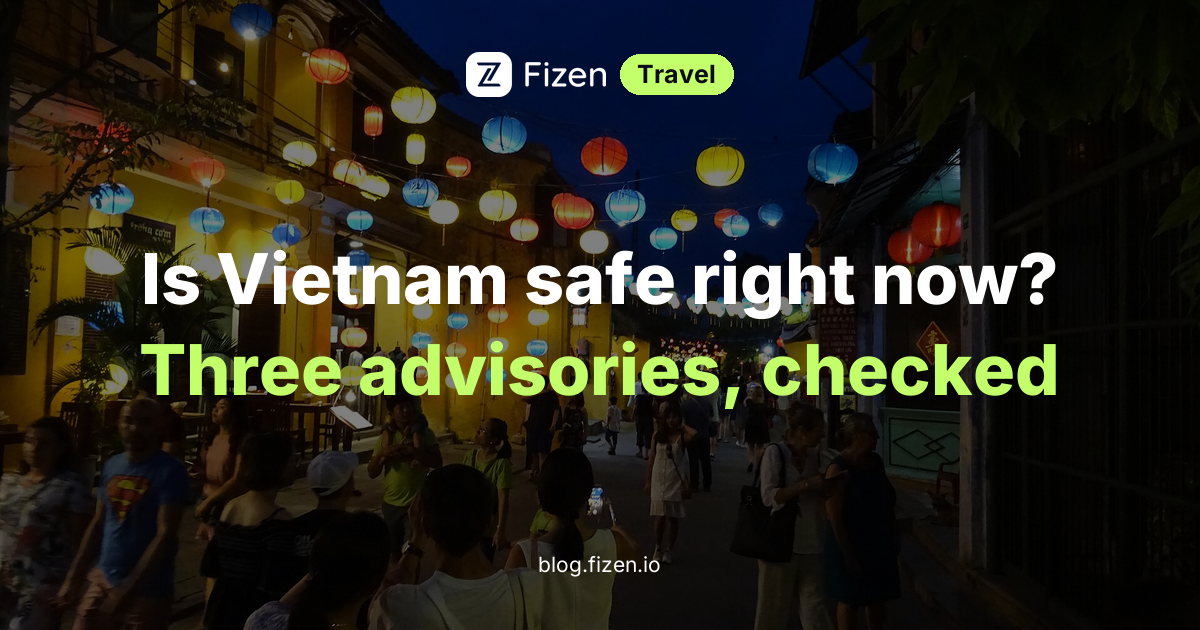
Quick answer: Yes. As of 3 November 2026 the US State Department rates Vietnam Level 1, Exercise Normal Precautions, its lowest level, and Australia's Smartraveller says "Exercise normal safety precautions", while the UK's FCDO page advises against travel to no part of the country. The real risks are petty theft, traffic, scams and the storm season that runs to November, not violent crime.
Key takeaways
- All three governments sit at their lowest level. US Level 1 (issued 23 June 2026), Australia "exercise normal safety precautions" (updated 24 September 2026), UK no area advised against (updated 21 September 2026).
- Theft, not violence, is the common problem. Bag snatching and pickpocketing in crowded tourist streets top the warnings.
- Storm season is the live risk in November. The UK puts it at May to November, Australia at June to November: floods, landslides and delays to flights, roads and phone service.
- Traffic is the biggest physical danger. The FCDO says compliance with road laws is poor; ride with Grab or a licensed taxi rather than renting a motorbike without a licence.
- Carry less cash. Australia reports ATM robberies and card skimming; paying by QR keeps the wallet thin.
You have the flights booked, then someone at work says "Vietnam, is that safe?" and you start searching at midnight. Fair question. I opened the US, UK and Australian advisories on 3 November 2026; here is what they actually say, with the date on each page.
What do the US, UK and Australian travel advisories say right now?
All three put Vietnam at their lowest warning level. None of them asks you to avoid any region.
| Government | Level, in its own words | Page date | What it flags |
|---|---|---|---|
| United States (State Department) | Level 1: Exercise Normal Precautions (lowest of 4) | Issued 23 June 2026 | Petty crime in tourist areas; landmines and unexploded ordnance, mainly at construction sites, low risk in tourist areas |
| United Kingdom (FCDO) | No advice against travel to any part of Vietnam | Updated 21 September 2026, still current 3 November 2026 | Tropical storm season May to November; bag snatching; methanol in drinks; drink spiking |
| Australia (Smartraveller) | Exercise normal safety precautions (lowest of 4) | Updated 24 September 2026, still current 3 November 2026 | Storm season June to November; ATM robberies, card skimming, taxi and gambling scams |
The US summary calls Vietnam "generally a safe destination for travelers." Recheck your government's page the week you fly.
Is Vietnam safe for tourists day to day?
For most visitors, yes. The FCDO says violent crime against foreigners is rare, but petty theft and pickpocketing happen regularly, and rise around Christmas and Tet. The classic loss is a phone or bag grabbed by someone on a passing motorbike.
- Hold your phone and bag on the side away from the traffic, both advisories say, and do not fight for them if someone grabs.
- Watch your drinks. The UK and Australia both warn about methanol in spirits, including in licensed bars, and about drink spiking. Buy your own drinks and keep them in sight.
- Never hand over your passport as a deposit, for example to a motorbike rental shop. The FCDO says shops can hold it against claimed damage.
- Overnight trains and buses: keep valuables on you while you sleep.
How dangerous is the traffic in Vietnam?
This is where the real risk sits. The FCDO says compliance with road laws is poor, and that bus and coach crashes are more likely at night. If you want to ride a motorbike yourself, the UK page says you need both a 1968 International Driving Permit and your home licence, plus third-party insurance, and that any alcohol in your blood can mean a fine. After an accident you can face compensation claims and a travel ban while it is investigated, even for minor injuries.
The easy fix is to let someone else drive. The FCDO names Grab and Xanh SM as apps that send licensed cars; book the whole trip in the app and check the plate matches. On foot, cross at a steady walking pace so riders can read where you are going.
Is it safe to travel to Vietnam in storm season?
Yes, with flexible plans. Smartraveller's latest update, dated 24 September 2026, says storm season usually runs from June to November and that heavy rain, floods, landslides and typhoons can affect flights, roads, power and phone services. The FCDO gives May to November and points travellers to Vietnam's National Centre for Hydro-Meteorological Forecasting and the Japan Meteorological Agency.
- Book refundable or changeable rooms and domestic flights for the coastal legs.
- Check that your travel insurance covers weather disruption, as both pages advise.
- Keep mobile data working so storm alerts, airline messages and rebooking links reach you. A travel eSIM installed before you fly does that; see our Hanoi eSIM guide.
Which scams should you watch for in Vietnam?
Smartraveller lists card skimming, taxi scams, gambling scams and robberies at ATMs. The patterns are well known by city, so read the one for where you land:
One rule covers most of them: book rides in the app at the price it shows, and ignore anyone who approaches you first.
How do you carry money safely in Vietnam?
Carry less of it. Smartraveller suggests using ATMs only inside banks, reputable hotels and shopping centres, and keeping your card in sight. Many cafes, markets and street stalls show a VietQR code at the counter, so you can pay the exact bill instead of flashing a fat wallet.
If your travel money is in USDT, Fizen QR Pay pays those VietQR, MoMo, ZaloPay and VNPay codes for visitors. The order: create or import your Fizen wallet (self-custody), get USDT on Solana or BNB Chain into it, deposit from the wallet into QR Pay and pass KYC (per wallet and per device), then scan and confirm the amount in dong. USDT on another network, or another token, cannot be deposited. Limits are US$800 per payment and US$1,000 per week. For travellers and foreigners only, not Vietnamese residents. Steps: QR Pay getting started.
Your money. Your freedom. No borders. Fizen is building the stablecoin neobank for people on the move: a wallet you own, local QR payments and travel data in one app.
Frequently asked questions
Is it safe to travel to Vietnam right now?
Yes. On 3 November 2026 the US, UK and Australian advisories all sat at their lowest level. Petty theft, traffic and storms are the main risks.
What is the US travel advisory level for Vietnam in 2026?
Level 1, Exercise Normal Precautions, the lowest of four, issued on 23 June 2026. It mentions petty crime in tourist areas and unexploded ordnance, mostly at construction sites.
Is Vietnam safe for solo female travellers?
Many travel solo without trouble, but the UK and Australia report drink spiking and assaults, often linked to unlicensed taxis. Buy your own drinks, use Grab or Xanh SM, and save your hotel location in your map app.
Is November a bad time to visit Vietnam?
November is the tail of storm season, which the UK puts at May to November. Keep coastal plans flexible, check forecasts from Vietnam's national weather centre, and make sure your insurance covers weather.
Do I need a visa for Vietnam?
It depends on your passport. The UK says British citizens get 45 days visa-free. Others can apply for an e-visa of up to 90 days, single or multiple entry, only on the official site evisa.gov.vn.
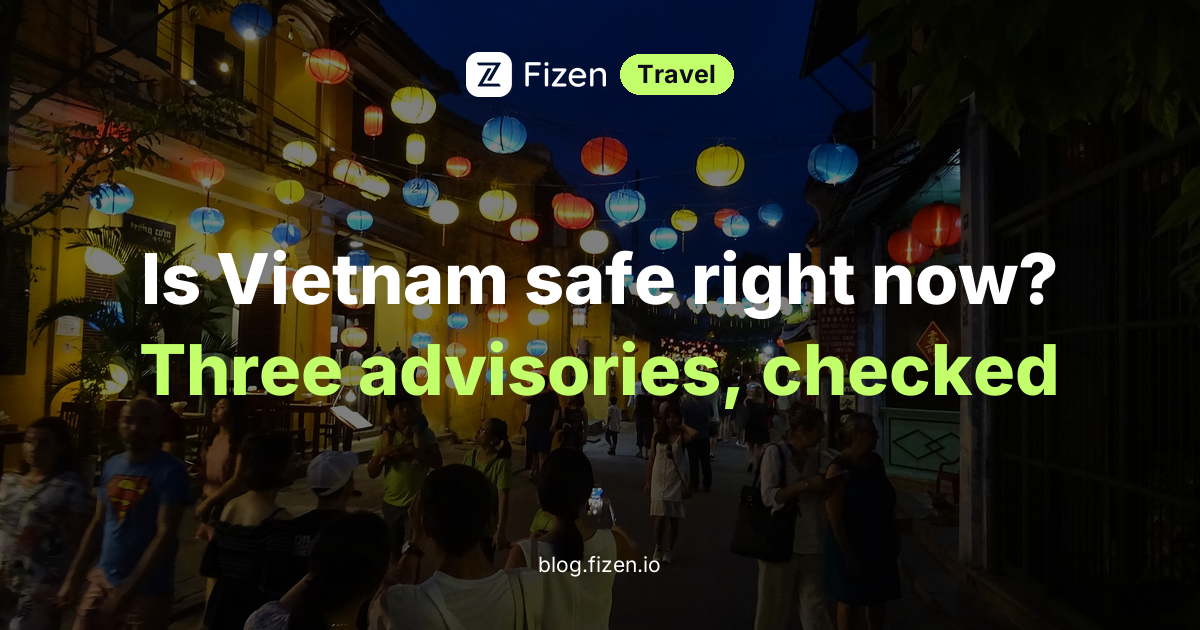
Carry less cash in Vietnam
Your money. Your freedom. No borders. Fizen, the stablecoin neobank for travelers, digital nomads and online workers. Fizen QR Pay is for travellers and foreigners in Vietnam and the Philippines: deposit USDT on Solana or BNB Chain from your Fizen wallet, scan the shop's VietQR and confirm the amount in dong, up to US$800 per payment and US$1,000 per week.
Terms and conditions
- Information only. This article is travel information only, not an offer or sale of any product or service, and not financial, legal, tax or travel-safety advice. Advisory levels change; read your own government's page before you travel.
- For readers in the United States. This article provides information only. It is not an offer, solicitation or sale of any product or service, and it is not financial, investment, legal or tax advice. Fizen products and services are not offered to US Persons.
- QR Pay availability. QR Pay is for cross-border use by travellers and foreigners in Vietnam and the Philippines only, and is not available to residents of those countries in their own country. It is funded only with USDT on Solana or BNB Chain; USDT on another network, or another token, cannot be deposited. KYC (per wallet and per device), KYT, AML and sanctions checks apply. The Fizen wallet is self-custody; USDT you move into QR Pay is governed by the Fizen QR Pay Terms, so only move in what you plan to spend.
- Independent. Fizen is not affiliated with the US Department of State, the UK Foreign, Commonwealth and Development Office, the Australian Department of Foreign Affairs and Trade, Grab or Xanh SM. Advisory wording is quoted from each public page as read on 3 November 2026.
- Full terms. See the Master Terms of Use, Privacy Policy and Disclaimer on the Fizen website.
Sources
- US Department of State, Vietnam Travel Advisory, Level 1, issued 23 June 2026 (read 3 November 2026 via the State Department advisory feed)
- US Department of State, travel advisory data feed (read 3 November 2026)
- UK FCDO, Vietnam travel advice, updated 21 September 2026 (read 3 November 2026)
- UK FCDO, Vietnam safety and security (read 3 November 2026)
- Smartraveller (Australian Government), Vietnam, updated 24 September 2026 (read 3 November 2026)
- Vietnam Immigration Department, official e-visa website (read 3 November 2026)
- Fizen Help Center, QR Pay getting started
- Fizen QR Pay Terms, effective 5 June 2026
All three advisories were read on 3 November 2026. The State Department page sits behind a bot check, so its level and date were read from the department's own advisory data feed (published 23 June 2026). FCDO text was read from the GOV.UK page (updated 21 September 2026); Smartraveller from its Vietnam page (updated 24 September 2026).