How to Pay in the Philippines as a Tourist in 2026. A Practical Guide to Cards, Cash, ATMs & QR.
The Philippines is a QR-first country. Cards work in hotels and malls, but many cafes, markets, and small shops prefer QR Ph or cash. How travelers pay in Manila, Cebu, Boracay, Palawan and Siargao, use QR Ph without a local bank, and avoid ATM and card fees.

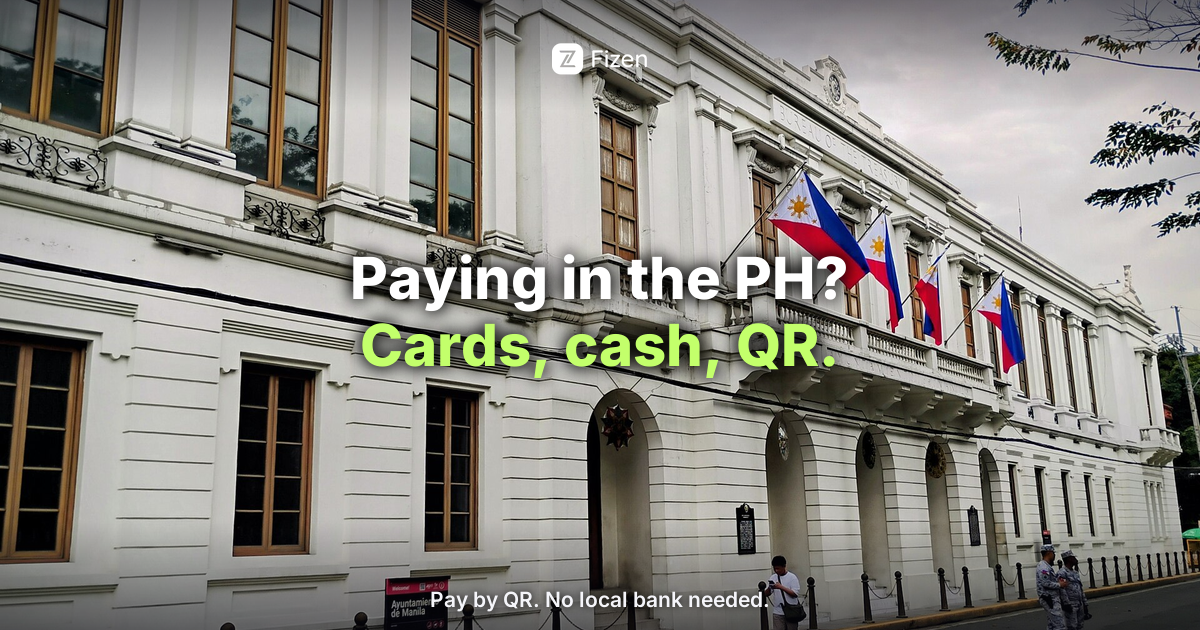
Quick answer: In the Philippines, daily payments are increasingly QR-first. Cards work mostly in hotels, malls, and larger chains, but many small cafes, carinderias, sari-sari stores, markets, and tricycles prefer QR Ph or cash. Keep a small cash backup, and use a QR-ready setup for most everyday purchases.
The Philippines is easy to love: thousands of islands, incredible food, and some of the warmest people you will meet. But paying for things can surprise first-timers, especially if you rely on cards.
The Philippines Went QR-First
The country moved fast into digital payments. QR Ph, the national QR standard from Bangko Sentral ng Pilipinas, is now used across cities and tourist areas: coffee shops, small eateries, convenience stores, market stalls, even individual sellers often display a printed QR code.
So the real question is not whether you can pay cashless. It is whether you have a setup that lets you use those codes smoothly as a visitor.
Paying with QR Without a Philippine Bank Account
Traditionally, QR Ph payments were easiest with a local bank account or a fully verified GCash or Maya wallet, which usually need a Philippine SIM and local documents. As a tourist, GCash access is limited, so foreigners increasingly look for a way to pay QR Ph without local banking.
If your goal is simple, scan a QR Ph code and pay, pick one tool, fund it, verify once, and use it for daily spending.
Fizen Super App (QR Pay for Travelers)
Fizen is built around travel-friendly stablecoin and payment use cases, including QR Ph payments. The idea is straightforward: fund your balance with USDT, scan a QR Ph code, and pay like locals, without relying on card terminals.
What it looks like in practice:
- Scan the merchant's QR Ph code, the same one every local customer uses.
- The merchant is paid in Philippine pesos, exactly as they expect. Nothing changes on their side and they never touch crypto.
- Your Fizen balance is debited in USDT, at the market rate.
No card, no local bank account, and the merchant never has to know anything about crypto. Just scan and pay.
Why This Can Be Easier Than Cards + ATMs
Here is the practical travel math:
- Airport exchange counters and random booths often bake in an unfavorable spread.
- ATMs stack fees: a local ATM fee around 250 pesos, your home bank's fee, and an FX spread on top.
- Cards may add foreign-transaction fees, and many smaller spots will not accept cards anyway, or pass the fee to you.
A QR-first setup reduces the constant cash-management loop: hunting for ATMs, carrying more cash than you want, and playing card-acceptance roulette.
Fizen helps you avoid all of that and pay directly with your phone. Fizen does not charge a top-up fee, and there is no hidden FX markup; conversion happens at the market rate.
Where cards usually work: hotels, shopping malls, larger restaurants, supermarkets, and international chains.
Where cards often do not: street food, carinderias, sari-sari stores, markets, salons, tricycles and jeepneys, and smaller independent shops, which frequently use QR Ph or cash only.
Setup (Takes Minutes)
- Download the Fizen app
- Complete verification if prompted
- Add funds with USDT
- Scan a QR Ph code and pay
No appointments, no paperwork runs, no guessing which places will accept your card.
What This Means for Your Trip
Whether you are in the Philippines for two weeks or two months, payments should not be the part of your day you think about. Use cash when you need it, keep a card for hotels and large merchants, but for daily spending a QR-ready option is often the difference between friction and smooth.
Paying in the Philippines' Most Popular Spots
Acceptance varies by destination. Here is the quick reality for the places most visitors go, and how to pay smoothly in each.
Boracay
Resorts, beachfront restaurants, and dive shops on Station 1 and 2 take cards, but D'Mall stalls, tricycles, and smaller eateries lean QR Ph or cash. Scan QR Ph with Fizen for day-to-day spending and keep some pesos for tricycles. On arrival you also pay the Boracay environmental and terminal fees in cash, so keep a few hundred pesos handy.
Palawan: El Nido, Coron, and Puerto Princesa
These island-hopping towns are largely cash-or-QR, and ATMs are limited and can run dry in peak season. Load your balance before you arrive, use QR Ph where it is shown, and carry cash for boat tours and small guesthouses. El Nido's eco-tourism development fee and most island-hopping tours are cash only, so bring enough pesos for the days you are out on the water.
Cebu and Bohol
Cebu City malls, Mactan resorts, and Bohol's Alona Beach take cards widely, while public markets, habal-habal rides, and countryside stops are QR or cash. QR Ph covers most urban and resort spending.
Siargao
General Luna's cafes and surf shops increasingly show QR Ph, but power and connectivity can wobble, so keep cash for motorbike rentals and remote breaks. ATMs are few and sometimes empty, so withdraw in the city or before the ferry and lean on QR Ph in town.
Manila and Tagaytay
The most card- and QR-friendly areas: malls, Grab, restaurants, and convenience stores nearly all take QR Ph or cards, so it is easy to go almost cashless here.
Banaue, Sagada, and remote provinces
Mountain and far-flung areas are still largely cash. Withdraw enough in a city before heading up, since ATMs and QR coverage thin out.
FAQ
Can foreigners use GCash in the Philippines?
As a tourist, GCash access is limited: full verification usually needs a Philippine SIM plus a local bank account or government ID, which most short-term visitors do not have. Fizen is built for visitors, so you can pay QR Ph by funding with USDT, with no local bank account required.
How much cash should I bring?
Carry a small buffer for tricycles, jeepneys, island tours, and remote areas, but you will not need much day to day if you pay QR Ph in cities and tourist hubs. Withdraw larger amounts less often to minimise the per-withdrawal ATM fee, which is around 250 pesos.
Do I need a Philippine bank account or SIM to pay by QR Ph?
No. With Fizen you fund your balance in USDT and scan any QR Ph code. The merchant is paid in pesos and you are debited in USDT, with no local bank account required.
Does the merchant need to accept crypto?
No. The merchant receives Philippine pesos exactly as they do from any local customer. They do not need to know anything about crypto.
Is it safe?
Treat it like any payment app: use the in-app confirmation, keep your phone secure, and only scan codes shown by the merchant at the point of sale.
Scan to start paying by QR Ph

Open your phone camera, scan the code, and get the Fizen app. Or open fizen.io/app.
Fizen is backed by Tether (read the announcement). The Fizen Super App is available in supported regions; check availability in your area. This article is for information only and is not financial advice. See Docs · Terms of Use.
Related guides
- The best crypto card to pay smoothly in SE Asia: Fizen Adventure Card
- Best Place to Change Cash in Vietnam: Avoid Scams and High Fees
- Mobile Apps to Scan QR Codes in Vietnam: A Complete Guide
- Maya or GCash, for a visitor
- Can a foreigner use GCash?
Terms and conditions
- Information only. Fizen publishes this article to inform, not to sell. Nothing here is an offer or solicitation, and it is not financial, investment, legal or tax advice. Prices, rules and availability change; check official sources.
- For readers in the United States. This article provides information only. It is not an offer, solicitation or sale of any product or service, and it is not financial, investment, legal or tax advice. Fizen is not offered to US Persons.
- Full terms. Master Terms of Use, Privacy Policy and Disclaimer on the Fizen site.