How to Get Paid Without PayPal in Vietnam (2026): USDT Methods
PayPal's receive and withdraw are limited in Vietnam, so freelancers get stuck. Here is how to get paid without PayPal using USDT, and turn it into dong.
Key takeaways
- PayPal's ability to receive and withdraw money is heavily limited for users in Vietnam, which strands a lot of freelancers.
- A clean alternative is to be paid in USDT: it settles in minutes, crosses borders without a bank, and holds its value at about a dollar.
- Agree the token and the blockchain network with your client, and always test with a small payment before a large one.
- Once paid, you can cash out USDT to dong via P2P, spend it by QR, or hold it as digital dollars.
If you freelance from Vietnam, you know the PayPal problem: receiving and withdrawing are restricted, so a tool the rest of the world uses barely works for you. The good news is you no longer need it. Getting paid in USDT sidesteps PayPal entirely, settles in minutes, and turns into dong easily. Here is how to get paid without PayPal in Vietnam in 2026.
Why does PayPal fall short in Vietnam?
PayPal in Vietnam is mainly set up for sending, not receiving and cashing out. Withdrawals to local banks are limited, holds are common, and many freelancers find money effectively stuck. That makes it a poor primary way to get paid from overseas clients.
How do you get paid in USDT instead?
- Agree token and network: confirm you will be paid in USDT and on which blockchain network. The wrong network is the most common way funds go missing.
- Share the right address: give the client a wallet address that supports that network, and request a small test payment first.
- Confirm arrival: the payment settles in minutes and lands in your own wallet, not a platform that can hold it.
How do you turn USDT into dong or spending?
Once you hold USDT you have choices. Sell it for dong via peer-to-peer to your bank at a tight rate, pay merchants directly by QR in Vietnam, or keep it as a stable dollar balance. You are not forced to convert everything the moment you are paid.
| Get paid by | Receive | Withdraw in Vietnam |
|---|---|---|
| PayPal | Limited | Restricted, holds common |
| Bank wire | Slow | Fees plus rate markup |
| USDT | Minutes | P2P to dong, or spend by QR |
A note on tax
Money you receive for work is usually taxable income at its value when received, whether it arrives as dollars or USDT. Keep records of each payment. This is general information, not tax advice.
Frequently asked questions
Why can't I use PayPal to get paid in Vietnam?
PayPal's receiving and withdrawal features are heavily restricted for Vietnamese users, with limited local bank withdrawals and frequent holds, so it is unreliable for freelance income.
How do I get paid without PayPal?
Get paid in USDT: agree the token and blockchain network with your client, share a wallet address that supports that network, and test with a small payment first.
How do I turn USDT into dong?
Sell it for dong via peer-to-peer to your bank at a tight rate, or spend it directly by QR in Vietnam.
Is getting paid in USDT taxable?
Usually yes, as income at its value when received. Keep records and consult a local professional. This is not tax advice.
What is the biggest risk?
Sending to the wrong blockchain network. Always confirm the network and test with a small amount first.
PayPal was never built to pay you in Vietnam. Get paid in dollars that actually arrive.
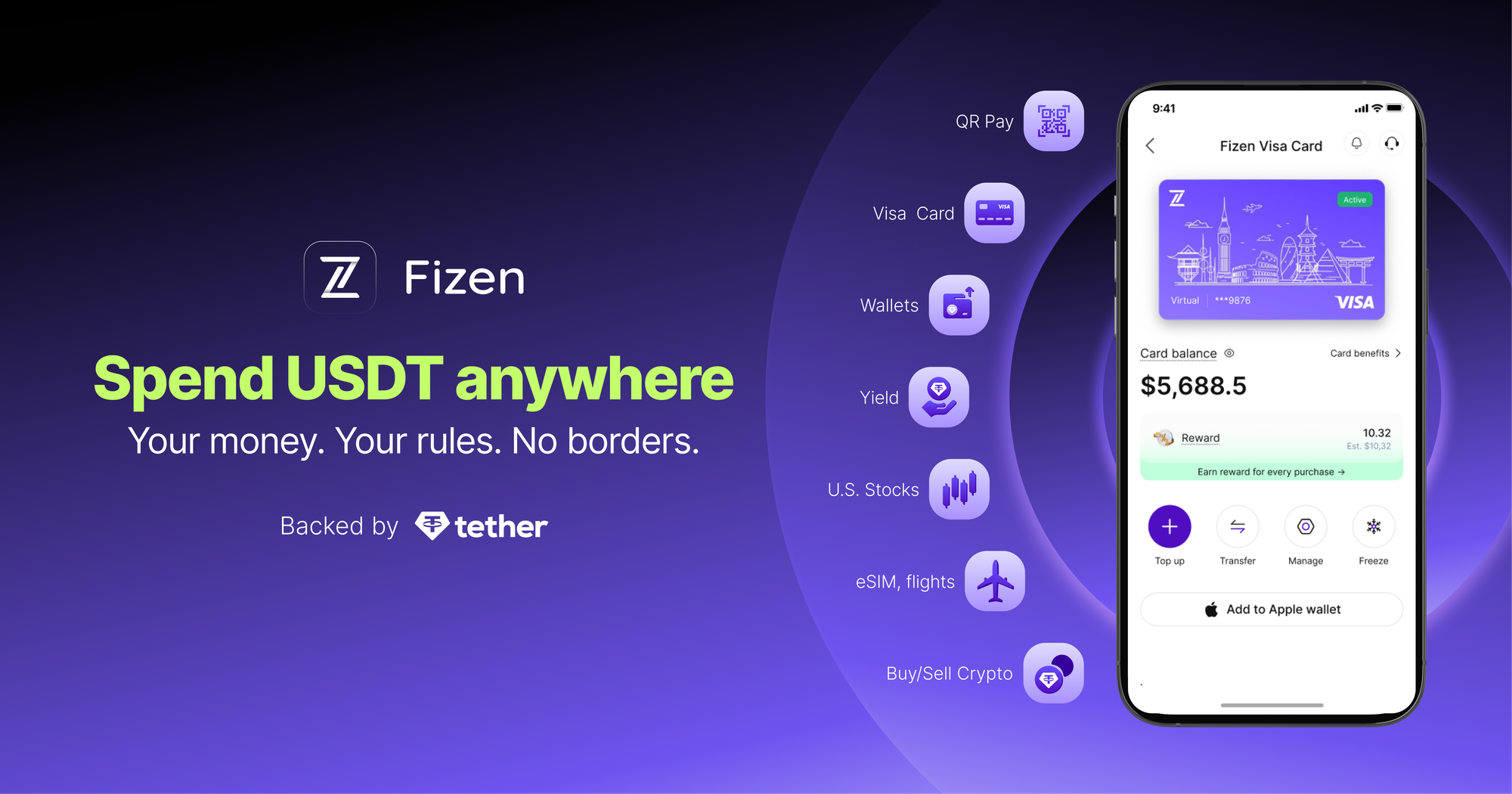
Fizen: hold, spend and send USDT yourself
A self-custody super app, all from one USDT balance: QR pay for visitors in Vietnam and the Philippines, send money across 64 countries, tokenized US stocks and a travel eSIM in 150+ countries. Backed by an investment from Tether.
Fizen is a self-custody super app: you hold your own balance. Availability of QR pay, send, buy, sell, stocks and eSIM varies by country, and each transaction depends on the networks and partners at the time. Fizen is backed by an investment from Tether. This is general information only, not financial or tax advice. See the Terms of Use and Disclaimer.
Terms and conditions
- Information only. Fizen publishes this article to inform, not to sell. Nothing here is an offer or solicitation, and it is not financial, investment, legal or tax advice. Prices, rules and availability change; check official sources.
- For readers in the United States. This article provides information only. It is not an offer, solicitation or sale of any product or service, and it is not financial, investment, legal or tax advice. Fizen is not offered to US Persons.
- Full terms. Master Terms of Use, Privacy Policy and Disclaimer on the Fizen site.
- QR Pay funding. Fizen QR Pay is funded only with USDT on Solana or BNB Chain: no bank account link, no card, no VND or PHP deposit, and no other token or network. USDT on another network, or another token, cannot be deposited. QR Pay is for cross-border use by travellers and foreigners and is governed by the Fizen QR Pay Terms.