How to Get Paid in USDT as a Freelancer (2026)
The 2026 guide to getting paid in USDT as a freelancer: how to receive it, the network trap to avoid, and how to spend or cash out.


More freelancers are getting paid in stablecoins because it settles in minutes, crosses borders without a bank, and holds its value at roughly one dollar. Upwork, Deel and Fiverr now support stablecoin payouts, and plenty of clients pay by direct transfer. Here is how to receive USDT safely, the one mistake that loses money, and how to turn it into spending or local currency.
How to receive USDT
- Agree the token and network: confirm you are being paid in USDT and on which blockchain network. The wrong network is the single most common way funds go missing.
- Share the right address: give the client a wallet address that supports that network, and request a small test payment before a large one.
- Confirm arrival: the payment settles in minutes and you can see it land in your wallet.
Through a platform vs direct
Platforms like Upwork and Deel now settle stablecoin payouts for a small flat fee, which is often cheaper than a wire. Direct invoices skip the platform cut entirely but put the responsibility on you to get the token and network right. Both work; the direct route just needs more care.
Spending or cashing out
Once you hold USDT you can spend it on a Visa card, pay by QR in Vietnam or the Philippines, or sell it for local currency through P2P or Transak. You are not forced to convert to fiat at all if you would rather spend directly.
Frequently asked questions
How do freelancers get paid in USDT?
Agree the token and network with the client, share a wallet address that supports that network, and request a small test payment first. Upwork, Deel and Fiverr also offer stablecoin payouts.
What is the biggest risk?
Sending to the wrong blockchain network. Always confirm the network and test with a small amount before a large payment.
How do I spend USDT once paid?
Spend it on a Visa card, pay by QR in Vietnam or the Philippines, or cash out to local currency via P2P or Transak.
Is getting paid in USDT taxable?
Usually yes, as income at its value when received. See our crypto tax guide and a local professional.
Your work crosses borders; your pay should too. Get paid in dollars that move in minutes.
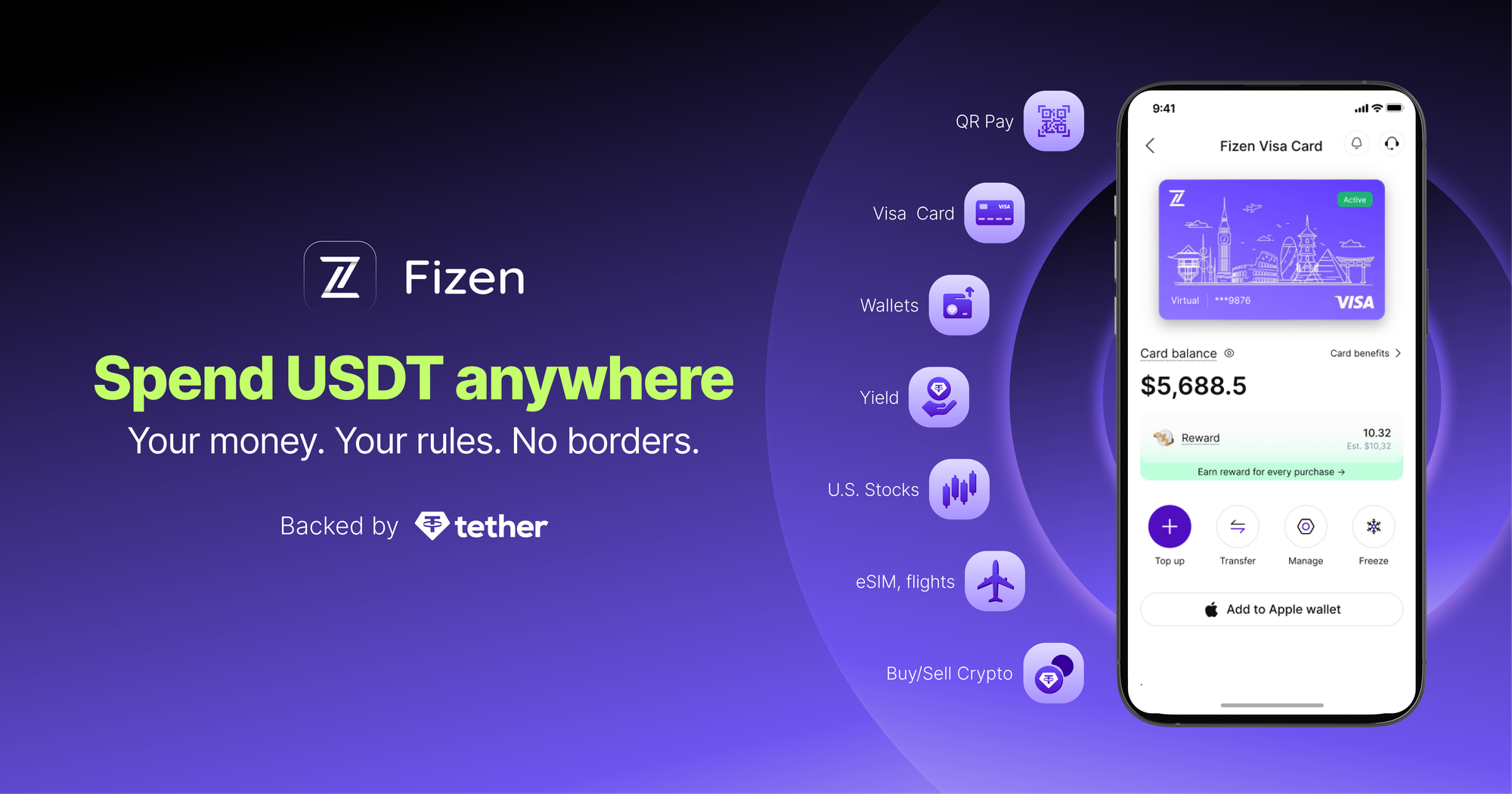
Fizen — send, spend and get paid in USDT
QR payments for visitors in Vietnam and the Philippines, a travel eSIM in 150+ countries, tokenized US stocks and a self-custody wallet. One app.
Fizen lets you hold your own balance and move it across borders. Availability of buy, sell, transfer, tokenized stocks and QR pay varies by country, and whether any individual transaction completes depends on the networks, counterparties and partners at the time. Fizen is backed by an investment from Tether. For more, see the Fizen Docs and Terms of Use. This article is for general information only and is not financial or tax advice.
Related guides
Terms and conditions
- Information only. Fizen publishes this article to inform, not to sell. Nothing here is an offer or solicitation, and it is not financial, investment, legal or tax advice. Prices, rules and availability change; check official sources.
- For readers in the United States. This article provides information only. It is not an offer, solicitation or sale of any product or service, and it is not financial, investment, legal or tax advice. Fizen is not offered to US Persons.
- Full terms. Master Terms of Use, Privacy Policy and Disclaimer on the Fizen site.
- QR Pay funding. Fizen QR Pay is funded only with USDT on Solana or BNB Chain: no bank account link, no card, no VND or PHP deposit, and no other token or network. USDT on another network, or another token, cannot be deposited. QR Pay is for cross-border use by travellers and foreigners and is governed by the Fizen QR Pay Terms.