Why Tether Is Betting on Stablecoin Utility and Self-Custody (2026)
Tether's investments increasingly point one way: everyday stablecoin use, held by users themselves. Here is the thesis behind it, and why the Fizen investment fits.

Key takeaways
- Tether, the company behind the world's largest stablecoin, is increasingly backing real-world USDT utility and self-custody.
- Its investment in Fizen was made, in Tether's own words, to strengthen global stablecoin utilization and self-custody solutions.
- The thesis: stablecoins move beyond trading into everyday spending, sending and saving, held by the people who use them.
- For users, it signals where the space is heading, usable digital dollars you actually control.
It is easy to think of Tether as just the company that prints USDT for traders. But look at where it is putting money, and a clearer picture emerges: Tether is betting on stablecoins becoming everyday money, held by people themselves, not just chips on an exchange. Its investment in Fizen is one piece of that. Here is the thesis, grounded in what Tether has actually said, and why it matters to you.
What Tether actually said
When Tether announced its strategic investment in Fizen, the stated purpose was explicit: to strengthen global stablecoin utilization and self-custody solutions. That is not marketing gloss, it is the official framing. Two words in there do a lot of work: utilization, meaning real-world use, and self-custody, meaning users holding their own funds. That is the direction Tether is pointing.
Why stablecoin utility is the next frontier
USDT already dominates crypto trading. The room to grow is not there, it is in everyday life: paying a merchant, sending money home, saving in dollars in a country with a shaky currency. That is where hundreds of millions of people could actually use a stable digital dollar. Backing apps that make USDT spendable and sendable, rather than just tradeable, is a bet on that far bigger market.
Why self-custody is part of the thesis
The other word is self-custody. The lesson of the last few years is that people lose money when they hand it to a platform that fails, freezes or delists them. A digital dollar that lives in your own wallet, that no single company can seize, is more trustworthy and more durable. Backing self-custody is a bet that the future of stablecoins is held by users, not by intermediaries.
Where Fizen fits
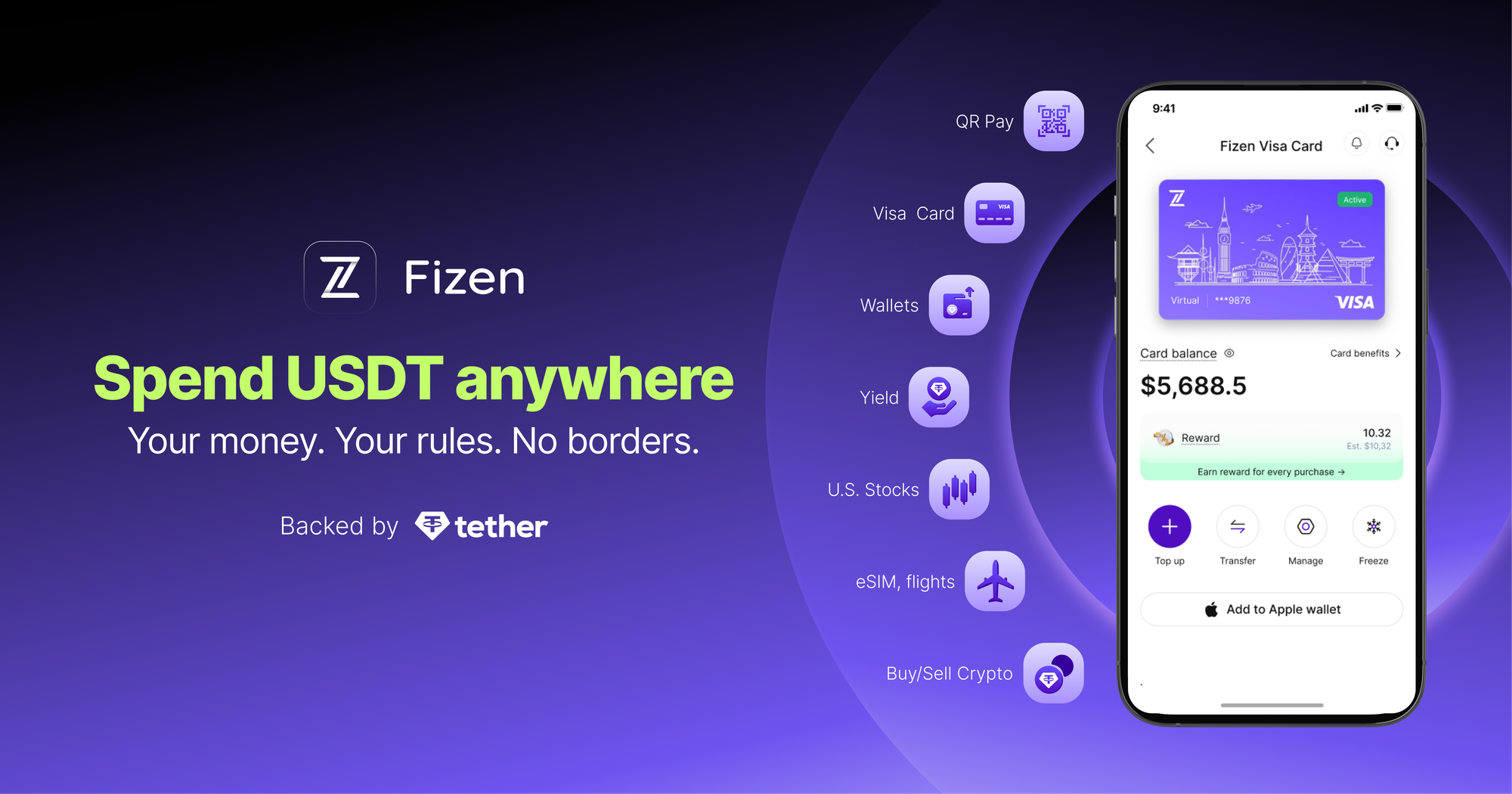
Fizen is a self-custody super app that puts USDT to work in real life: a Visa card, QR pay, remittances, tokenized stocks and a travel eSIM, all from one balance you control. In other words, it is exactly the combination Tether's stated thesis points at, real-world utility plus self-custody. That is why the investment lines up rather than looking random.
What it signals for users
You do not have to read tea leaves. The direction of travel is that stablecoins are becoming usable, self-custodied digital dollars, and the biggest issuer in the space is putting weight behind that. For anyone already holding USDT, it is a sign the tools to actually live on it, not just trade it, are being built and backed. This is general information and analysis, not investment advice.
Frequently asked questions
Why did Tether invest in Fizen?
In Tether's own framing, to strengthen global stablecoin utilization and self-custody. Fizen makes USDT usable in everyday life while users hold their own funds, which fits that thesis.
Is Tether moving beyond trading?
Its investments increasingly back real-world stablecoin use, payments, remittances and self-custody, not just exchange trading. That is where the growth is.
Why does self-custody matter to Tether's thesis?
Because a dollar users hold themselves cannot be frozen or lost by a failing platform, which makes stablecoins more trustworthy and durable at scale.
What does this mean for USDT holders?
It signals that tools to spend, send and live on USDT, in self-custody, are being built and backed, not just trading venues.
Is this official Tether information?
The stated purpose of the Fizen investment is from Tether's official announcement; the broader thesis here is analysis, not an official Tether statement.
Follow where the money goes, not the marketing. Tether is betting on digital dollars you actually use, and hold.
Fizen: the self-custody super app backed by Tether
Hold your own USDT and put it to work: spend by Visa or QR, send across 64 countries, buy tokenized US stocks, and get a travel eSIM, all from one balance you control. Backed by a strategic investment from Tether.
Fizen is a self-custody super app: you hold your own balance. It is backed by a strategic investment from Tether (see the official announcement). This is general information, not financial or investment advice.