Coins.ph QRPh vs a Self-Custody Wallet: Which for Tourists? (2026)
Coins.ph put stablecoins on the Philippines' QRPh rails. Here is how it stacks up against holding USDT yourself, especially for visitors without a PH account.
Key takeaways
- The Philippines' national QRPh standard now carries stablecoin payments, and Coins.ph was first to route USDT and USDC through it.
- Coins.ph is a licensed Philippine e-wallet: powerful locally, but it generally needs a Philippine identity and account, which tourists cannot get.
- A self-custody wallet lets a visitor hold USDT and pay by QR without a Philippine account, and keeps the balance in your control.
- For residents, Coins.ph is convenient; for tourists and anyone who wants self-custody, holding USDT yourself is the flexible route.
The Philippines is one of the most stablecoin-friendly countries on earth, and its payment rails are catching up. Coins.ph, a licensed local e-wallet, now routes stablecoins through QRPh, the national QR standard. That is great news, with one catch for visitors: Coins.ph is built for people with a Philippine identity and account. Here is how Coins.ph QRPh compares to holding USDT yourself, and which makes sense for you in 2026.
What did Coins.ph actually add?
Coins.ph connected stablecoin balances to QRPh, the Philippines' unified QR code, so a Coins.ph user can pay QRPh merchants funded from crypto. QRPh works across banks and e-wallets nationwide, so this plugs stablecoins into everyday payments at a large merchant base.
What is the catch for tourists?
Coins.ph is a regulated Philippine e-wallet, which is exactly why it works so well for residents, and exactly why it is hard for visitors. Opening and verifying it generally assumes a Philippine identity and, often, a local number. A short-stay tourist usually cannot get in, no matter how much USDT they hold.
How does a self-custody wallet compare?
With a self-custody wallet you hold USDT yourself and pay by QR where supported, without a Philippine account. You keep control of the balance, you are not tied to one platform, and you can spend, send or cash out on your terms. The trade-off is that you manage your own wallet.
| Coins.ph QRPh | Self-custody wallet | |
|---|---|---|
| Who holds your balance | Coins.ph | You |
| Needs a PH account/ID | Yes | No |
| Good for tourists | Hard to access | Yes |
| Pay QRPh merchants | Yes | Where supported |
| Control of funds | Custodial | You hold the keys |
Which should you use?
If you are a Philippine resident, Coins.ph is convenient and deeply integrated. If you are a visitor, or you simply prefer to hold your own dollars, a self-custody wallet gets you paying by QR without a local account and keeps the balance yours.
Frequently asked questions
Can tourists use Coins.ph?
Usually not easily. Coins.ph is a licensed Philippine e-wallet that generally requires a Philippine identity and account, which short-stay visitors cannot obtain.
How can a tourist pay by QR in the Philippines then?
Hold USDT in a self-custody wallet that supports Philippine QR, and pay merchants directly from your balance, no local account needed.
Is Coins.ph or self-custody safer?
Coins.ph is regulated but custodial, so it holds your balance. Self-custody means you hold your own keys, so no single platform controls your funds.
Does self-custody work with QRPh merchants?
You can pay by QR where your wallet supports the Philippine standard; coverage grows over time.
Which is cheaper?
Both avoid card FX fees. Costs come down to each platform's spread; self-custody lets you shop the P2P rate when you cash out.
The rails opened up; the front door still checks your passport. Hold USDT yourself and walk straight in.
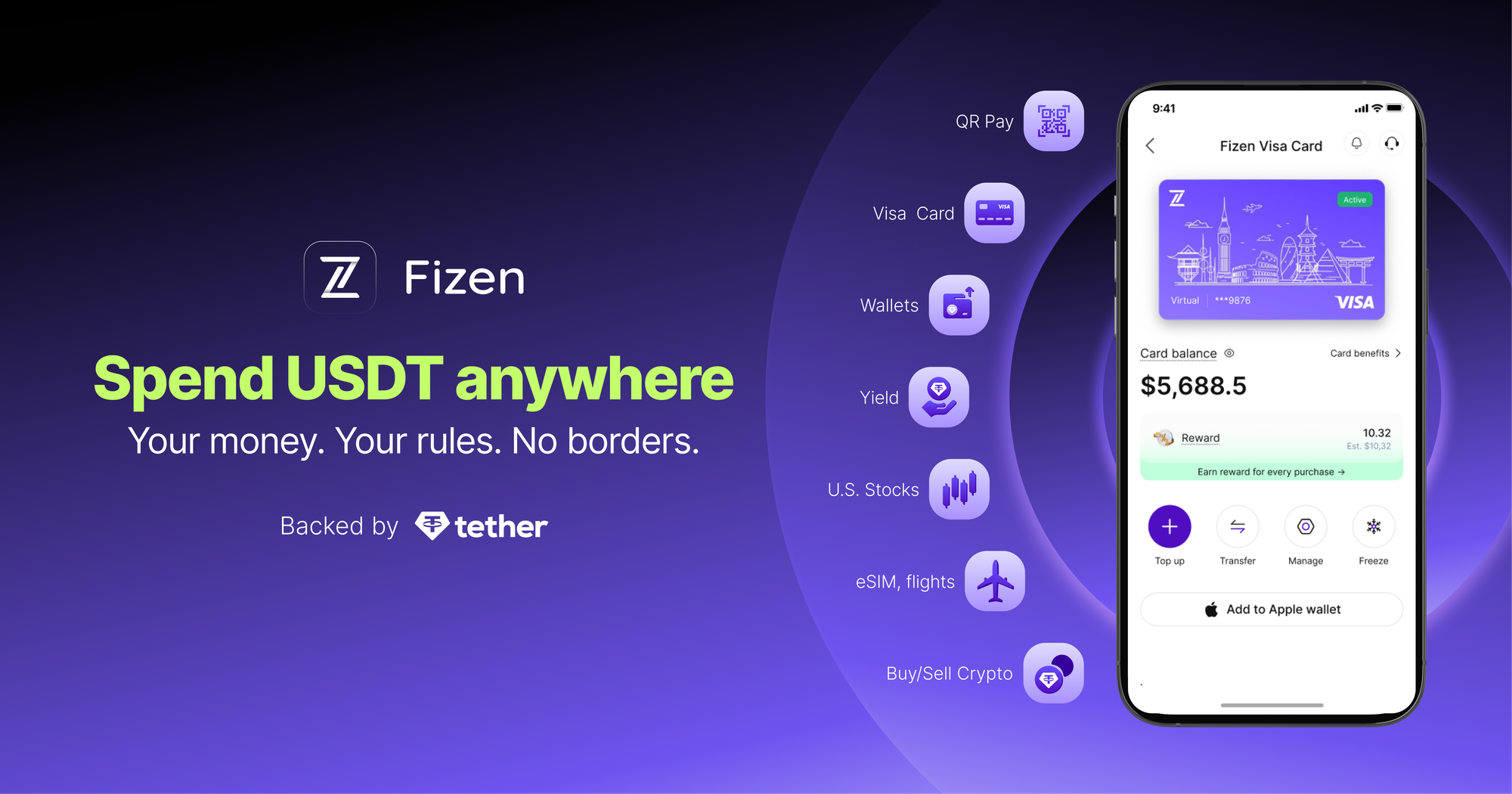
Fizen: hold, spend and send USDT yourself
A self-custody super app, all from one USDT balance: QR pay in Vietnam and the Philippines, send money across 64 countries, buy and sell crypto via P2P or Transak, tokenized US stocks, a travel eSIM in 150+ countries, and a Visa card. Backed by an investment from Tether.
Fizen is a self-custody super app: you hold your own balance. Availability of QR pay, send, buy, sell, stocks and eSIM varies by country, and each transaction depends on the networks and partners at the time. Fizen is backed by an investment from Tether. This is general information only, not financial or tax advice. See the Terms of Use and Disclaimer.