South Korea eSIM 2026: Best Options for Travelers
The honest, been-there guide to data in South Korea: whether an eSIM works, the gotchas nobody warns you about, and the one I use now (from $4).
Key takeaways
- Sort data before you fly and you walk out of the airport in South Korea already online, no counter queue.
- Your phone must be eSIM-capable and carrier-unlocked, and an eSIM is data-only, so keep your normal SIM for calls and OTP texts.
- Install it before you leave home; some countries let you activate on landing, strict ones need full setup before arrival.
- The one I use (Fizen) starts at $4, covers 150+ countries, pays via USDT, Stripe, Apple Pay or Google Pay, with real one-to-one support if it ever fails.
Seoul runs on apps, and I found that out standing outside a Hongdae cafe unable to load the QR menu, the map, or the translation I suddenly and urgently needed to order without pointing like a lost tourist. Korea does not really do 'offline visitor'.
Now I land connected. Here's the honest guide to staying online in South Korea, the gotchas, and what it costs.
Roaming, local SIM, or eSIM? What I'd tell a friend
The short version: roaming stings, Korea's KT and SKT tourist SIMs are solid but data-only and mean the airport counter, and an eSIM gives you the same fast networks without the queue. Set it up before you fly, keep your number for texts, done.
Does an eSIM actually hold up in South Korea?
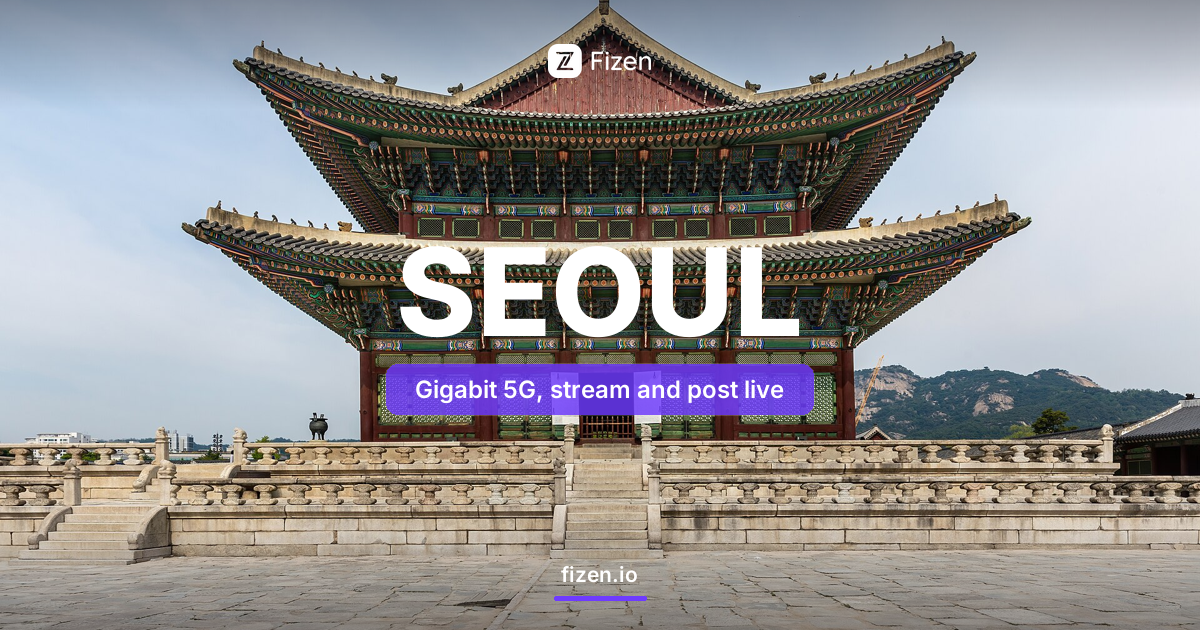
Outstanding. Korea has some of the fastest, most complete mobile coverage anywhere, subways, mountains, island ferries, all of it. You genuinely will not think about signal, which leaves more attention for the fried chicken and the 2am karaoke.
The eSIM gotchas nobody warns you about
A few things I wish someone had told me before my first eSIM, so you can skip the learning curve:
- Your phone must be ready: it has to be eSIM-capable and carrier-unlocked. A phone still locked to a home contract will refuse a travel eSIM, and some models sold in one region ship with eSIM crippled, so check yours before you pay.
- It is data-only: the eSIM gives you internet, not a local number. Keep your normal SIM in for calls and the two-factor codes your bank loves to text.
- Install before you fly: download the eSIM on home Wi-Fi, not in an airport queue. Korea is easy: install at home and switch on when you land.
- Check hotspot if you tether: if you run a laptop off your phone, confirm the plan allows hotspot. Some 'unlimited' plans quietly throttle or block it.
When a dead SIM costs you the menu
Korea is so app-dependent that a dead eSIM does not just cost you the internet, it costs you the menu, the map and the taxi all at once. That is precisely when you want support you can reach, not a form. With Fizen the failure rate is low, but if it happens you get a one-to-one replacement and a real person on the other end, which on a bad night is the difference between a story and a disaster.
What I use, and what it costs
None of this matters if the plan is a rip-off, so plainly: a Fizen eSIM starts at $4, and the same one works in 150+ countries, so I stopped re-buying an app for every trip. You pick a daily 1GB, 3GB or 5GB plan for a short stay, or go unlimited if you are working off it. You can pay with USDT, or by card through Stripe, Apple Pay or Google Pay, so there is no local bank card and no foreign-transaction fee in the way.
Which plan makes sense for South Korea?
Maps, Papago translation, KakaoMap and T-money top-ups nibble data all day; 3 to 5GB for a week, unlimited if you're translating menus and hotspotting.
| Option | Online on arrival | The honest catch |
|---|---|---|
| Home roaming | Yes | Priced to sting |
| Local SIM in South Korea | After the queue | Counter, passport, swap your card |
| Fizen eSIM | Yes, instantly | Set it up before you fly, from $4 |
A few questions I get asked
Does an eSIM work in South Korea?
Outstanding.
Is my phone compatible with a travel eSIM?
It needs to be eSIM-capable and carrier-unlocked. Most recent iPhones and flagship Android phones qualify, but a carrier-locked phone or some region-specific models will not, so check before you buy.
Do I install the eSIM before I fly?
Yes, download it at home on Wi-Fi. Korea is easy: install at home and switch on when you land.
How much does an eSIM for South Korea cost?
The one I use (Fizen) starts at $4 and covers 150+ countries, with daily 1GB, 3GB and 5GB plans or unlimited, paid via USDT, Stripe, Apple Pay or Google Pay.
What if it does not work when I land?
Pick a provider you can actually reach. With Fizen, if an eSIM fails you get a one-to-one replacement and a real person who answers, instead of a dead FAQ page.
Where to Buy a South Korea eSIM and Get Online in Minutes
You can buy a South Korea eSIM in the Fizen app in about two minutes: pick a daily or unlimited data plan, pay in USDT or by card via Stripe, Apple Pay or Google Pay, and install it before you fly. When you land you are already online on 4G or 5G, with no airport SIM counter and no roaming bill. Compare plans on the Fizen eSIM page and Fizen eSIM pricing.
Where can I buy a South Korea eSIM?
You can buy a South Korea eSIM online in the Fizen app: choose a daily or unlimited plan, pay in USDT or by card, and install it before you travel so you have South Korea internet on 4G or 5G the moment you land.
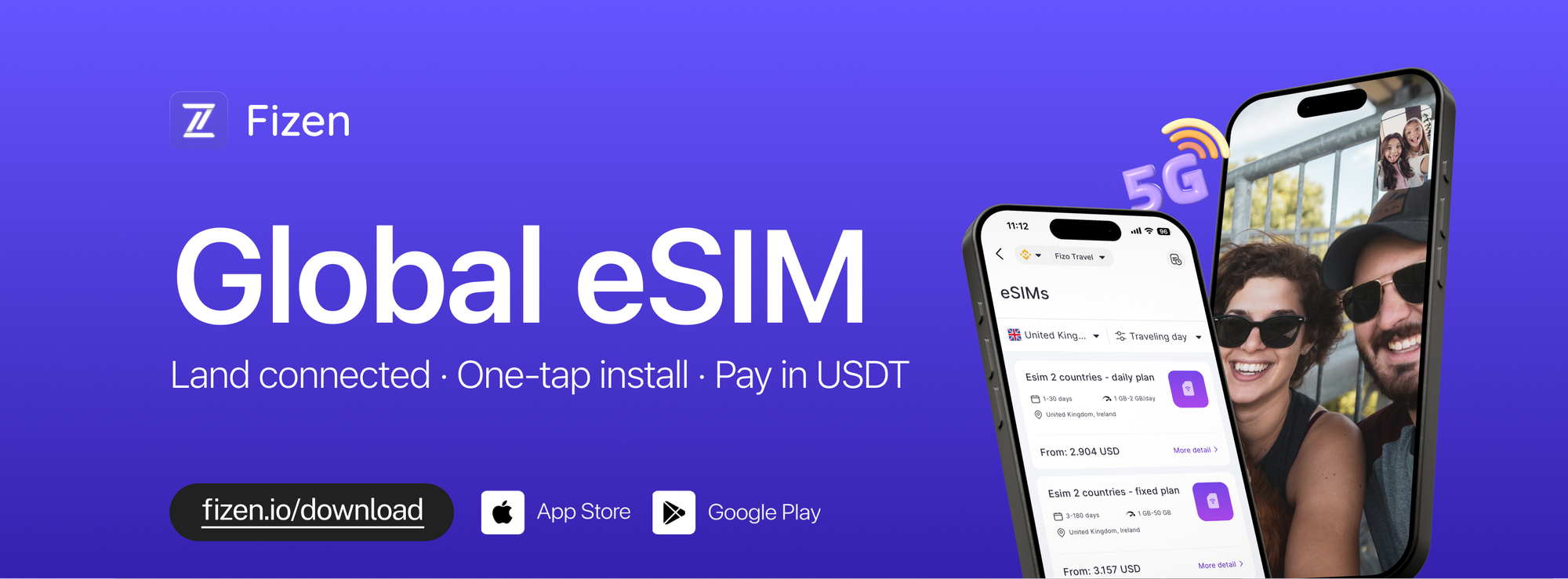
Land already online, from $4.
No midnight SIM queue, no roaming bill that eats your budget. A Fizen eSIM covers 150+ countries, with daily 1GB, 3GB and 5GB plans or unlimited data. Pay with USDT, or by card via Stripe, Apple Pay or Google Pay. And on the rare day one fails, you get a one-to-one replacement and a person who actually answers, not a ticket that replies next week.
Honest note: I use Fizen myself, and plans and prices change, so check the current one before you buy. Fizen is a self-custody super app, backed by an investment from Tether.
More from the road
- Staying Connected in Thailand
- The Complete Fizen eSIM Guide
- eSIM Scams in 2026 and How to Avoid Them
- Best Travel eSIM 2026: Every Country, Honestly Compared
- Best eSIM for Japan
- Best eSIM for Taiwan
Get the Fizen eSIM and set it up
Terms and conditions
- Information only. Fizen publishes this article to inform, not to sell. Nothing here is an offer or solicitation, and it is not financial, investment, legal or tax advice. Prices, rules and availability change; check official sources.
- For readers in the United States. This article provides information only. It is not an offer, solicitation or sale of any product or service, and it is not financial, investment, legal or tax advice. Fizen is not offered to US Persons.
- Full terms. Master Terms of Use, Privacy Policy and Disclaimer on the Fizen site.