What to Eat in the Philippines (2026): Local Food and How to Pay
Adobo, sinigang, lechon and halo-halo: the Filipino food to try in 2026, plus how to pay for every plate by QR like a local.
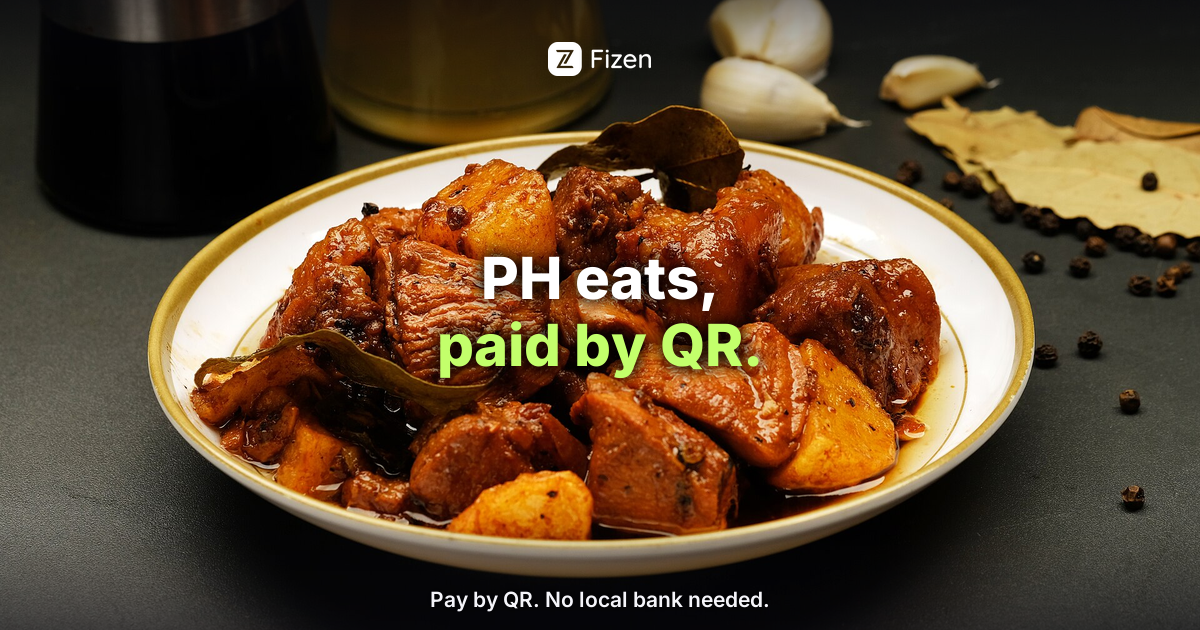
Filipino food is having its moment, a delicious mix of sweet, sour and savoury shaped by centuries of trade. The best of it comes from carinderias, market stalls and family kitchens that run on cash and QR, not foreign cards. Here is what to eat and how to pay for it like a local.
The dishes to try
- Adobo: the unofficial national dish, meat braised in soy, vinegar, garlic and pepper. Every family has their version.
- Sinigang: a bright, sour tamarind soup with pork or seafood and vegetables, the ultimate comfort food.
- Lechon: whole roast pig with crackling skin, the centrepiece of any celebration.
- Halo-halo: the famous shaved-ice dessert piled with fruit, beans, jelly and leche flan.
Where the best food is
As with anywhere, the best Filipino food is rarely fancy. Carinderias (small eateries), market stalls and street vendors serve the real thing, and they take cash or a QR Ph code, not foreign cards.
How to pay like a local
With the Fizen app you verify once, top up a balance in USDT, and scan a QR Ph code to pay in pesos, no local bank account or GCash registration needed. Order the adobo, scan, and go back for the halo-halo.
Frequently asked questions
What food should I try in the Philippines?
Adobo, sinigang and lechon are the essentials, plus halo-halo for dessert. The best versions are at carinderias and market stalls.
Do Filipino food spots take cards?
The best local ones do not. Carinderias, stalls and street vendors take cash or a QR Ph code, not foreign cards.
How do I pay for street food in the Philippines?
Pay by QR: with an app like Fizen, verify once, top up a USDT balance, and scan the QR Ph code to pay in pesos. No local bank or GCash needed.
Is Filipino food good?
Yes, it is a rich, distinctive cuisine of sweet, sour and savoury flavours, best enjoyed at humble local spots.
The best Filipino food comes from stalls that do not take your card. Pay for it like a local.
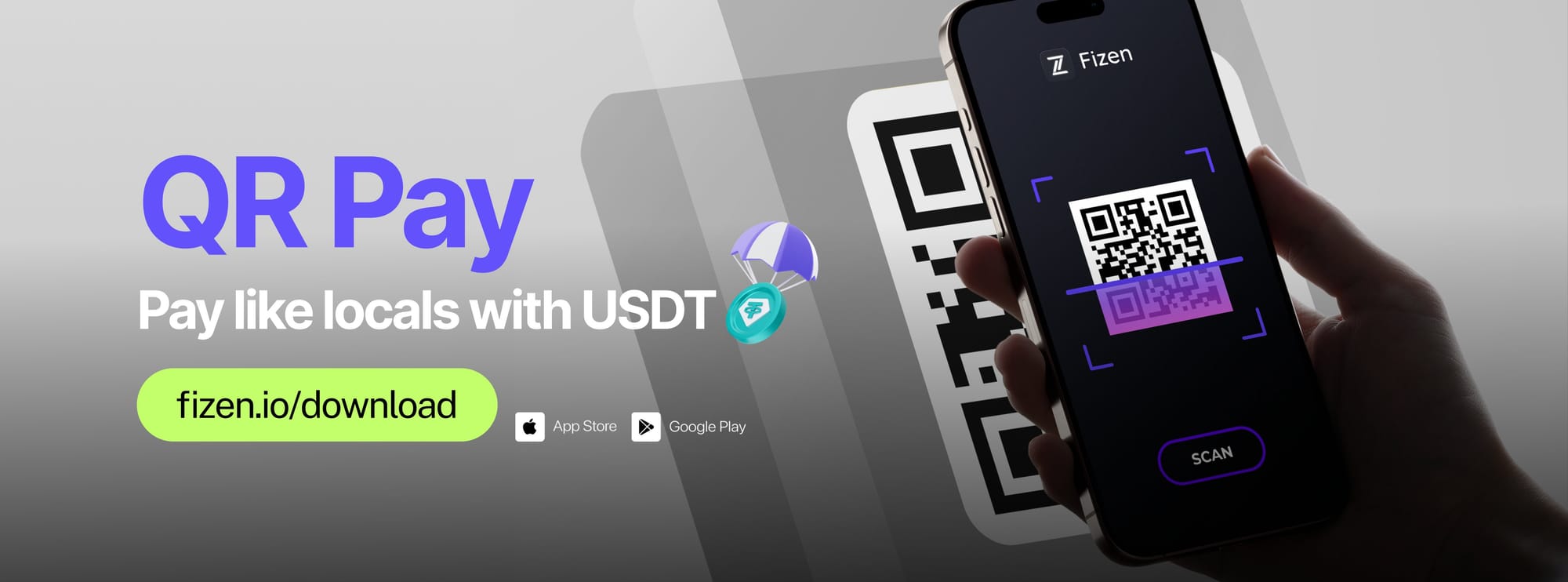
Fizen Super App
One app for QR pay as a visitor in Vietnam and the Philippines, a travel eSIM in 150+ countries and a self-custody wallet. Your money, your control.
Fizen QR Pay works wherever VietQR is accepted. Whether any individual payment goes through still depends on the merchant and the local network at the time. Fizen is backed by Tether, the largest digital-asset company and issuer of USDT. For more on Fizen QR Pay, see the Fizen QR Pay Docs and Terms of Use. This article is for informational purposes only and is not financial advice.
Related guides
- Money Tips for the Philippines
- How to Pay in the Philippines as a Tourist
- Pay With Crypto in the Philippines
Terms and conditions
- Information only. Fizen publishes this article to inform, not to sell. Nothing here is an offer or solicitation, and it is not financial, investment, legal or tax advice. Prices, rules and availability change; check official sources.
- For readers in the United States. This article provides information only. It is not an offer, solicitation or sale of any product or service, and it is not financial, investment, legal or tax advice. Fizen is not offered to US Persons.
- Full terms. Master Terms of Use, Privacy Policy and Disclaimer on the Fizen site.
- QR Pay funding. Fizen QR Pay is funded only with USDT on Solana or BNB Chain: no bank account link, no card, no VND or PHP deposit, and no other token or network. USDT on another network, or another token, cannot be deposited. QR Pay is for cross-border use by travellers and foreigners and is governed by the Fizen QR Pay Terms.