Crypto Card Scams in 2026: The 5 Fakes Circulating and How to Spot Them
The five crypto-card scams actually circulating in 2026, and the five one-minute checks that filter every one.

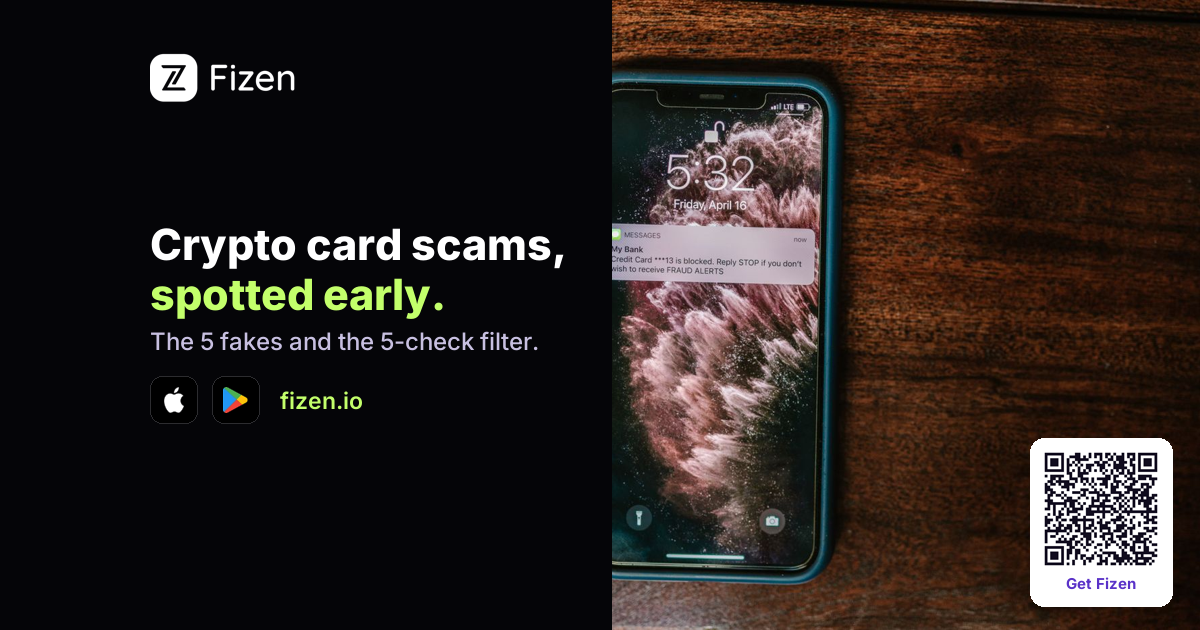
The fastest way to lose crypto is not a hack; it is a payment product that was never real. As stablecoin cards went mainstream, scammers followed, and in 2026 the fakes are polished: real-looking sites, Telegram support, even unboxing videos. Here are the scams actually circulating, and the checks that filter every one of them.
The five scams doing the rounds
- The phantom card: a site takes your top-up for a card that never issues. The tell: no verifiable company, no app-store presence, payment only to a raw wallet address.
- The fake support agent: you complain about a real card on X or Telegram; a fake account replies first and asks for your seed phrase or a verification deposit. No legitimate support ever needs either.
- The too-good cashback: 30-50% cashback promises that pay early users from later users' top-ups until the exit.
- The clone site: a pixel-perfect copy of a real card site on a lookalike domain, harvesting logins and top-ups. Always type the domain yourself.
- The Telegram card vendor: anonymous "aged cards" or "no-KYC unlimited cards" sold in chat groups; they are stolen, cloned, or imaginary.
🎁 Reader bonus: Code c12M → up to 10% cashback + FiPoints on every spend. T&Cs apply.
Claim your card →The five-check filter
Before funding any card: (1) a named company with a real registration trail; (2) apps in the official App Store and Google Play under that company's developer account; (3) identifiable backers or investors you can verify from the investor's own site, Fizen, for example, announced its Tether investment on Tether's own newsroom; (4) KYC at onboarding, its absence signals a product built to vanish; (5) self-custody or clearly documented custody terms, so you know exactly who holds what.
If you already paid a fake
Stop contact, keep every screenshot and transaction hash, report the domain to the registrar and the app to the platform, and warn the community threads where you found it. Funds sent to scam wallets rarely return, which is why the filter above matters more than any recovery service, and paid 'crypto recovery' offers are themselves the follow-up scam.
Frequently asked questions
How do I know if a crypto card is legit?
Named company, official app-store listings, verifiable backers, KYC at onboarding, and documented custody. A miss on any of the five is a walk-away signal.
Is a card that skips KYC safer for privacy?
No. Skipping KYC means the product runs outside card-network rules, which is how balances disappear without recourse.
Can support agents ask for my seed phrase?
Never. No legitimate support needs your seed phrase, private keys, or a 'verification deposit'. Anyone asking is a scammer.
Are crypto recovery services real?
Overwhelmingly no. Paid recovery offers targeting scam victims are the second act of the same scam.
Every check on the list takes one minute; skipping them can cost everything. Fund only what passes all five, and sleep fine.
Fizen Virtual Visa Card
The best card for SaaS, ChatGPT, Claude, Netflix, Spotify, Amazon, Google, Meta, Tiktok Ads. Spend USDT like cash globally.
Fizen Card processes as a standard Visa and is accepted wherever Visa is supported. Whether any individual charge is approved still depends on the merchant and their payment processor at the time of payment. Fizen Card is issued under applicable regulations. Users should verify availability in their jurisdiction. This article is for informational purposes only and does not constitute financial advice. More details about Fizen Card, please refer to Fizen Card Docs and Terms of Use.
Related guides
More guides
Terms and conditions
- Information only. Fizen publishes this article to inform, not to sell. Nothing here is an offer or solicitation, and it is not financial, investment, legal or tax advice. Prices, rules and availability change; check official sources.
- For readers in the United States. This article provides information only. It is not an offer, solicitation or sale of any product or service, and it is not financial, investment, legal or tax advice. Fizen is not offered to US Persons.
- Full terms. Master Terms of Use, Privacy Policy and Disclaimer on the Fizen site.