
How to Send Money From the US to India With USDT (2026)
How to send money from the US to India with USDT: the sender setup, cashing out to rupees via P2P or UPI, a cost comparison, and a note on records.
The United States to India route is one of the largest remittance corridors in the world, and it is also one of the most overcharged. A typical bank wire or money-transfer app takes a visible fee and then quietly marks up the dollar-to-rupee rate, so a family in India receives noticeably fewer rupees than the sender expects. Sending the same amount as USDT removes most of that gap. Here is how to do it from the US, and how the person in India turns it into rupees.
The setup on the US side
- Buy USDT: in the Fizen app, buy USDT with US dollars through P2P or Transak, or top up from a card. You now hold digital dollars.
- Send it: transfer the USDT to the recipient's wallet. It arrives in minutes for a small network fee, not a percentage of the amount.
Cashing out to rupees in India
On the India side, the recipient sells the USDT for rupees through P2P or Transak and receives the funds to a local bank or UPI. Because India has a deep peer-to-peer market and instant UPI payouts, the cash-out is fast and the spread is small. The recipient does not need a US bank account or a card that works internationally; they only need the Fizen app and a local payout method.
What it costs, roughly
| Method | Typical all-in cost | Speed |
|---|---|---|
| Bank wire | 4 to 7 percent (fee plus FX markup) | 1 to 5 business days |
| Money-transfer app | 2 to 5 percent | Minutes to a day |
| USDT (buy, send, cash out) | about 0.5 to 1.5 percent | Minutes |
Costs are indicative and vary by provider, amount and payout method.
A note on tax and records
Sending your own money to family is generally a gift or personal transfer, but every jurisdiction treats crypto records differently, and India in particular expects clear documentation. Keep the transaction hash and the buy and sell records on both ends, and speak to a local tax professional for anything sizeable. This article is information, not tax advice.
Frequently asked questions
What is the cheapest way to send money from the US to India?
On cost alone, a USDT transfer is usually cheapest, at roughly 0.5 to 1.5 percent all in, versus 4 to 7 percent for a bank wire once the exchange-rate markup is included.
How does the recipient in India get rupees?
They sell the USDT for rupees through P2P or Transak in the Fizen app and receive the money to a local bank account or UPI. No US bank account is required.
How fast does it arrive?
The USDT transfer settles in minutes; total time depends on how quickly each side buys and cashes out, but it is typically much faster than a bank wire.
Do I need to report it?
Personal transfers to family are usually not taxable income, but rules on documentation vary. Keep the transaction hash and buy and sell records, and consult a local tax professional for large amounts.
Every rupee lost to a markup is a rupee that never reached home. Send on a rail that keeps more of it.
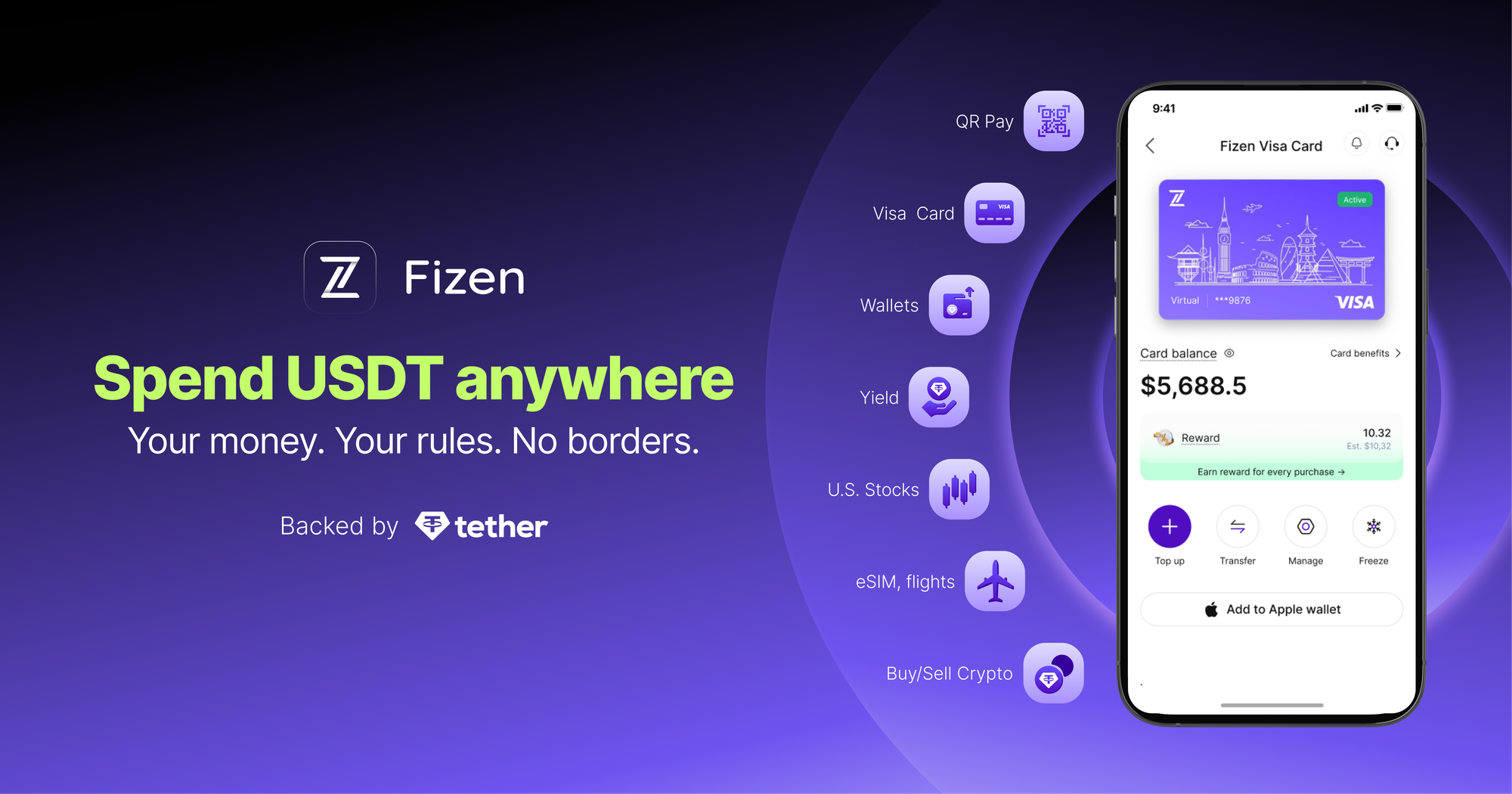
Fizen — send, spend and get paid in USDT
Buy and sell crypto with P2P in 64 countries or Transak, QR pay across Vietnam and the Philippines, and a Visa card. Move money across borders for a fraction of a bank wire.
Fizen lets you hold your own balance and move it across borders. Whether any individual buy, sell or transfer completes depends on the networks, counterparties and local partners involved at the time, and availability varies by country. Fizen is backed by an investment from Tether, the largest digital-asset company and issuer of USDT. For more, see the Fizen Docs and Terms of Use. This article is for general information only and is not financial advice.