How to Send Money From Korea to Vietnam With USDT (2026)
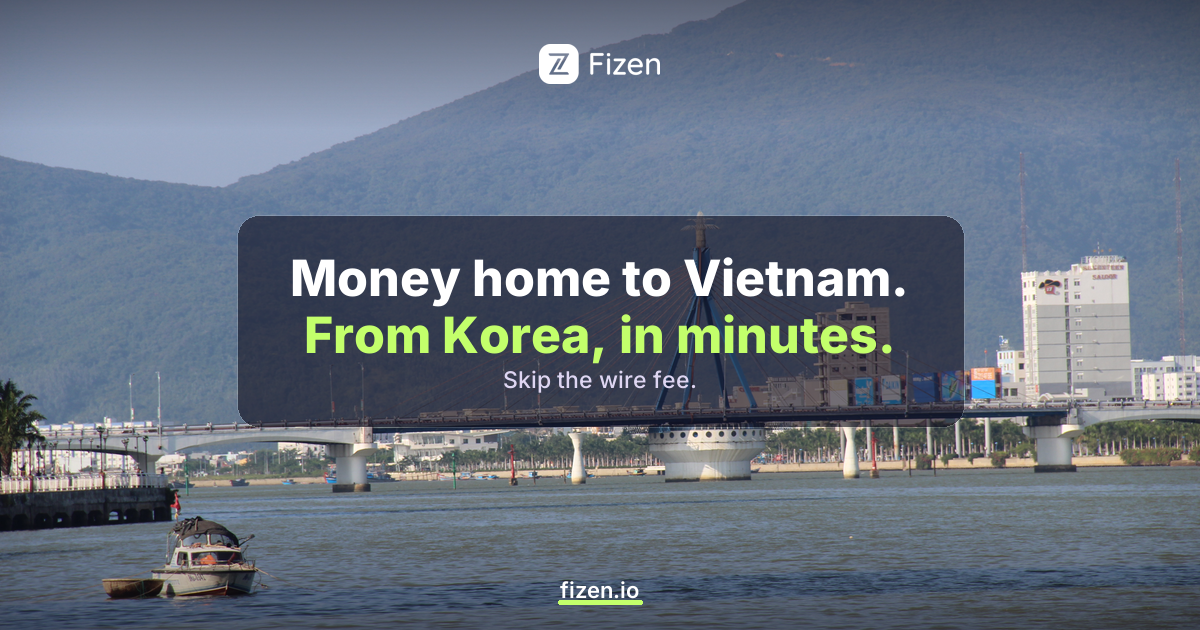
Korea to Vietnam is a huge worker corridor and quietly overcharged. Here is how to send money with USDT for a fraction of the fee, and cash out to dong.
Key takeaways
- A large Vietnamese community works in South Korea, and most send money home through banks or operators that charge a fee plus a won-to-dong rate markup.
- A USDT transfer typically costs about 0.5 to 1.5 percent all in, versus roughly 4 to 7 percent once fees and rate markups are counted.
- The route: buy USDT with won, send it in minutes, and family in Vietnam sells it for dong or spends it by QR.
- No Korean or Vietnamese bank on both ends is required; each side needs a wallet and the right network.
The Korea to Vietnam corridor is one of Asia's biggest and quietest overcharges. Hundreds of thousands of Vietnamese live and work in South Korea, and sending won home usually means a bank wire or an operator that takes a visible fee plus a markup on the won-to-dong rate. Sending the same amount as USDT strips out most of that. Here is the Korea-to-Vietnam route, end to end.
Why is sending money Korea to Vietnam so expensive?
Traditional remittance charges you twice: a fee you can see, and the gap between the rate you get and the real mid-market rate. On the won-to-dong corridor the combined cost often lands between 4 and 7 percent, and bank wires are slow on top. A USDT transfer removes most of the markup because it moves digital dollars directly.
How does the USDT route work?
- In Korea, buy USDT: buy USDT with won through P2P or Transak in a self-custody wallet.
- Send it: transfer to the recipient's wallet; it settles in minutes for a small network fee.
- In Vietnam, cash out: family sells the USDT for dong via P2P to a bank or e-wallet, or spends it directly by QR.
What does it cost, and how fast?
| Method | Typical all-in cost | Speed |
|---|---|---|
| Bank wire | 4 to 7 percent | 1 to 5 days |
| Transfer operator | 3 to 6 percent | Minutes to a day |
| USDT transfer | about 0.5 to 1.5 percent | Minutes |
When is a traditional operator still better?
If the person receiving only wants cash at a nearby counter and is not comfortable with a wallet, a cash operator is convenient. USDT wins on cost, speed and not needing a bank on either end, but it asks both sides to hold a wallet and confirm the network before a large transfer.
Frequently asked questions
Cheapest way to send money from Korea to Vietnam?
A USDT transfer, usually about 0.5 to 1.5 percent all in, versus 4 to 7 percent for banks and operators once the won-to-dong markup is included.
How does family in Vietnam receive it?
They sell the USDT for dong via peer-to-peer to a bank or e-wallet, or spend it by QR. No Korean account is needed.
How fast is it?
The transfer settles in minutes, far faster than a multi-day bank wire.
Is it safe?
Hold USDT in a wallet you control and confirm the blockchain network before a large transfer; send a small test first.
Do both sides need a bank?
No. Each side needs a wallet; the recipient can cash out to a bank or e-wallet or spend by QR.
A month of work in Korea should not lose a week and a chunk of the rate. Send it home in minutes for less.
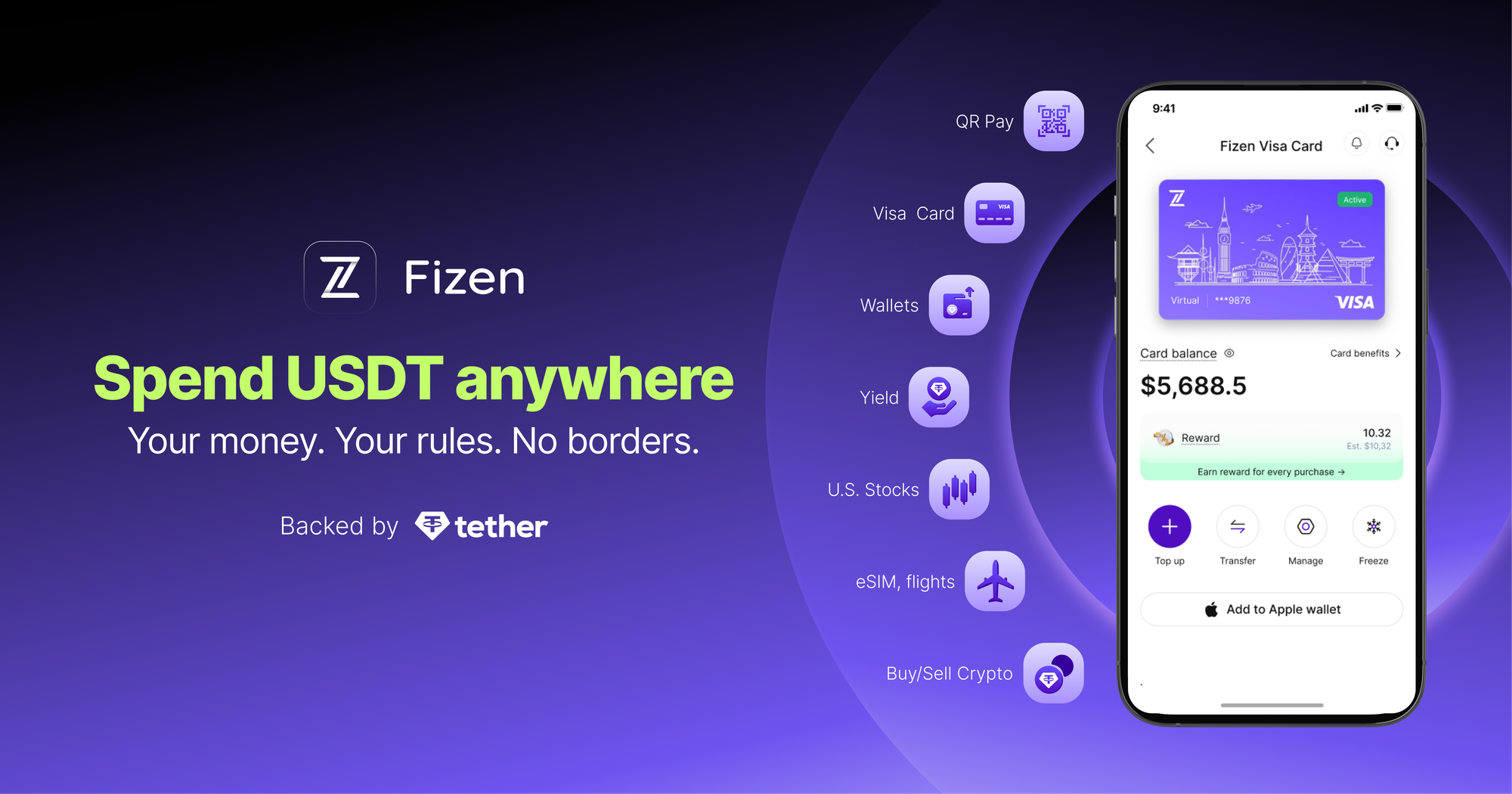
Fizen: hold, spend and send USDT yourself
A self-custody super app, all from one USDT balance: QR pay in Vietnam and the Philippines, send money across 64 countries, buy and sell crypto via P2P or Transak, tokenized US stocks, a travel eSIM in 150+ countries, and a Visa card. Backed by an investment from Tether.
Fizen is a self-custody super app: you hold your own balance. Availability of QR pay, send, buy, sell, stocks and eSIM varies by country, and each transaction depends on the networks and partners at the time. Fizen is backed by an investment from Tether. This is general information only, not financial or tax advice. See the Terms of Use and Disclaimer.
Terms and conditions
- Information only. Fizen publishes this article to inform, not to sell. Nothing here is an offer or solicitation, and it is not financial, investment, legal or tax advice. Prices, rules and availability change; check official sources.
- For readers in the United States. This article provides information only. It is not an offer, solicitation or sale of any product or service, and it is not financial, investment, legal or tax advice. Fizen is not offered to US Persons.
- Full terms. Master Terms of Use, Privacy Policy and Disclaimer on the Fizen site.