Moreta Pay Review (2026): Fees, Limits, Cashback in Vietnam

Moreta Pay is a crypto QR payment app for Vietnam: you top up a balance and pay VietQR codes at local prices. It works, but fees, top-up limits and cashback rules matter. This review covers all three, plus how it compares with LocalPay and Fizen QR Pay in 2026.
Moreta Pay keeps showing up in traveler groups as the app that lets you scan local QR codes in Asia with money from your home bank. The pitch is simple, but a review that only repeats the pitch is not useful. Here is what actually matters after you look closely: how funding works, what each payment really costs you, and what you give up by going QR-only.
What is Moreta Pay?
Moreta Pay is a QR-focused payment app for foreigners in Asia and Latin America. You verify your identity with a passport photo and a selfie, connect money from your home side (bank transfer, SEPA, UK Faster Payments, or a card), and then scan local QR codes - the app bills you in your home currency for each payment.
How Moreta Pay works
- KYC: passport photo plus a selfie, similar to most regulated payment apps.
- Funding: home bank transfer, SEPA, UK Faster Payments, or card - a genuinely wide set of rails.
- Paying: scan the merchant QR, confirm, and the charge lands in your home currency.
What Moreta Pay gets right
- Familiar funding. If you do not hold crypto and do not want to, pulling from your home bank feels natural.
- Wide coverage ambitions across Asia and Latin America, not just one country.
- Home-currency billing is easy to reconcile against your bank statement.
Where Moreta Pay falls short
- FX on every single payment. Billing in your home currency means a conversion happens each time you scan - the spread is built into your coffee, your taxi, your dinner.
- QR-only. There is no card, so anywhere that wants a tap or an online checkout is out of reach.
- One-trick app. No eSIM, no crypto on-ramp, no way to make an idle balance productive.
Moreta Pay vs Fizen QR Pay
Fizen approaches the same problem from the stablecoin side. You hold a USDT balance and spend it by QR or with a Visa-supported card, so there is no per-payment FX conversion from your home currency. Fizen is backed by Tether, the issuer of USDT, and the app goes well beyond QR:
- QR pay in Vietnam and the Philippines for foreign visitors (KYC required).
- A card for everything QR cannot cover - online checkouts included.
- Travel eSIM, flights and hotels, gift cards, P2P crypto to fiat, swap, and tokenized US stocks - one app instead of five.
The honest split: if you refuse to touch stablecoins, Moreta Pay is a reasonable pick. If you are comfortable loading USDT once, Fizen removes the per-payment FX and gives you a full travel stack.
Who should use Moreta Pay?
Short-trip travelers who want zero contact with crypto and only need QR payments. For longer stays, digital nomads, or anyone paid in stablecoins, a USDT-based super app fits daily life better.
FAQ
Is Moreta Pay legit?
It is a real, functioning payment app with standard KYC (passport plus selfie). As with any payment service, availability and terms vary by country.
Does Moreta Pay work in Vietnam?
Vietnam is one of its core markets - you scan local QR codes and the app bills your home currency.
Do I need crypto to use Moreta Pay?
No. Moreta funds from your home bank or card. That is its main difference from stablecoin-based apps like Fizen.
Does Moreta Pay have a card?
No. It is QR-only, which is the biggest functional gap versus apps that also issue a card.
What is the best Moreta Pay alternative?
Fizen QR Pay is the closest alternative for Vietnam and the Philippines: a USDT balance, QR pay plus a card, and a travel super app around it, backed by Tether.
Travelers who set up a stablecoin balance before the trip skip the FX math entirely - every scan afterwards just works, and early users are stacking cashback while the program is young.
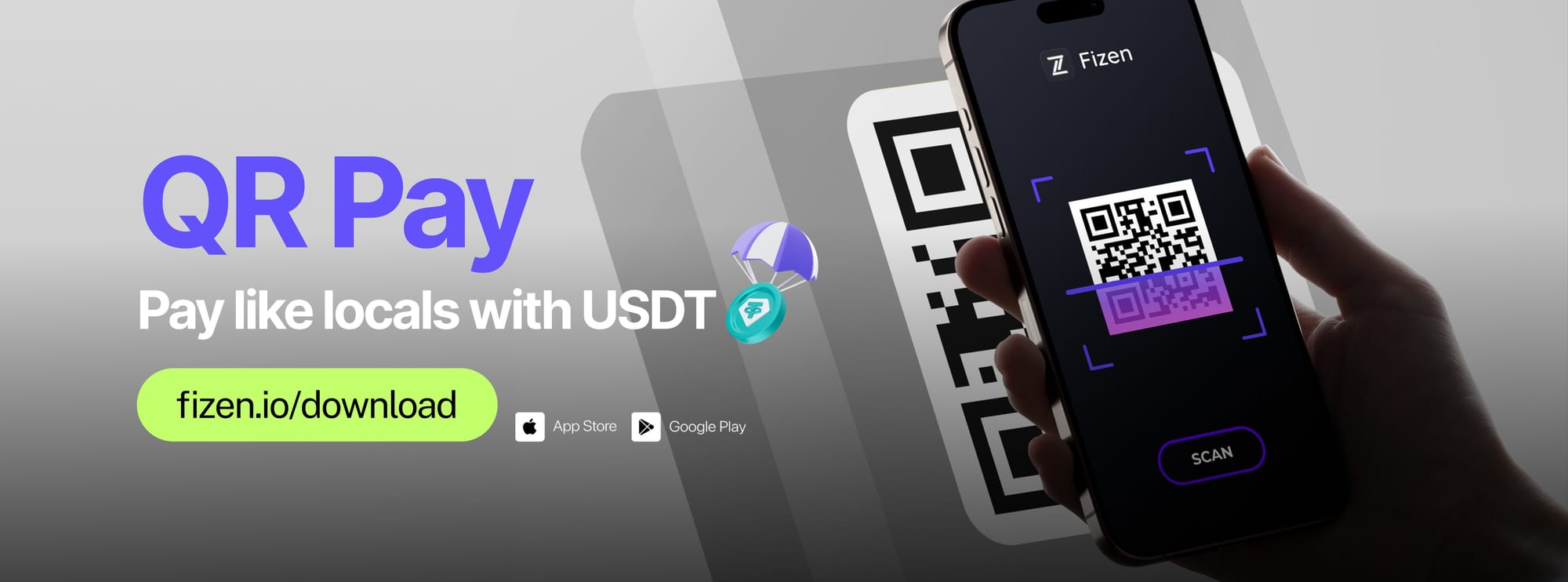
Fizen Super App
One app for QR pay, a Visa card, travel eSIM, buy and sell crypto, and cashback. Your money, your control.
Fizen QR Pay works wherever VietQR is accepted. Whether any individual payment goes through still depends on the merchant and the local network at the time. Fizen is backed by Tether, the largest digital-asset company and issuer of USDT. For more on Fizen QR Pay, see the Fizen QR Pay Docs and Terms of Use. This article is for informational purposes only and is not financial advice.
Moreta Pay in Vietnam: How It Works and What It Costs
Moreta Pay works in Vietnam as one of its core markets. You scan a local QR code and the app bills your home currency, funded from a bank transfer or card. That home-currency billing is convenient, but it means a foreign-exchange conversion sits inside every payment you make in Vietnam.
On Moreta Pay Vietnam fees, the headline is the FX spread on each transaction rather than a flat per-payment fee. If you spend often, that spread adds up, which is where a stablecoin balance that avoids per-payment FX can work out cheaper.
How much does Moreta Pay cost in Vietnam?
Moreta Pay bills in your home currency, so the main cost in Vietnam is the foreign-exchange spread applied to each payment rather than a single flat fee. Frequent spenders feel this more than occasional ones.
How does Moreta Pay work?
You verify with a passport photo and a selfie, fund the app from home through bank transfer, SEPA, UK Faster Payments or card, then scan the merchant's local QR code and confirm. The merchant receives local currency.
More local-pay guides
- Fizen QR Pay vs LocalPay vs Moreta Pay: full comparison
- Best Moreta Pay alternative for Vietnam QR payments
- Best local-pay wallet for foreigners in Vietnam
- How to pay in Vietnam without a local bank account
Next: the full picture
If you are still deciding rather than looking something up, these two go end to end:
- Fizen QR Pay: the complete guide — what it is, who it is for, who it is not for, what it costs, and what to test on day one.
- The complete Fizen eSIM guide — because every payment app needs working data before it is any use to you.
More Vietnam pay guides
Paying in Vietnam by QR: the full guide
Keep reading
Terms and conditions
- Information only. Fizen publishes this article to inform, not to sell. Nothing here is an offer or solicitation, and it is not financial, investment, legal or tax advice. Prices, rules and availability change; check official sources.
- For readers in the United States. This article provides information only. It is not an offer, solicitation or sale of any product or service, and it is not financial, investment, legal or tax advice. Fizen is not offered to US Persons.
- Full terms. Master Terms of Use, Privacy Policy and Disclaimer on the Fizen site.