
How to Pay in Vietnam as a Tourist (2026): Cash, Card, and QR
A traveler's guide to paying in Vietnam in 2026: cash vs card vs VietQR, the fees to avoid, and how foreigners can pay by QR without a Vietnamese bank account.
Key takeaways
- Vietnam is fast going cashless on QR: locals pay for almost everything by scanning VietQR codes, so knowing how to pay the local way saves you cash-handling and bad exchange rates.
- Cards work at hotels, malls and mid-to-upmarket restaurants, but many small shops, markets, street food stalls and taxis are cash or QR only.
- Foreign Visa and Mastercard are accepted at card terminals, but you will often pay a foreign-transaction fee and a poor FX rate, and ATMs charge withdrawal fees.
- Carry some cash for small vendors, and use a QR-pay app made for visitors so you can pay the way locals do without opening a Vietnamese bank account.
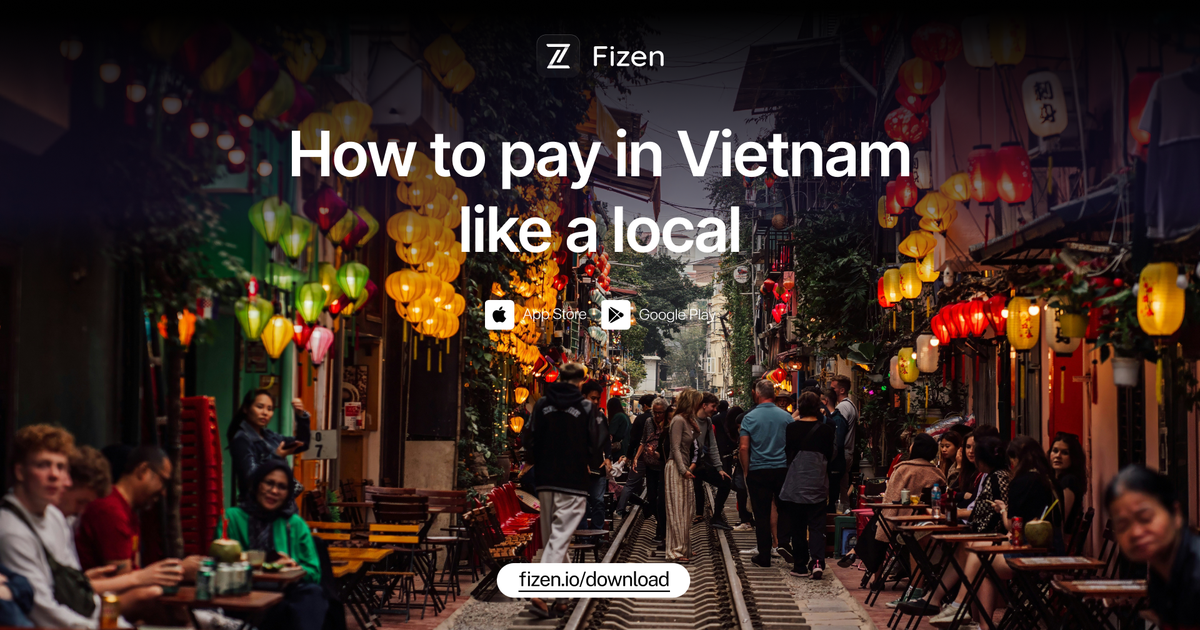
Vietnam is one of the easiest countries in Asia to travel, right up until you try to pay for something. Half the time the card machine works, half the time the vendor points at a QR code sticker or asks for cash. This guide covers exactly how paying works in Vietnam in 2026, when to use cash, card or QR, how to avoid the fees that quietly eat your budget, and the simplest setup for a visitor.
Is Vietnam a cash or card country?
Both, but the honest answer in 2026 is that Vietnam runs on QR. Locals pay for coffee, noodles, groceries and taxis by scanning a VietQR code with a banking app. Cash is still king at markets, street food stalls and with older vendors. Cards work, but in a narrower set of places than you might expect. So the practical mix for a tourist is: a little cash, a card for bigger venues, and a QR-pay option for everything in between.
Can tourists use credit and debit cards in Vietnam?
Yes, at hotels, shopping malls, chain stores, tour operators and mid-to-upmarket restaurants, foreign Visa and Mastercard are widely accepted. The catch is cost. Many foreign cards add a foreign-transaction fee of around 2 to 3 percent, and the exchange rate applied is rarely the best. If the terminal offers to charge you in your home currency instead of Vietnamese dong, always choose dong: paying in your own currency triggers dynamic currency conversion, which is almost always a worse rate.
How do you pay for things in Vietnam as a tourist, in practice?
| Where | Cash | Card | QR |
|---|---|---|---|
| Hotels, malls, chain stores | Yes | Yes | Sometimes |
| Mid to upmarket restaurants | Yes | Usually | Often |
| Street food, small cafes | Yes | Rarely | Increasingly |
| Markets and small shops | Yes | Rarely | Often |
| Taxis and ride-hailing | Yes | In-app | In-app / QR |
General guide; individual vendors vary.
What is VietQR, and can foreigners use it?
VietQR is Vietnam's national QR payment standard. You scan a merchant's QR code, confirm the amount, and pay instantly. It is how locals pay for nearly everything, and it is fast, feeless at the point of sale, and everywhere. The traditional catch for visitors is that VietQR is built around Vietnamese bank accounts, which tourists cannot easily open. That gap is exactly what a visitor-focused wallet solves: it lets you top up a balance yourself and pay VietQR codes without a local bank, so you can finally pay the way locals do.
How much cash should I bring to Vietnam?
Keep enough cash for the cash-only corners of a trip: street food, local markets, small cafes, tips and short taxi rides. Many travelers find a few hundred thousand dong on hand at any time is plenty for a day of small spending, topped up as needed. Avoid carrying large amounts. Withdraw from bank-branded ATMs rather than random machines, take out larger amounts less often to reduce per-withdrawal fees, and always decline the ATM's offer to convert to your home currency.
How to avoid fees when paying in Vietnam
- Always pay in Vietnamese dong, never your home currency, to dodge dynamic currency conversion.
- Withdraw larger amounts less often, since ATM fees are usually per-transaction.
- Prefer QR payment where you can: it settles at the real rate with no point-of-sale fee.
- Keep a small cash buffer so you are never forced into a bad-rate card payment or a fee-heavy ATM run.
The simplest setup for a visitor
If you want one clean answer: carry a little cash, keep a card for big venues, and add a QR-pay app made for visitors so you can pay VietQR codes like a local without a Vietnamese bank account. Fizen is one option built for exactly this: you top up your own balance and, as a visitor, scan and pay VietQR at shops, cafes and markets, all from one app you control. It is the missing piece that lets a foreigner pay the local way. For a deeper comparison of the visitor wallets, see the related guides below.
Frequently asked questions
Can I pay by card everywhere in Vietnam?
No. Cards work at hotels, malls, chains and mid-to-upmarket restaurants, but many street stalls, markets, small cafes and taxis are cash or QR only. Carry some cash and a QR option too.
Is it better to pay in dong or my home currency?
Always pay in Vietnamese dong. If a terminal or ATM offers to charge in your home currency, that is dynamic currency conversion, which almost always gives you a worse exchange rate.
Can tourists use VietQR without a Vietnamese bank account?
Not with a normal bank app, which needs a local account. A visitor-focused wallet like Fizen lets you top up yourself and pay VietQR codes without opening a Vietnamese bank account.
How much cash should I carry in Vietnam?
Enough for the cash-only spots: street food, markets, small cafes, tips and short taxis. A few hundred thousand dong for a day of small spending is a common rule of thumb, topped up as needed.
Do foreign cards charge fees in Vietnam?
Often yes: a foreign-transaction fee of roughly 2 to 3 percent plus a weaker FX rate, and ATMs add withdrawal fees. Paying by QR at the real rate avoids the point-of-sale fee.
Pay the way locals do. Cash for the stalls, a card for the big places, and QR for everything in between.
Pay by QR in Vietnam, no local bank account
Fizen lets visitors scan and pay VietQR codes at shops, cafes and markets across Vietnam, from a balance you top up yourself. One app, made for visitors. Backed by an investment from Tether.
This is general travel information, not financial advice. Merchant acceptance and fees vary; check before you pay. Fizen QR Pay works where VietQR is accepted; whether a specific payment goes through depends on the merchant and network. Fizen is a self-custody app, backed by an investment from Tether.
Terms and conditions
- Information only. Fizen publishes this article to inform, not to sell. Nothing here is an offer or solicitation, and it is not financial, investment, legal or tax advice. Prices, rules and availability change; check official sources.
- For readers in the United States. This article provides information only. It is not an offer, solicitation or sale of any product or service, and it is not financial, investment, legal or tax advice. Fizen is not offered to US Persons.
- Full terms. Master Terms of Use, Privacy Policy and Disclaimer on the Fizen site.
- QR Pay funding. Fizen QR Pay is funded only with USDT on Solana or BNB Chain: no bank account link, no card, no VND or PHP deposit, and no other token or network. USDT on another network, or another token, cannot be deposited. QR Pay is for cross-border use by travellers and foreigners and is governed by the Fizen QR Pay Terms.
Related reading
- Best Vietnam Local Pay Wallet for Foreigners
- Fizen QR Pay vs LocalPay vs Moreta Pay
- Apps to Scan QR Codes in Vietnam
- Physio in Da Nang: Where Expats Actually Go
- Hospitals in Vietnam Keep Surprising Expats
- Visa Runs from Da Nang: How Expats Actually Do It