How to Get Paid as a Remote Worker in USDT (2026)
Your job is borderless but your pay often isn't. Here is how remote workers get paid in USDT in 2026, hold it themselves, and cash out wherever they are.

Key takeaways
- Remote work is global, but payment rails often lag, with delays, fees and country limits.
- Getting paid in USDT lands your money in a wallet you control, in minutes, wherever you are.
- You can hold it as stable dollars, spend by card or QR, send home, or cash out to local currency.
- Agree the token and network with your employer, and keep records for tax.
You can work for a company on the other side of the world from a cafe anywhere, until payday, when the borderless dream hits a very bordered banking system. Wires are slow, some countries are unsupported, and fees stack up. Getting paid in USDT is how a lot of remote workers make the money side as borderless as the work. Here is the 2026 playbook.
Why remote pay is the weak link
Your skills travel instantly; your money does not. International payroll and transfers depend on which corridors and methods your employer's provider supports, and that often does not include a fast, cheap route to where you actually live. USDT removes that dependency, because it settles to your wallet directly, then you convert on your terms.
How to get paid in USDT
- Agree it up front: confirm with your employer or client that you will be paid in USDT, and on which network.
- Receive to your wallet: share a self-custody wallet address; the pay lands in minutes, under your control.
- Use it your way: hold as dollars, spend by card or QR, send money home, or cash out to local currency via P2P.
The practical bits
Test with a small payment the first time, confirm the network every time, and keep records: income is generally taxable at its value when received, wherever you live. Because you hold the balance yourself, no single bank or platform in one country can freeze your pay. This is general information, not tax advice.
Frequently asked questions
How do remote workers get paid in USDT?
Agree it with your employer, receive USDT to a self-custody wallet you control, then hold, spend, send or cash out to local currency.
Why get paid in USDT as a remote worker?
It settles in minutes to a wallet you control, avoiding slow wires and unsupported-country payout limits.
How do I turn it into local money?
Sell USDT via P2P to your bank or mobile wallet, or spend it directly by card or QR.
Is it taxable?
Yes, income is generally taxable at its value when received, wherever you live. Keep records; not tax advice.
What is the main risk?
Sending on the wrong blockchain network. Confirm the network and test with a small amount first.
Your work already ignores borders. Your pay should too.
Fizen: get paid in USDT you actually control
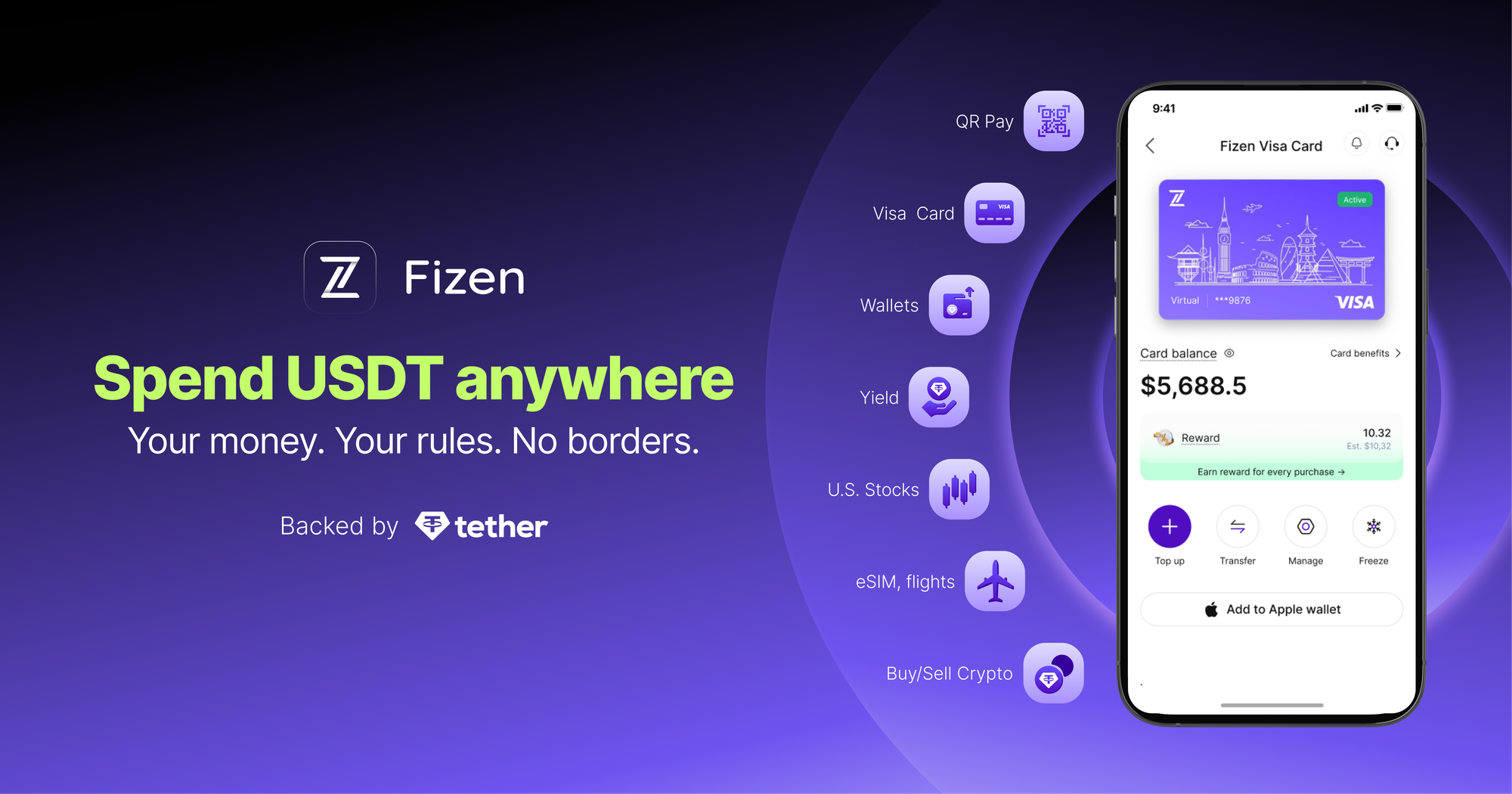
Receive USDT into a wallet only you control, hold it as stable digital dollars, then spend by card or QR, send across 64 countries, or cash out to local currency via P2P. Backed by an investment from Tether.
Fizen is a self-custody app: you hold your own balance, and availability of products varies by country and partner at the time. Not offered to US Persons. Backed by an investment from Tether. This is general information, not financial or tax advice.
Terms and conditions
- Information only. Fizen publishes this article to inform, not to sell. Nothing here is an offer or solicitation, and it is not financial, investment, legal or tax advice. Prices, rules and availability change; check official sources.
- For readers in the United States. This article provides information only. It is not an offer, solicitation or sale of any product or service, and it is not financial, investment, legal or tax advice. Fizen is not offered to US Persons.
- Full terms. Master Terms of Use, Privacy Policy and Disclaimer on the Fizen site.