How to Avoid Foreign Transaction Fees While Traveling (2026)
Foreign-transaction fees and poor exchange rates can add 3 to 8 percent to a trip. Here is exactly how to stop paying them in 2026, from the DCC trap to fee-free cards.
Key takeaways
- Foreign-transaction fees (around 2 to 3 percent) plus dynamic currency conversion and ATM charges can quietly add 3 to 8 percent to everything you spend abroad.
- The single biggest fix is free: always pay in the local currency, never your home currency, to avoid dynamic currency conversion (DCC).
- Use a card with no foreign-transaction fee, withdraw larger amounts less often, and prefer local QR payment where it settles at the real rate.
- A card you fund yourself and spend globally, with no home-bank FX markup, removes most of these fees in one move.
You budget carefully for a trip, then get home to a statement that is mysteriously 5 percent higher than you expected. That gap is fees: foreign-transaction charges, bad exchange rates, and ATM withdrawal costs, stacked on every purchase. None of it is obvious at the till. Here is how each fee works and exactly how to stop paying it in 2026.
Where the fees actually come from
| Fee | Typical size | How to avoid it |
|---|---|---|
| Foreign-transaction fee | ~2 to 3% | Use a card with no FX fee |
| Dynamic currency conversion (DCC) | ~3 to 8% worse rate | Always pay in local currency |
| ATM withdrawal fee | Flat + %, per withdrawal | Withdraw larger, less often |
| Card network FX markup | ~0 to 1% | Use a card at the real network rate |
The DCC trap: always pay in local currency
This is the one that catches everyone. When a card terminal or ATM abroad asks whether you want to be charged in your home currency or the local one, choosing your home currency triggers dynamic currency conversion. The machine converts at a rate set by the merchant's processor, which is almost always worse than your card's rate, by anywhere from 3 to 8 percent. Always choose the local currency. It costs nothing and it is the biggest single saving on this list.
Pick a card with no foreign-transaction fee
Many everyday bank cards add roughly 2 to 3 percent on every foreign purchase. A card with no foreign-transaction fee removes that entirely. If your current card charges one, that alone is a reason to travel with a different card. Check the fee before you go, not after.
ATM tactics
Cash still matters in a lot of countries, but ATMs abroad charge per withdrawal, often a flat fee plus a percentage. Take out larger amounts less frequently rather than small amounts often, use bank-branded machines over standalone ones, and, again, decline the ATM's offer to convert to your home currency.
Prefer local payment rails where you can
In many countries, local QR payment settles at the real interbank rate with no point-of-sale fee, which beats a foreign card. In Vietnam, for example, paying VietQR codes avoids the card FX markup entirely. Where a country has a strong local payment rail, using it is often the cheapest option of all.
The simplest fee-free setup
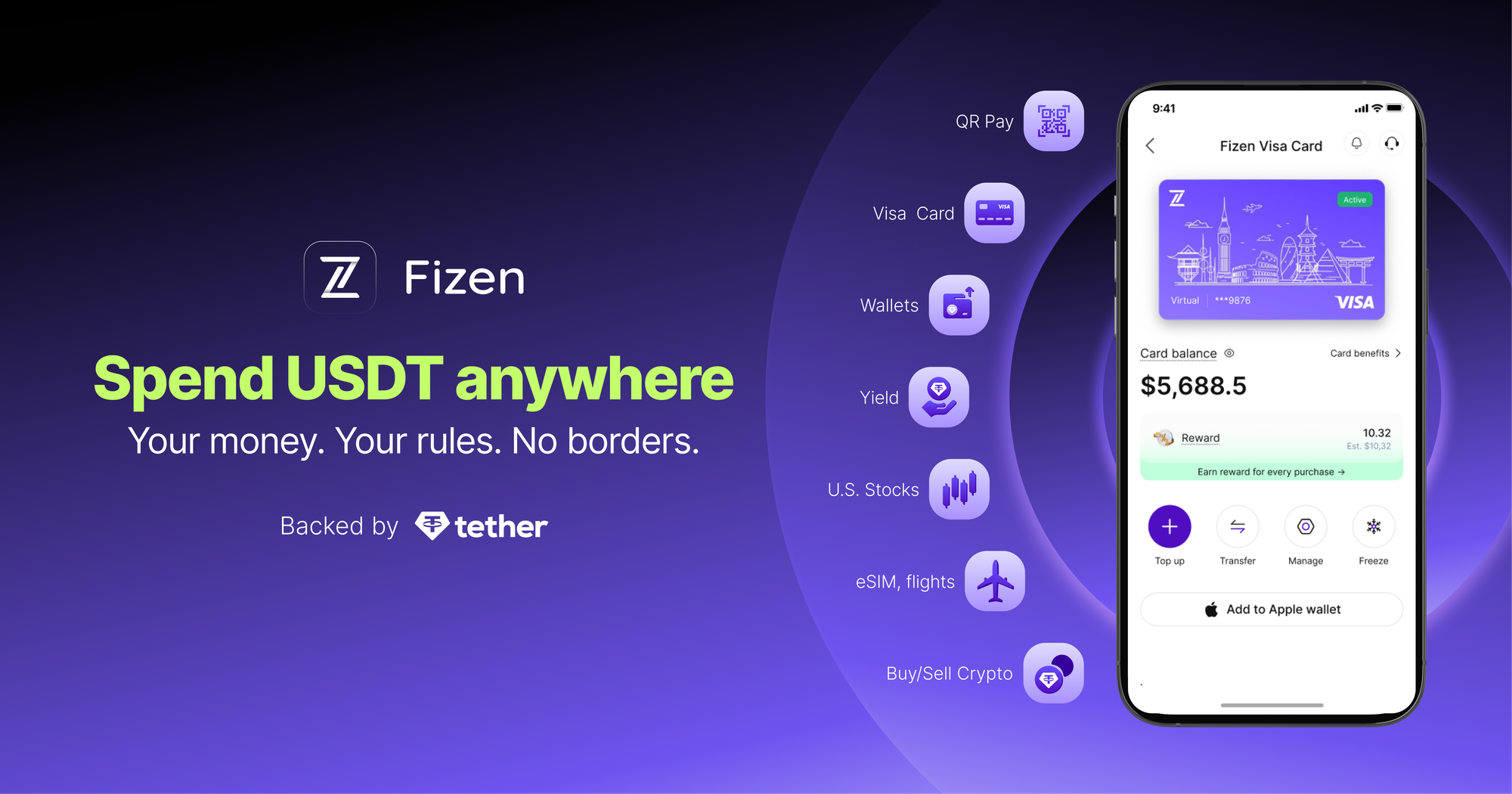
If you would rather not juggle cards, one option is to carry a balance you fund yourself and spend globally without a home-bank markup. Fizen gives you a Visa card you top up and spend anywhere Visa works, plus local QR pay and a travel eSIM, from one app, so you sidestep the foreign-transaction fee and the DCC trap in a single setup rather than five separate cards.
Frequently asked questions
What is a foreign-transaction fee?
A charge, usually around 2 to 3 percent, that many cards add to every purchase made in a foreign currency. A card with no foreign-transaction fee avoids it entirely.
Should I pay in my home currency or the local currency abroad?
Always the local currency. Choosing your home currency triggers dynamic currency conversion (DCC), which applies a worse exchange rate, typically 3 to 8 percent worse.
How do I avoid ATM fees when traveling?
Withdraw larger amounts less often since fees are usually per-transaction, use bank-branded ATMs, and decline the machine's offer to convert to your home currency.
What is the cheapest way to pay abroad?
Where a country has a strong local payment rail, such as QR payment, it often settles at the real rate with no fee. Otherwise, a card with no foreign-transaction fee, paid in local currency, is best.
Do I need a special card to avoid FX fees?
You need one that does not charge a foreign-transaction fee. Options include some travel cards and apps like Fizen, where you fund a balance yourself and spend globally without a home-bank FX markup.
Stop tipping your bank to go on holiday. Pay in local currency, use a no-FX card, and keep the 3 to 8 percent.
Spend abroad without the foreign-transaction fee
Fizen gives you a Visa card you fund yourself and spend globally, plus a travel eSIM and QR pay, from one app you control. No home bank, no FX surprise. Backed by an investment from Tether.
This is general travel information, not financial advice; check current prices and terms in the app. Fizen is a self-custody app, backed by an investment from Tether.