How Canadians Pay in Vietnam by QR (2026): No Bank, No Card Fees
Canadian cards mean FX fees and awkward declines in Vietnam. Here is how Canadians pay by QR with USDT instead, no local bank and no card foreign-transaction fee.
Key takeaways
- Canadian cards abroad usually add a foreign-transaction fee plus a weak exchange rate, and some get declined in Vietnam.
- Vietnam runs on QR payments, and you can pay merchants by QR from a stablecoin balance instead of a card.
- With a self-custody wallet you hold USDT and pay by QR in dong, with no Vietnamese bank account on your side.
- Set it up before you fly so you land already able to pay, without hunting for an ATM.
If you have travelled from Canada to Vietnam, you know the card routine: a foreign-transaction fee, a mediocre exchange rate, and the occasional decline at a shop that only takes QR. Vietnam is a QR-first country, so there is a cleaner way. Here is how Canadians pay in Vietnam by QR with USDT in 2026, without a Vietnamese bank account and without feeding your Canadian card's fees.
Why do Canadian cards struggle in Vietnam?
Two reasons. First, most Canadian cards add a foreign-transaction fee and convert at a rate that is not in your favour. Second, huge parts of Vietnam, from street food to family shops, run on QR, not card terminals, so a card is simply not accepted. Cash works but means ATM fees and carrying a wad around.
How do you pay by QR with USDT?
From a self-custody wallet that supports Vietnamese QR, the flow is the one you already know from tapping a card: open the app, scan the merchant's QR, confirm the dong amount, and pay. Your USDT settles the payment in dong to the merchant, so you spend digital dollars and they receive local currency, with no Canadian card fee in the middle.
- Hold USDT: keep digital dollars in a wallet you control before you fly.
- Scan and pay: open the app, scan the merchant QR, confirm the dong amount.
- Done: no Vietnamese bank account, no foreign-transaction fee.
Card vs QR with USDT in Vietnam
| Canadian card | QR with USDT | |
|---|---|---|
| Foreign-transaction fee | Usually yes | No |
| Accepted at street stalls | Often no | Yes, where QR is shown |
| Exchange rate | Card network markup | Live rate at pay |
| Needs local bank | No | No |
One tip: set up your wallet and hold some USDT before you fly, over trusted WiFi. Then you arrive already able to pay, instead of queuing at an airport ATM.
Frequently asked questions
Can Canadians pay by QR in Vietnam?
Yes. Vietnam runs on QR, and with a self-custody wallet that supports Vietnamese QR you scan a merchant code and pay in dong from your USDT, no Vietnamese bank account needed.
Do Canadian cards charge fees in Vietnam?
Most add a foreign-transaction fee and convert at a marked-up rate, and many merchants take QR only, not cards.
Do I need a Vietnamese bank account?
No. Your USDT settles the payment and the merchant receives dong.
How do I get USDT before travelling?
Buy USDT with Canadian dollars through P2P or Transak in your wallet before you fly, over trusted WiFi.
What if a shop only takes cash?
Keep a small dong float for tiny stalls and donations; use QR for everything larger.
Your Canadian card wants a fee at every tap in Vietnam. Pay by QR and keep it.
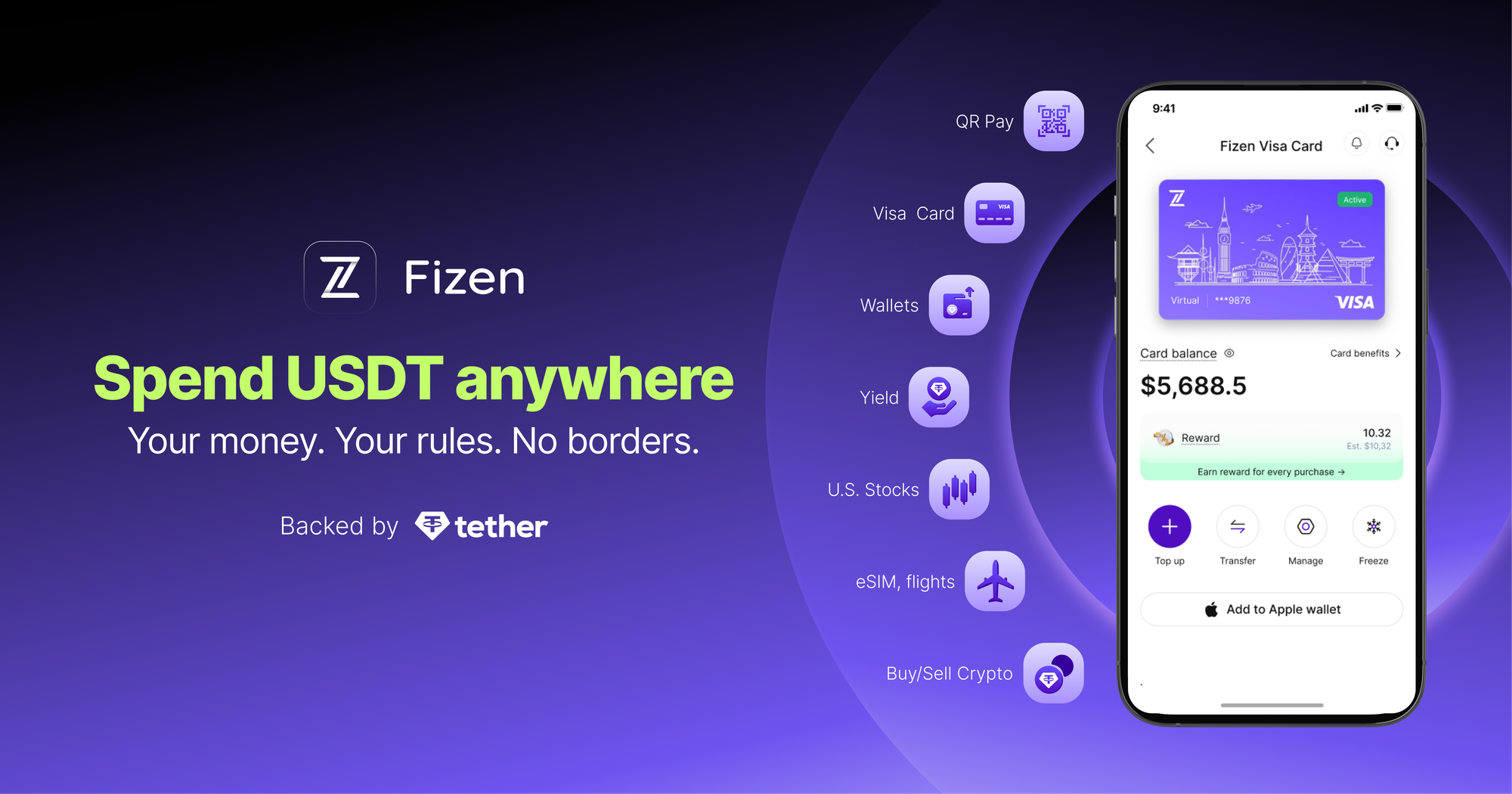
Fizen — hold, spend and send USDT yourself
A self-custody super app: your balance stays in your control. Buy and sell crypto via P2P in 64 countries or Transak, QR pay in Vietnam and the Philippines, invest in tokenized US stocks, a travel eSIM, and a Visa card. One app.
Fizen lets you hold your own balance and move it across borders. Availability of buy, sell, transfer, QR pay, tokenized stocks and eSIM varies by country, and whether any individual transaction completes depends on the networks, counterparties and partners at the time. Fizen is backed by an investment from Tether. For more, see the Fizen Docs and Terms of Use. This article is for general information only and is not financial, legal or tax advice.