Google Launches MPC Crypto Custody for Banks: What Multi-Party Compute Does (Oct 2026)
Google just walked into the business of guarding crypto keys. Its new Multi-Party Compute service splits a bank's private key across separate machines so no single hack can drain a wallet. Here is how it works, what is still missing, and what it says about who should hold your keys.
Quick answer: On 28 October 2026 Google Cloud unveiled Google Multi-Party Compute (MPC), a crypto custody service that splits a private key into shares held on separate systems so no single machine ever holds the whole key. It is in private preview with unnamed banks and design partners, Alphabet already uses it for its own assets on Ethereum and Solana, and Google plans commercial availability in early 2027, with pricing not yet announced.
Key takeaways
- Google is now a crypto custody vendor. Google says this is its first purpose-built MPC custody product for digital assets, aimed at banks and financial institutions.
- No whole key, anywhere. Key shares can sit in Google Cloud, on the bank's own hardware, with another cloud or on staff phones, and a set number of them, such as 2 of 3 or 5 of 7, must sign together.
- Rules before signatures. Each transaction passes a policy engine first: spending limits, approved destination wallets, multi-team approval.
- Not live for everyone yet. Private preview now, commercial launch planned for early 2027, banks testing it not named, no price.
- The bigger story is keys. Stolen private keys are behind a large share of crypto losses, which is why banks, and individuals, care who holds them.
When the company that runs your email and your maps starts building vaults for crypto keys, it tells you where money is heading. On 28 October 2026, at its first digital assets symposium in New York, Google Cloud showed banks a new way to hold crypto without ever keeping a whole private key in one place. Here is what it is, checked against Google's own documentation, and what it means for people who hold stablecoins themselves.
What did Google launch?
CoinDesk, which broke the story on 28 October 2026, reported that the product is called Google Multi-Party Compute. Google's own documentation describes it as a custody platform for digital asset signing keys that combines threshold signing, transaction policies and enterprise governance controls. It is built for banks and other financial institutions that want to hold and move crypto and tokenized assets for their clients.
- Status: private preview under Google Cloud's pre-release terms, tested by several design partners and major financial institutions that Google did not name.
- Launch: commercial availability planned for early 2027. Pricing has not been disclosed.
- First user: Alphabet has started using it to secure its own digital assets on Ethereum and Solana, without saying which assets or how much.
- Why it is new: Google already sold key tools such as Cloud KMS and Cloud HSM, but customers had to assemble signing, policies and recovery themselves. Google told CoinDesk this is its first dedicated MPC custody service for crypto.
- Who was in the room: Cointelegraph reported that the New York symposium agenda listed speakers from Morgan Stanley, Citi, Wells Fargo and OKX. Google has not said whether any of them are testing the product.
- Bitcoin rules already shipping: Cointelegraph also noted that on 1 October Google expanded the service's Bitcoin policy rules to check transaction amounts, destination address types and change outputs, with release notes going back to August 2026.
Rich Widmann, Google Cloud's director of digital assets strategy, told CoinDesk that "digital asset adoption and tokenization are at an inflection point". Nalin Mittal, a Web3 product manager at Google Cloud, called it on X "our biggest launch in the digital assets space to date".
How does Multi-Party Compute protect a private key?
A normal crypto wallet has one private key. Whoever has it can move the money. MPC, short for multi-party computation, removes that single point of failure: the key is created as separate shares held by independent parties, and those parties jointly produce a signature without ever rebuilding the full key.
| Piece | How Google's version works |
|---|---|
| Key shares | Held by independent, hardware-backed parties: Google Cloud, the bank's own premises, another cloud provider or users' mobile devices |
| Threshold | A set number must sign together, for example 2 of 3 or 5 of 7 |
| Protocol | A hardened extension of the DKLS23 threshold-signing protocol |
| Policy check | Rules written in Cedar, such as spending limits or approved destination wallets, checked before signing |
| Chains | ECDSA (secp256k1) for Bitcoin, Ethereum and EVM chains; Ed25519 for Solana is listed as coming soon in the documentation |
| Google's access | Google says it cannot see key material unencrypted, even when shares sit on its infrastructure |
One detail in Google's documentation is worth knowing: the policy verdict guides the signers but does not enforce the final decision. If enough signers approve, a transaction the rules flagged can still go through. Security still depends on how each bank configures the system and protects its approvers.
Why are banks worried about private keys now?
Because stolen keys are how most of the money leaves. As CoinDesk laid out in its report, Chainalysis found that compromised private keys accounted for 43.8% of crypto stolen in 2024, and DeFiLlama data put cumulative losses from hacks and exploits at US$16.69 billion as of June 2026, with roughly 40% tied to private-key compromises.
- Real cases in 2026: a compromised privileged key helped an attacker take about US$25 million from Resolv in March, and attackers drained more than US$32 million from Humanity Protocol wallets in June after stealing a foundation member's keys.
- AI-assisted scams: Chainalysis reported that scam operations linked to AI-tool vendors took an average of US$3.2 million each in 2025, against US$719,000 for those without such links.
- Quantum, later: Google says the design can support post-quantum upgrades, but gave no timetable. No computer today can break a Bitcoin key.
For banks that want to offer crypto and tokenized assets under rules like the US GENIUS Act, a breach is not just a loss, it is a licence problem. A big, familiar name guarding the keys is an easier sell to a risk committee.
Who else does this, and what is still unknown?
MPC custody is not new. Specialist firms such as Fireblocks, Fordefi and BitGo have sold it to institutions for years, as CoinDesk pointed out, and Google itself published guidance on building MPC with its Confidential Space technology in 2023. What is new is Google packaging it as its own service and pitching itself as neutral infrastructure that lets banks run their own custody business. CoinDesk also flagged that Google offered no independent performance comparison with existing custody products.
- Which banks are testing it, and when they go live.
- Pricing, and how much a bank still depends on Google for software, policies and operations.
- When Solana signing leaves "coming soon" in the documentation, given that Alphabet already secures assets on Solana.
- Independent performance or security comparisons, which Google has not published.
What does this mean if you hold stablecoins yourself?
The lesson banks are paying Google to learn is the one every crypto holder faces: whoever controls the key controls the money. Institutions solve it by splitting the key across machines and committees. An individual solves it more simply, by keeping the key with themselves and guarding the backup.
- Know who holds your key. On an exchange, the exchange does. In a self-custody wallet, you do.
- Protect the recovery phrase offline. Write it down, never type it into a website, chat or email, and never share it with anyone claiming to be support.
- Slow down before you sign. Most losses start with a convincing message, not with broken cryptography.
That is the idea Fizen is built on. Fizen is building the stablecoin neobank for people on the move, starting from a self-custody wallet: you hold your own keys and your USDT, and the same app lets you buy a travel eSIM in 150+ countries and invest in tokenized US stocks where eligible. Banks are only now getting key splitting from Google. Holding your own key has been possible all along. Read how the Fizen wallet works.
Frequently asked questions
What is Google Multi-Party Compute?
It is a Google Cloud crypto custody service, unveiled on 28 October 2026, that splits a private key into shares on separate systems so a set number of them must sign together and no single machine holds the whole key.
When will Google's MPC custody be available?
It is in private preview with unnamed banks and partners. Google plans commercial availability in early 2027 and has not announced pricing.
Which blockchains does Google MPC support?
ECDSA signing for Bitcoin, Ethereum and EVM chains. Google's documentation lists Ed25519 signing for Solana as coming soon, although Alphabet already uses the service for assets on Solana.
Can Google see or move the funds?
Google says it cannot access key material unencrypted, even when key shares are stored on its infrastructure, and that customers keep control of their keys.
Is Google MPC for individual users?
No. It is built for banks and financial institutions. Individuals who want to control their own keys use a self-custody wallet and keep the recovery phrase offline.
Hold your own keys, carry your own money
Fizen is a self-custody wallet: you keep the keys to your USDT. The same app gets you online abroad with a travel eSIM in 150+ countries.
Terms and conditions
- Information only. This article summarises public documents and news reports. It is not financial, legal, tax or investment advice, and not an offer or sale of any product. Tokenized stocks are investments and can lose value, and are not available in every country.
- For readers in the United States. This is information only, not an offer or sale, and not advice. Fizen products and services are not offered to US Persons.
- Independent. Fizen is not affiliated with Google, Alphabet or the other companies named in this article. Google and the Google logo are trademarks of Google LLC. Facts are as stated in the sources listed below.
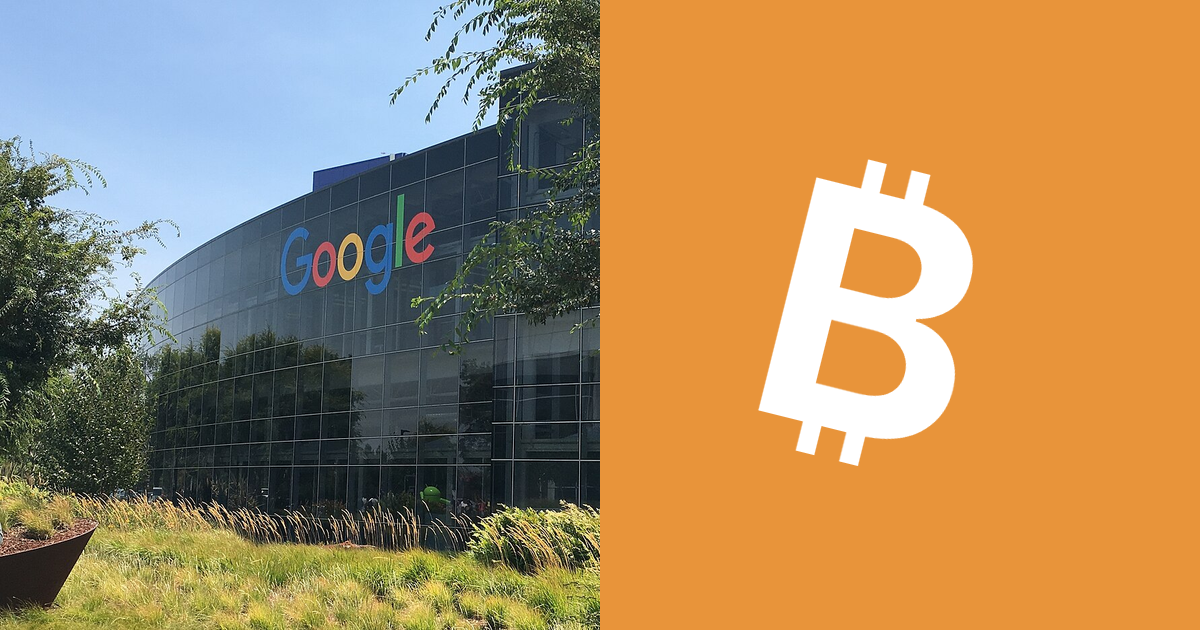
- Image. Banner uses "Googleplex HQ (cropped)" by Asoundd, Wikimedia Commons, CC BY-SA 4.0, alongside the Bitcoin symbol.
Sources
- Google Cloud, Multi-party Compute overview (documentation)
- Google Cloud, Multi-party Compute release notes
- CoinDesk, Google to preview a new crypto security system as private-key hacks mount, 28 October 2026
- Cointelegraph, Google Cloud outlines MPC service for institutional Bitcoin custody, 28 October 2026
- Nalin Mittal (Google Cloud) on X, 28 October 2026
- Google Cloud blog, securing digital assets with MPC and Confidential Space (2023)
- Solana Compass, Google previews MPC custody with Solana support coming soon
- Wikimedia Commons, Googleplex HQ (cropped) by Asoundd, CC BY-SA 4.0.jpg)
Checked against Google's documentation, CoinDesk, Cointelegraph and the sources below on 29 October 2026.