Fizen QR Pay Is Coming to Latin America: Brazil, Peru and Argentina
Fizen QR Pay is coming to Latin America: Brazil, Peru and Argentina. One app to pay with USDT like a local. Not available yet and no date given, so subscribe and we will write the day it goes live.

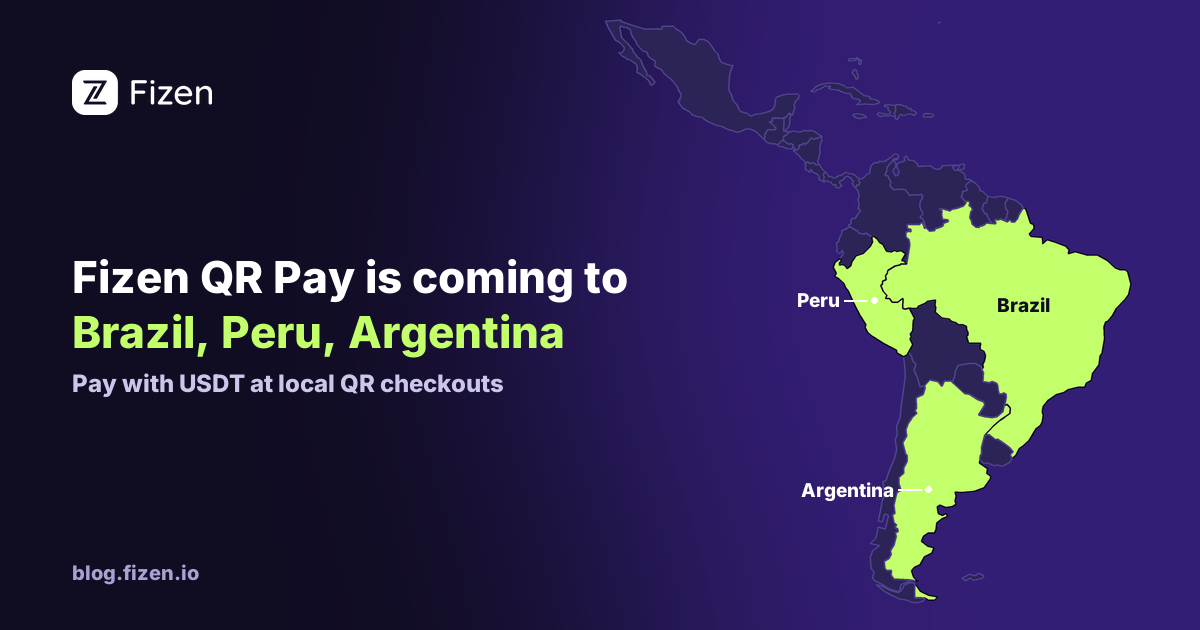
Quick answer: Fizen is building QR payments for Brazil, Peru and Argentina with licensed local partners. It is not live for users yet and there is no launch date to share. What works today in those countries: the self-custody Fizen wallet for holding and sending USDT, and Fizen eSIM for data in 150+ countries, with a US$10 credit for new app users.
Key takeaways
- Three countries first. Brazil, Peru and Argentina, built with licensed local partners rather than routed around local rules.
- Not live yet, and no date. We would rather say that plainly than let a roadmap read like an announcement.
- A different model from Asia. In Vietnam and the Philippines QR Pay is for visitors only. In Latin America it is intended to be open to residents too.
- What works there today: the self-custody wallet for USDT, and Fizen eSIM with a US$10 credit for new app users.
Fizen QR Pay is coming to Latin America. Brazil, Peru and Argentina are the first three markets, and the work is under way now with licensed local partners.
The idea is one sentence long: one app to pay with USDT like a local. You hold digital dollars, you scan the same QR code everyone else scans, and the shop is paid in its own currency. No local bank account, no foreign card to be declined, no cash left over at the airport.
Most fintech announcements are written as if the job were already done. This one is not. It is not something you can use yet, and we are not going to give you a date we might miss. What follows is what is being built, why those three countries, and what already works there today.
Why Latin America, and why these three
Look at where dollar demand is loudest rather than where trading volume is highest. In Argentina, people have spent two decades treating the dollar as the unit they actually think in. In Peru, dollar accounts sit next to soles accounts as an ordinary fact of life. In Brazil, Pix rebuilt everyday payments in a few years and made instant QR payment the normal way to pay a person or a shop.
Those are three different reasons to want digital dollars that behave like money rather than like an investment, and they point at the same product. It is the same pattern we watch elsewhere: this year stablecoin supply has been shrinking, down $6.66 billion in the week to 7 November alone, while stablecoin payment volume ran to $482 billion in the first nine months of 2026, up 45% on a year earlier. Speculative money is leaving. Spending money is arriving.
What is actually being built
The goal is simple to describe: hold USDT in a wallet you control, then pay with USDT at a local QR checkout, with the merchant receiving local currency exactly as they do now. No local bank account to open, no foreign card to be declined, no cash to change back at the airport.
The part that takes time is not the app. It is doing this with a licensed local partner in each country, so that payments settle through regulated rails and merchants are paid the way they expect. That work is under way in Brazil, Peru and Argentina.
What we are not saying
We are not saying it works in Brazil today. We are not giving a launch date. Payment licensing moves at its own pace and a date we miss is worse than no date at all. When a country is genuinely open, you will be able to use it in the app, and we will say so there first.
One difference worth flagging now, because it changes who this is for. In Vietnam and the Philippines, QR Pay is a travellers' product under cross-border terms: residents cannot use it to pay at home. In Latin America the intention is the opposite, open to residents as well as visitors. Final eligibility will follow each market's rules.
What already works there today
Two things, and both are live right now:
- The Fizen wallet. Self-custody, one USDT balance, sending and receiving across Tron, Ethereum, BNB Chain and Solana. You hold the keys, which also means you hold the recovery phrase. Write it down offline and never share it with anyone, including anyone claiming to be support.
- Fizen eSIM. Data in 150+ countries, installed before you fly and switched on when you land, with a US$10 credit for new app users taken off automatically at checkout. You can pay for it with USDT or by card.
If you are travelling to Brazil, Peru or Argentina before any of this lands, those two cover the part that usually goes wrong: staying online, and holding money you control.
What to watch
- Whether local dollar premiums narrow as more regulated on-ramps open in each country.
- Whether stablecoin payment volume keeps climbing while total supply falls, which is the clearest sign this is turning into spending money.
- Country-by-country eligibility, which we will publish per market rather than as one regional claim.
Stay tuned
We will not announce a date we are not sure of, so the honest version is this: subscribe and we will write to you the day it goes live in your country. One email, no drip campaign, and you can leave any time.
Brazil, Peru and Argentina are being built now. Subscribe and we will tell you the day QR Pay goes live where you are. In the meantime the self-custody wallet and eSIM already work there.
Tell me when it goes liveGet the app and my $10 giftRelated reading
- The Fizen wallet: what it is and how it works
- Pix for foreigners in Brazil
- Best travel eSIM for Brazil
- Best travel eSIM for Peru
- Best travel eSIM for Argentina
Information only. This article is published for information and does not sell any product or service. It is not financial, investment, tax or legal advice. QR payments in Brazil, Peru and Argentina are in development, are not available to users at the time of writing, and no launch date is implied. Availability, eligibility, limits and fees vary by country and may change, and any service is subject to its own terms. Always read the applicable terms before using any service.