Russia's Biggest Bank Will Lend Against Your Bitcoin. It Still Cannot Let You Spend It.
Sber intends to take Bitcoin, Ether and USDT as loan collateral. Russia's crypto market law takes effect on 1 September. And paying for anything with crypto inside Russia is still banned.
Key takeaways
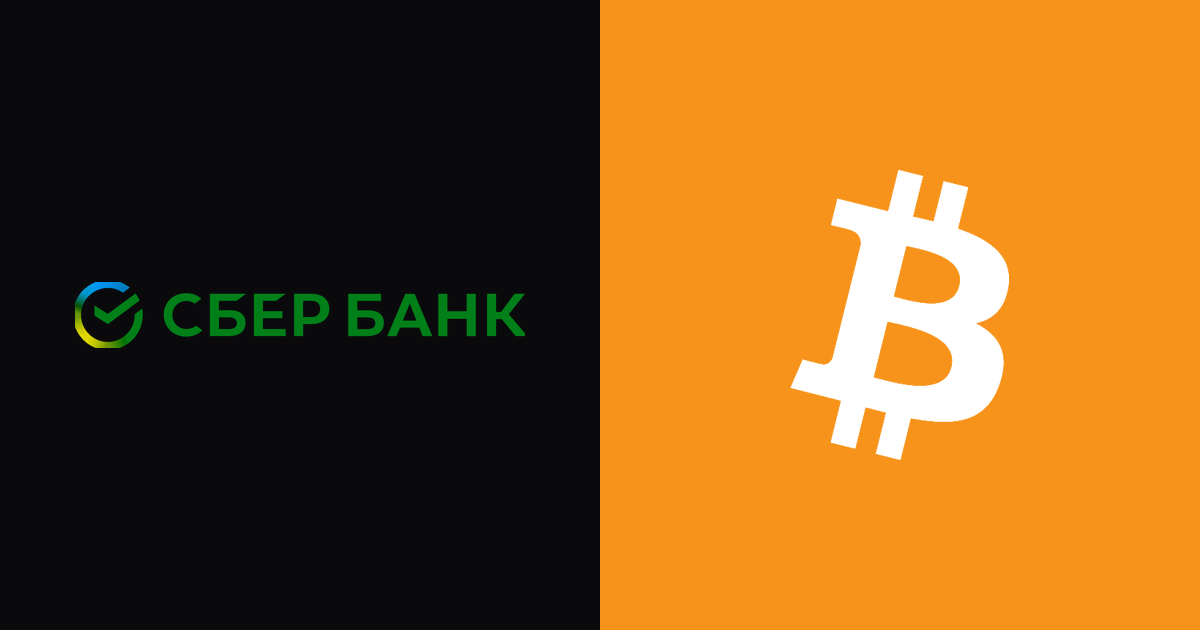
- Sber, Russia's largest bank, plans to accept Bitcoin, Ether and USDT as loan collateral, according to Deputy Chairman Anatoly Popov.
- It is conditional: the assets go on the collateral list only after the Bank of Russia permits them for public trading.
- The regulator moved in that direction on 11 August, proposing BTC, ETH and USDT for regulated exchange trading on criteria including market capitalisation, trading volume and at least five years of overseas price history.
- Russia's crypto market law takes effect on 1 September 2026, putting the market under formal central bank supervision.
- The line that has not moved: paying for goods and services with crypto inside Russia remains prohibited. You may soon be able to borrow against your Bitcoin. You still cannot buy coffee with it.
Sber, Russia's largest bank, intends to accept Bitcoin, Ether and USDT as collateral for loans. The statement comes from Deputy Chairman Anatoly Popov, and it carries a condition: the assets join the collateral list only once the Bank of Russia permits them for public trading (Cointelegraph, crypto.news).
Read that sentence carefully, because most of the coverage this week is going to compress it into something it does not say.
What was actually announced
| The claim | What is actually true |
|---|---|
| Sber accepts Bitcoin | Sber plans to accept it as loan collateral, conditional on regulatory approval |
| Russians can pay in crypto | Payments for goods and services inside Russia remain prohibited |
| It is live now | No launch date, loan terms or eligible customer groups have been announced |
| The central bank approved BTC, ETH and USDT | On 11 August the regulator proposed them for regulated exchange trading |
| Crypto is now legal in Russia | A market framework takes effect on 1 September 2026, covering trading and supervision, not spending |
Why the timing matters
Russia's crypto market law takes effect on 1 September 2026, placing the market under formal central bank supervision for the first time. Sber's announcement lands in the week before that, which is not a coincidence: a bank does not float a collateral product until it can point to a rulebook that lets it exist.
The regulator's own move on 11 August is the tell. It proposed Bitcoin, Ether and USDT for regulated exchange trading, using criteria that read like a risk committee wrote them: market capitalisation, trading volume, and at least five years of price history on overseas markets (Bitcoin.com News). That is a central bank choosing the three assets it can defend in a memo, not a central bank embracing crypto.
Collateral is not payment, and the difference is the whole story
A bank taking your Bitcoin as collateral is a bank treating it as property. The coin sits in custody, gets marked to market daily, and gets sold if you default. Nothing about that arrangement requires the state to accept crypto as money, which is exactly why it is the version regulators approve first, in Russia and everywhere else.
Paying for a coffee with the same coin is a different question, because it touches monetary sovereignty rather than credit risk. Russia has kept that line drawn: the payment ban stands. So the realistic near-future for a Russian holder is that their crypto becomes a financeable asset on a bank's balance sheet while remaining unspendable in the shop downstairs.
The honest read
This is a plan, not a product. There is no launch date, no announced loan-to-value, no rate and no eligibility list. Sber has run a bitcoin-backed pilot before, with a Russian mining company at the end of 2025, and a pilot with a miner is a long way from a retail lending line. The ETH and USDT part is doubly conditional, since it needs the Bank of Russia to permit public circulation first.
What it does signal is direction, and the direction is consistent across the whole market: crypto is being absorbed into the regulated financial system as an asset class, on terms banks and regulators choose. That is good for legitimacy and it does very little for the thing most people actually wanted, which was to spend their own money without asking anyone.
What this means if you are Russian and abroad
Domestic rules on payment stop at the border, but so does a Russian bank card. That is the gap that has shaped how Russian travellers pay across Southeast Asia, the Gulf and Central Asia for three years now, and nothing announced this week changes it.
The practical setup people land on is holding value in USDT they control and settling locally on arrival. Fizen is built for that shape of problem: a self-custody wallet where the balance is yours, a Visa card funded from it, and QR payments in markets like Vietnam and the Philippines where scanning the local code is how everyone actually pays. Nobody in the middle can freeze it, which for this audience is not a marketing line but the entire requirement.
If you are heading that way, the corridor-specific guides are more useful than any general advice: как платить во Вьетнаме без банка, a Visa card that works abroad, and the MIR reality checks for Uzbekistan, Kazakhstan and Azerbaijan.
Frequently asked questions
Is Sberbank accepting Bitcoin?
Not as payment. Sber plans to accept Bitcoin, Ether and USDT as collateral for loans, according to Deputy Chairman Anatoly Popov, and only after the Bank of Russia permits those assets for public trading. No launch date, loan terms or eligible customer groups have been announced.
Can Russians pay with crypto now?
No. Russia's crypto market law takes effect on 1 September 2026 and brings trading under formal central bank supervision, but using cryptocurrency to pay for goods and services inside Russia remains prohibited. The law regulates investment and custody, not payments.
Which coins did the Bank of Russia propose for regulated trading?
On 11 August the regulator proposed Bitcoin, Ether and USDT, selected on criteria including market capitalisation, trading volume and at least five years of price history on overseas markets.
What can non-qualified Russian investors buy?
Under the framework as reported, non-qualified investors may purchase up to 300,000 rubles a year through each intermediary, after passing mandatory knowledge tests. Treat the exact limits as subject to the implementing rules rather than settled.
Why does a bank want crypto as collateral rather than as payment?
Because collateral is the use a bank understands and a regulator tolerates. A pledged asset sits in custody, gets valued daily and gets liquidated if the borrower defaults. It creates lending volume without the bank ever holding a payment position, and it does not touch the monetary sovereignty question that makes central banks refuse crypto payments.
Does this change anything for a Russian travelling abroad?
Not directly. Domestic rules on payment do not follow you, but a Russian bank card generally does not work outside the country either. That gap is why so many Russian travellers in Asia and the Gulf end up settling everything locally in stablecoins rather than trying to make a home-issued card work.
Hold it yourself. Spend it anywhere.
Fizen keeps your USDT in a self-custody wallet you control, spendable by Visa card and by QR in markets like Vietnam and the Philippines. No local bank account required. Backed by a strategic investment from Tether. Not offered to US Persons.
Terms and conditions
- Not investment advice. This is news coverage of a third-party announcement. Nothing here is investment, legal or tax advice, and nothing is a recommendation to buy, sell or hold any asset. Crypto assets are volatile and you can lose money.
- For readers in the United States. This article provides information only. It is not an offer, solicitation or sale of any product or service, and it is not financial, investment, legal or tax advice. Fizen is not offered to US Persons.
- Not affiliated. Fizen has no relationship with Sber, the Bank of Russia or any institution named in this article. Statements attributed to them are reported by the sources linked above.
- Plans, not products. As reported, Sber has announced no launch date, loan terms, loan-to-value ratio or eligible customer groups, and the inclusion of ETH and USDT depends on further regulatory permission. Treat every figure as provisional.
- Local law. Rules on holding, trading and spending crypto differ by country and change quickly. Paying for goods and services with crypto inside Russia remains prohibited as reported. Check your own jurisdiction before acting.
- Availability. Fizen is not offered to US Persons. Product availability varies by country and can change without notice.
- Self-custody. You hold your own keys. No one, Fizen included, can restore your wallet if you lose your recovery phrase.
- Full terms. Master Terms of Use, Privacy Policy and Disclaimer.
- QR Pay funding. Fizen QR Pay is funded only with USDT on Solana or BNB Chain: no bank account link, no card, no VND or PHP deposit, and no other token or network. A transfer on an unsupported network or token may be permanently lost. QR Pay is for cross-border use by travellers and foreigners and is governed by the Fizen QR Pay Terms.
Reported 30 August 2026 by Cointelegraph, crypto.news, Bitcoin.com News and The Crypto Times. News coverage, not investment advice.