
Bitcoin Hit $74,600 and a Record $2.7 Billion in Shorts Burned
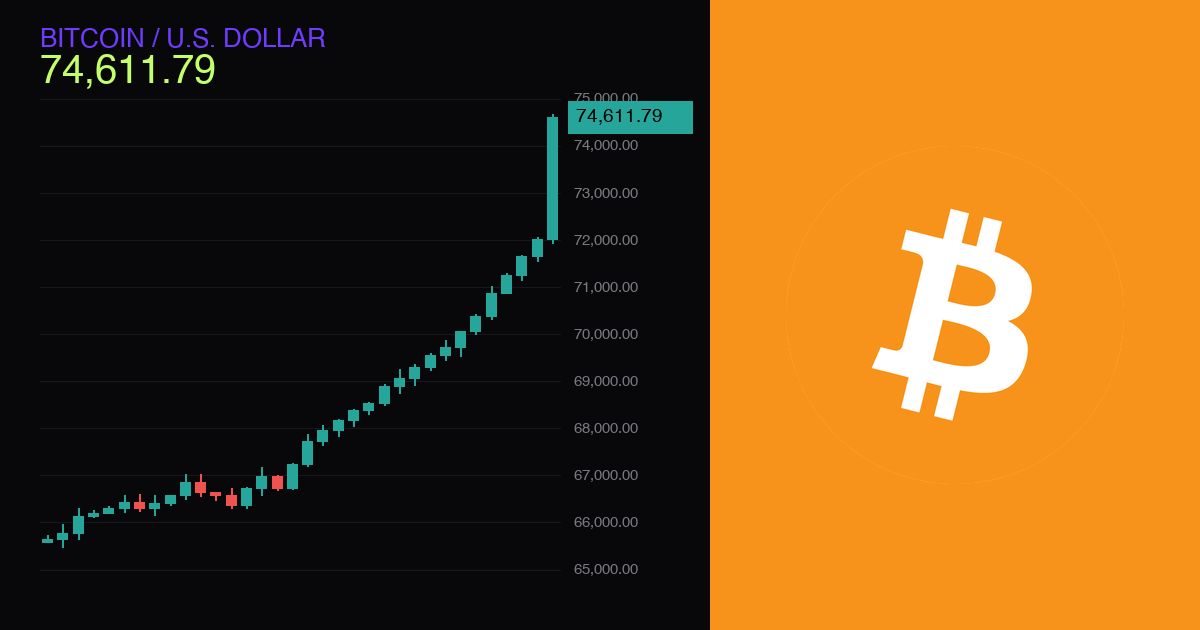
The price is the headline everywhere else. The real story is $2.7 billion of bearish bets force-closed in one day, ten dollars of shorts burned for every dollar of longs. Here is how a record squeeze works.
Key takeaways
- Bitcoin ripped to around $74,600 and roughly $2.7 billion of short positions were liquidated in a single day, a record, per Bloomberg.
- Across the two-day squeeze, CoinGlass counts more than $3.1 billion in shorts wiped out: about $1.67 billion on Bitcoin and $1 billion on Ether.
- The asymmetry tells the story: over $3 billion of shorts erased against only about $305 million of longs, roughly 10 to 1.
- Ethereum rose toward $2,300 as the same squeeze tore through ETH shorts.
- Michael Saylor posted "Strategy, amplified." Eric Trump called it an amazing week for BTC and ETH. Peter Schiff called it a fakeout and pushed gold instead.
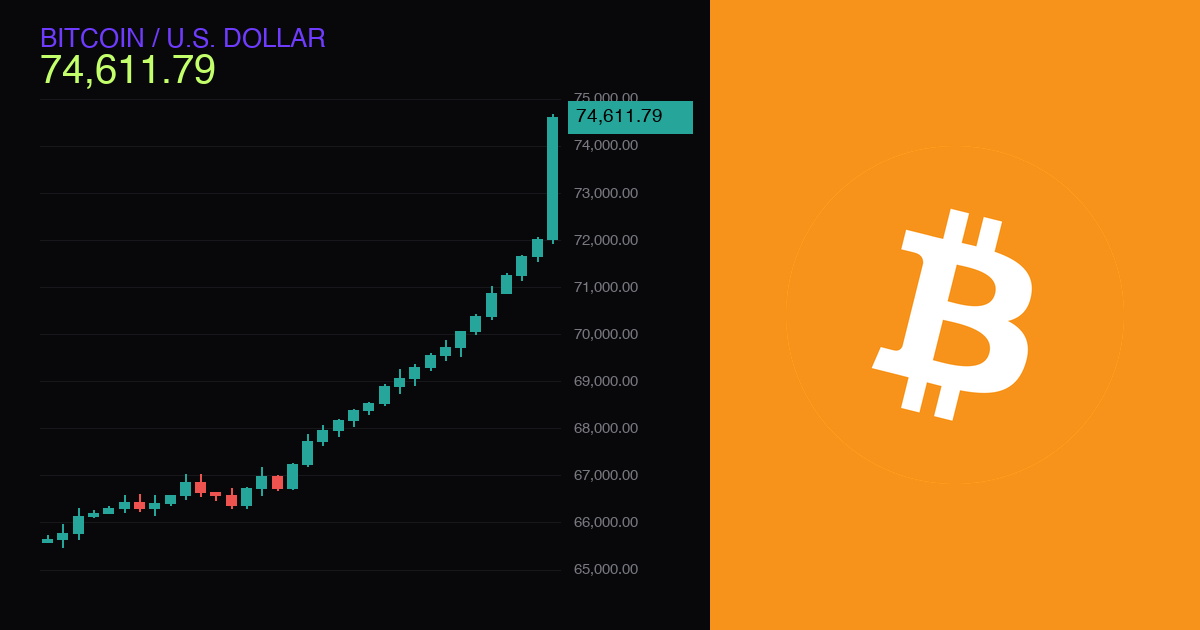
Bitcoin punched through $70,000 and kept going, printing around $74,600 as the week's third act. But the real headline is not the price. It is what the price did to the people betting against it: roughly $2.7 billion of short positions were liquidated in a single day, a record, per Bloomberg.
The liquidation numbers
- ~$2.7 billion in crypto shorts erased in one day, the largest single-day short liquidation on record, per Bloomberg.
- $3.1 billion+ in shorts wiped across the two-day squeeze, per CoinGlass data.
- $1.67 billion on Bitcoin, about $1 billion on Ether, the two engines of the squeeze, per Crypto Economy.
- Only ~$305 million in longs liquidated over the same window. Ten dollars of bearish bets burned for every dollar of bullish ones.
- Ethereum pushed toward $2,300 as ETH shorts were torn through, per TheStreet.
How a squeeze this big happens
Bitcoin spent months pinned near $60,000, and crowded short positions piled up betting the chop would continue. Then one week delivered everything those bets could not survive: the US Treasury doubled its long-bond buyback operations, the White House held a crypto summit, the CLARITY Act found momentum in the Senate, and roughly $190 billion flowed back into the crypto market cap. Each leg higher force-closed a tier of shorts, and each forced close was itself a buy order. That is why the chart went vertical instead of drifting.
Who said what
Michael Saylor, whose company holds more Bitcoin than any other, celebrated with two words: "Strategy, amplified." Eric Trump called it an amazing week for BTC and ETH. And Peter Schiff, crypto's most reliable bear, dismissed the whole move as a fakeout and told people to buy gold instead. Which is a funny recommendation this week, because gold just spiked past $4,500 too. Both sides of that argument are being paid at once.
What an amazing week for BTC and ETH https://t.co/qTI7xUuq9Z
— Eric Trump (@EricTrump) August 20, 2026
The honest read
Analysts are already talking about strength into 2027, and they may be right. But a squeeze is forced buying, and forced buying ends. Some of this move is conviction; some of it is simply shorts paying ransom. When the forced flow dries up, prices built on it can retrace hard, and the same leverage that just destroyed the bears will happily destroy overconfident bulls. $3 billion in liquidations is not a bull case. It is a warning label about leverage, written in someone else's money.
The boring alternative that never gets liquidated
Every dollar in those liquidation numbers belonged to someone using borrowed money to bet on price. There is a version of crypto with no liquidation price: assets you actually own, in a wallet you control. Fizen is built for that side of the market: buy BTC or ETH outright in the app if you want the exposure, keep your spending money in USDT, and use it by Visa card and QR in 150+ countries. No margin, no funding rate, no 3 a.m. margin call.
Frequently asked questions
What is a short liquidation?
A short is a leveraged bet that the price will fall. When the price rises instead, the exchange forcibly closes the position by buying the asset back, which pushes the price even higher and liquidates the next tier of shorts. That chain reaction is a short squeeze, and it is why moves like this one go vertical.
How big was this liquidation event?
Roughly $2.7 billion of crypto shorts were wiped out in a single day, which Bloomberg reported as a record. Counting the full two-day move, CoinGlass data puts short liquidations above $3.1 billion, led by about $1.67 billion on Bitcoin and $1 billion on Ether, against only around $305 million in long liquidations.
Why were so many traders short?
Bitcoin had spent months grinding sideways near $60,000, and crowded bets built up on more of the same. Then one week delivered a Treasury liquidity intervention, a White House crypto summit, CLARITY Act momentum and about $190 billion flowing back into the market. The shorts were on the wrong side of all of it at once.
Is Peter Schiff right that this is a fakeout?
He might be; nobody knows. Squeezes produce violent moves that can retrace once the forced buying is done, and analysts flagging strength into 2027 are the same class of people who did not predict this week. The honest answer is that leverage got punished, in both directions, and it always will.
What does this mean if I use stablecoins rather than trade?
Mostly that volatility cuts both ways and leverage amplifies it. A dollar-pegged balance like USDT does not squeeze or liquidate; it is the part of crypto built for spending, not betting. If you want exposure to BTC or ETH, buying the asset outright in a self-custody wallet involves no liquidation price at all.
Own the asset, skip the liquidation price
Buy BTC and ETH outright in Fizen, no leverage, no margin calls. Keep spending money in USDT and use it by Visa card and QR in 150+ countries. Self-custody, backed by an investment from Tether. New accounts get $10 of eSIM credit.
This is news coverage, not investment advice. Figures as of 20 August 2026 from Bloomberg, CoinGlass, Crypto Economy and TheStreet.
Terms and conditions
- Information only. Fizen publishes this article to inform, not to sell. Nothing here is an offer or solicitation, and it is not financial, investment, legal or tax advice. Prices, rules and availability change; check official sources.
- For readers in the United States. This article provides information only. It is not an offer, solicitation or sale of any product or service, and it is not financial, investment, legal or tax advice. Fizen is not offered to US Persons.
- Full terms. Master Terms of Use, Privacy Policy and Disclaimer on the Fizen site.