How to Pay in the Philippines in 2026 as a Tourist
A practical 2026 guide to paying in the Philippines: cash vs cards, ATM fees, QR payments, e-wallet access for foreigners, and the easiest setup for tourists and digital nomads.

A practical guide to cash, cards, ATMs, QR, e-wallets & crypto for travelers and long-stay digital nomads
Paying in the Philippines is easy once you understand how things actually work on the ground. It’s not fully cashless, but it’s also not cash-only. Daily life runs on a mix of cash, QR payments, and cards — and the right balance depends on where you are, what you’re buying, and how long you’re staying.
This guide is written for international travelers — whether you’re visiting for a week or living in the Philippines for months. It explains what people really use to pay, where cards work (and don’t), how QR payments fit into daily life, and whether crypto is practical in 2026.
What’s the best way to pay in the Philippines for travelers?
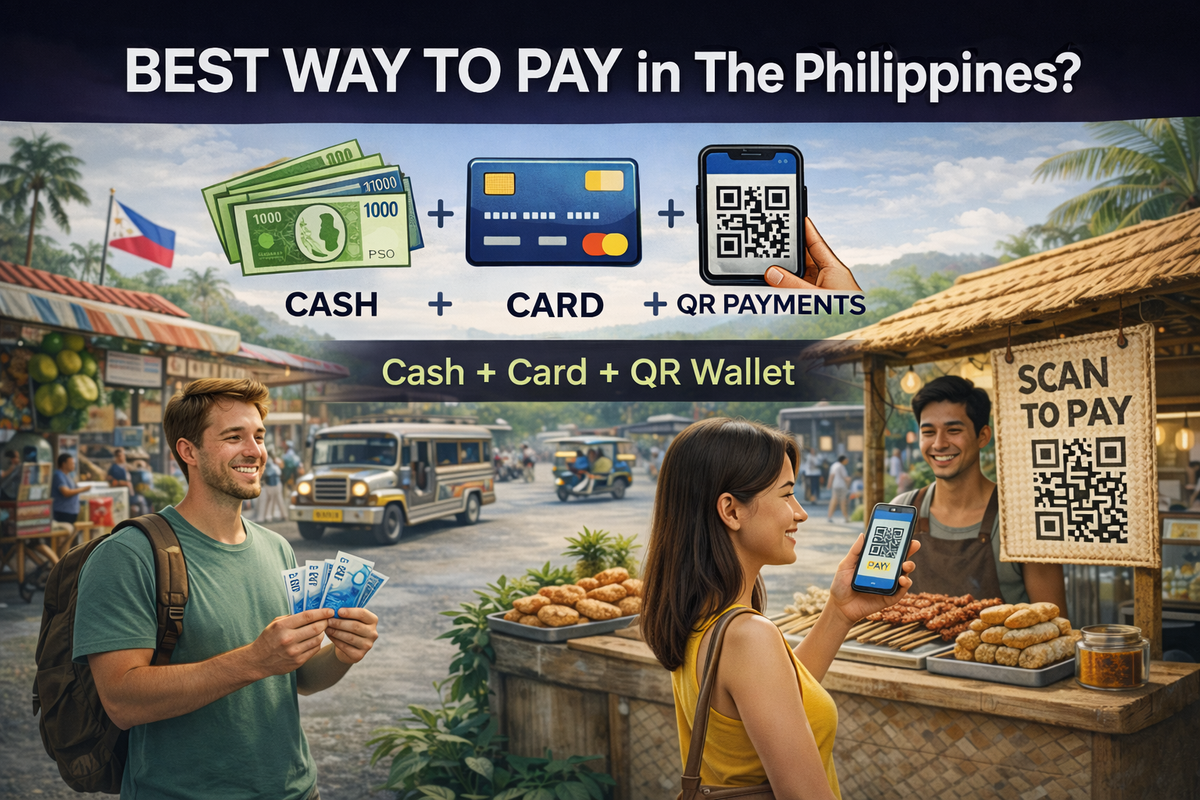
The most reliable setup in the Philippines is a mix of cash + card + QR payments. Use cash for transport, markets, and small eateries; cards for malls, hotels, and major chains; and QR e-wallets for everyday spending where card acceptance is inconsistent.
TL;DR — What Actually Works in the Philippines
- Cash is still essential for transport, markets, and small eateries
- Cards work reliably in malls, hotels, resorts, and large chains
- QR payments & e-wallets are the most practical option for daily spending
- ATMs are easy to find, but fees add up
- The smoothest setup combines cash + card + a QR-ready wallet
What People in the Philippines Use to Pay Day to Day
Many visitors search “what Filipinos use to pay” because QR codes appear everywhere — and that’s accurate.
In everyday life:
- Cash is used for jeepneys, tricycles, street food, markets, and tips
- QR payments via mobile wallets are common in cafés, convenience stores, pharmacies, and services
- Cards are mainly used in malls, supermarkets, hotels, and tourist businesses
Relying only on cards quickly becomes limiting. QR is fast and widely accepted, but access matters for visitors.
Cash in the Philippines (Still Necessary)
Cash remains the default for many small purchases.
Use cash for:
- Local transport
- Street food and neighborhood spots
- Markets, tips, and small services
Practical tip: Carry smaller bills (₱50–₱200). Larger notes are often hard to break, especially outside major malls.
Using Cards in the Philippines
Cards usually work well in:
- Shopping malls (SM, Ayala)
- Hotels and resorts
- Supermarkets and international chains
Cards often don’t work — or are inconvenient — in:
- Small cafés and bakeries
- Local restaurants
- Salons and independent shops
Be aware of:
- Foreign transaction fees (often 2–3%)
- Occasional card surcharges
- Offline terminals during power or internet issues
ATMs: Convenient, but Not Cheap
ATMs are widely available in cities and tourist areas such as Manila, Cebu, and Boracay.
Typical costs include:
- A local ATM fee (around ₱200–₱250 per withdrawal)
- Your bank’s ATM fee
- An exchange-rate spread
If you’re staying longer, withdrawing larger amounts less often usually saves money.
QR Payments & E-Wallets in the Philippines
QR payments are a major part of daily life, which is why many travelers search “e-wallet for travelling to the Philippines.”
Locals commonly use mobile wallets for:
- Cafés and casual restaurants
- Convenience stores and pharmacies
- Freelancers and service providers
Most local wallets are designed for residents and usually require:
- A Philippine phone number
- Local verification steps
That’s convenient for locals, but less practical for short-term visitors or people moving between countries.
QR Payments for Travelers: A Practical Option
For travelers and digital nomads staying longer than a few days, the real challenge isn’t whether QR exists — it’s how to access it without local banking setup.
The Fizen App is designed for global users who want to pay by QR where cards don’t work, without opening a local bank account in the Philippines.
In practice:
- Open the app
- Add funds
- Scan the merchant’s QR code
- Confirm and pay
This setup helps travelers reduce ATM withdrawals, avoid repeated FX fees, and handle daily spending from one balance.
Note: Some features may require a one-time identity check, which is standard for regulated payment apps.
The app that makes you pay like a local in the Philippines
Paying by Location: What to Expect
Manila
Cards work well in malls, airports, and hotels. Cash or QR is often faster for local spots and services.
Cebu
Cash remains common outside malls and resorts. QR payments are widely used, while card acceptance at small venues can be inconsistent.
Boracay & Islands
Cash is essential. Cards usually work only at resorts and higher-end restaurants, and connectivity issues can affect terminals.
If you move between cities and islands, carrying some cash is always wise.
A Simple Payment Setup That Works
For short trips (1–2 weeks):
- Cash for daily spending
- One debit or credit card
- Occasional ATM withdrawals
For longer stays or digital nomads:
- Cash for edge cases
- Card for hotels and malls
- QR payments via a travel-friendly app for everyday life
Tips That Save Time and Money
- Don’t rely on cards alone
- Avoid many small ATM withdrawals
- Ask “GCash or cash?” before ordering
- Keep mobile data — QR payments need internet
Final Takeaway
The Philippines isn’t cashless — but it’s QR-first for everyday purchases in many areas. The smoothest way to travel is to combine:
- Cash for transport and small vendors
- Card for malls, hotels, and big merchants
- QR payments for daily spending where cards don’t
If you want QR access without the local-wallet hassle, download Fizen and set it up once before your trip — so payments fade into the background.
The app that makes you pay like a local in the Philippines
If you’re continuing your trip through Southeast Asia, you may also want to read our guide on how to pay in Vietnam as a tourist, where daily payments are even more QR-first than in the Philippines.

FAQs
Do tourists need cash in the Philippines?
Yes. Cash is still essential for transport, street food, markets, and small local businesses. Even in cities, many daily purchases are cash-only.
Can foreigners use QR payments in the Philippines?
In many cases, yes — but most local e-wallets require a Philippine phone number and local verification. Some travel-friendly apps like Fizen App allow visitors to use QR payments without opening a local bank account.
What’s the best way to pay in Manila, Cebu, and Boracay?
- Manila: Cards work well in malls and hotels; cash or QR is faster for local spots
- Cebu: Cash is common; QR is widely used; cards can be inconsistent at small venues
- Boracay & islands: Cash is essential; cards mainly work at resorts
Fizen App serves both QR and card payments.